

Classic Defender vs. New Defender: Two Different Vehicles, One Name
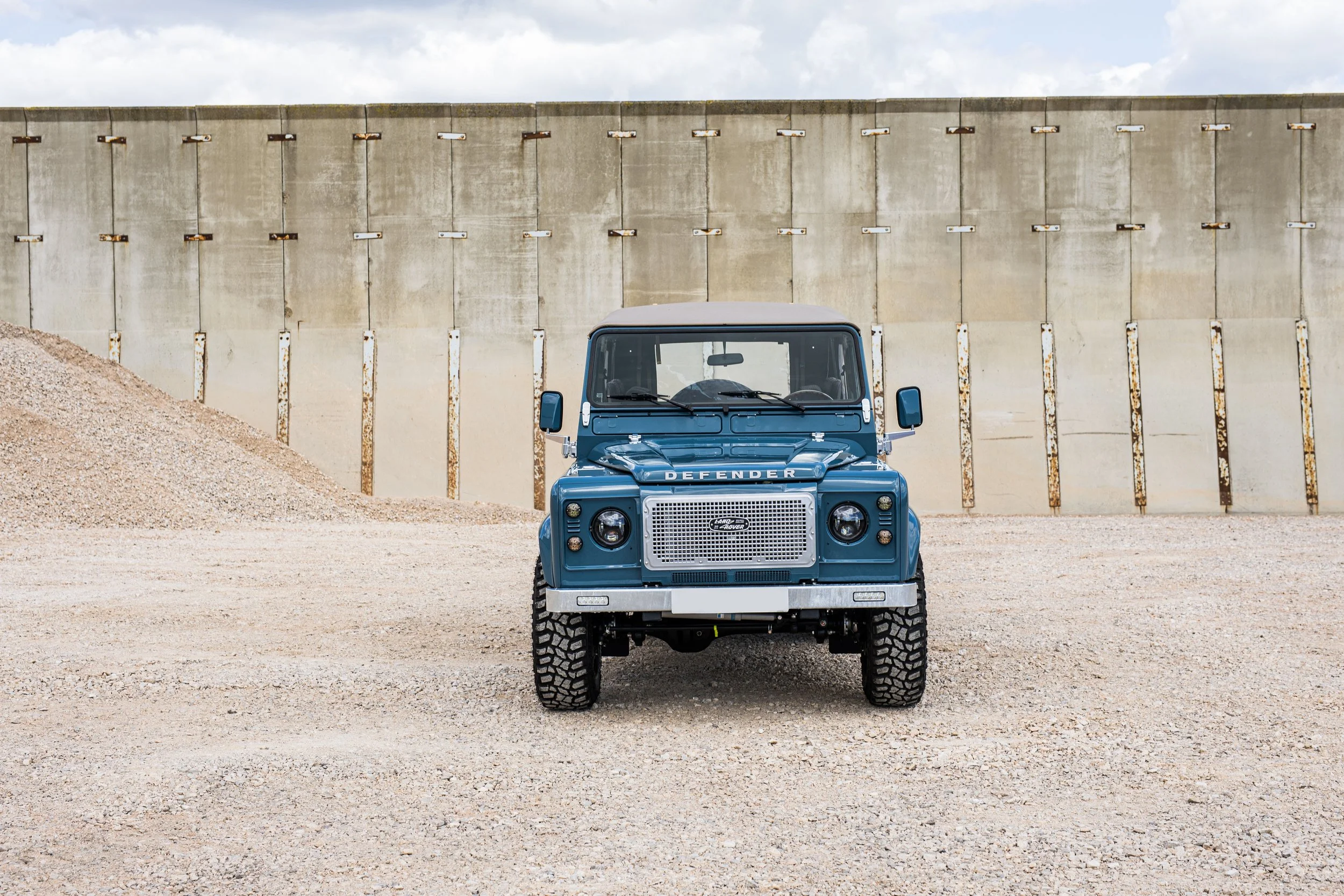
If you are considering a Land Rover Defender, you are looking at two very different vehicles that happen to share a name.
The new Defender is a modern SUV. It is well engineered, comfortable, and capable. The classic Land Rover Defender is a vehicle that was built between 1983 and 2016, designed around utility, simplicity, and a shape that has not aged.
At Shoreline, we build classic Defenders. We are not here to tell you the new one is a bad vehicle. It is not. But the two are built on different philosophies, and understanding the difference will help you figure out which one you actually want.
They look different for a reason
The new Defender was designed as a modern SUV. It shares its platform with the Discovery. It has rounded panels, plastic cladding, and a shape that was developed in a wind tunnel. It fits into modern traffic. It looks like what it is: a 2020s vehicle with off-road styling.
The classic Defender looks the way it does because of how it was built. Flat aluminum panels, exposed rivets, flat glass, a boxy silhouette that was designed for function. It was not styled by a design committee. It was engineered to be manufactured simply and repaired easily.
On the road, the difference is obvious. A new Defender is a familiar sight. A classic Land Rover Defender, properly built, stops people in their tracks. That is not a criticism of the new vehicle. It is a statement about what 40 years of production history does for a shape that was never designed to be fashionable.
They drive differently
The new Defender drives like a luxury SUV. It is quiet, smooth, and insulated from the road. The suspension is electronically managed. The cabin is full of screens and sensors. It is effortless in the way that a modern vehicle should be.
A classic Defender, in its original form, drives like a 30-year-old work truck. Stiff ride, loud cabin, basic controls. That is not what most people want from a daily driver.
A classic Defender that has been properly rebuilt is a different experience. With an LS3 V8 and a modern automatic transmission, a Shoreline Defender has the power and the drivability to keep up with modern traffic. Upgraded suspension, full soundproofing, climate control, and a luxury Defender interior make it comfortable enough for every day. But the driving experience still feels mechanical and connected in a way that a modern vehicle does not. You feel the road. You are involved in the drive. That is part of what draws people to the classic.
The new Defender prioritizes ease. The classic Defender, properly built, prioritizes experience. Both are valid. They appeal to different things.
They hold value differently
A new Defender follows the same depreciation curve as any modern luxury SUV. It loses a significant percentage of its value in the first few years of ownership. That is normal for a mass-produced vehicle.
A classic Land Rover Defender is a finite supply. Land Rover stopped making them in 2016, and no more will be produced. The restomod Defender market has grown significantly in recent years, and well-documented, properly engineered builds tend to hold their value over time.
The factors that protect value on a classic Defender are specific: a galvanized chassis, a ground-up build from a bare frame, full photographic documentation, a clear build record, and a known builder. A vintage Land Rover Defender with all of these is a different financial proposition from a vehicle with no paperwork.
We are not financial advisors and we will not make promises about what any vehicle will be worth in five years. What we will say is that the classic Defender market has consistently rewarded quality builds with strong resale. The new Defender has not been on the market long enough to know where values will settle.
They are built on different ideas
The new Defender is a technology-first vehicle. Screens, sensors, driver assists, electronic suspension, and software-managed systems throughout. If something goes wrong, it typically requires dealer-level diagnostics to identify and fix.
A classic Defender was designed to be understood mechanically. The architecture is simple. The systems are accessible. A custom Defender with modern upgrades, an LS3 V8, modern wiring, upgraded brakes, adds capability without adding the complexity of a fully electronic vehicle.
That simplicity is part of the appeal. A Shoreline Defender is not a rolling computer. It is a mechanical vehicle with modern reliability, built to a standard where you understand what is under the hood and can trust it to work.
Who each one is for
The new Defender is a good vehicle for someone who wants a modern SUV with off-road capability, the latest technology, and the convenience of buying from a dealership with a full factory warranty. It is practical, comfortable, and requires no decisions beyond the options list.
A custom Land Rover Defender is for someone who wants something different. A vehicle with presence and character that a modern SUV does not have. A vehicle that is built specifically for them, around how they plan to use it. A vehicle that feels like it was made by people who care about the result, because it was.
Most of our clients have driven the new Defender. Many of them own one or have owned one. They come to Shoreline because the classic Defender offers something the new one does not. Not better. Different.
Where to start
If you are considering a classic Defender build, whether it is a Defender 90 or a Defender 110, Heritage, Beach, Villain, or Modern, get in touch. We will walk you through the options, the spec, and the timeline.
Get in touch. We will design a build around you.