

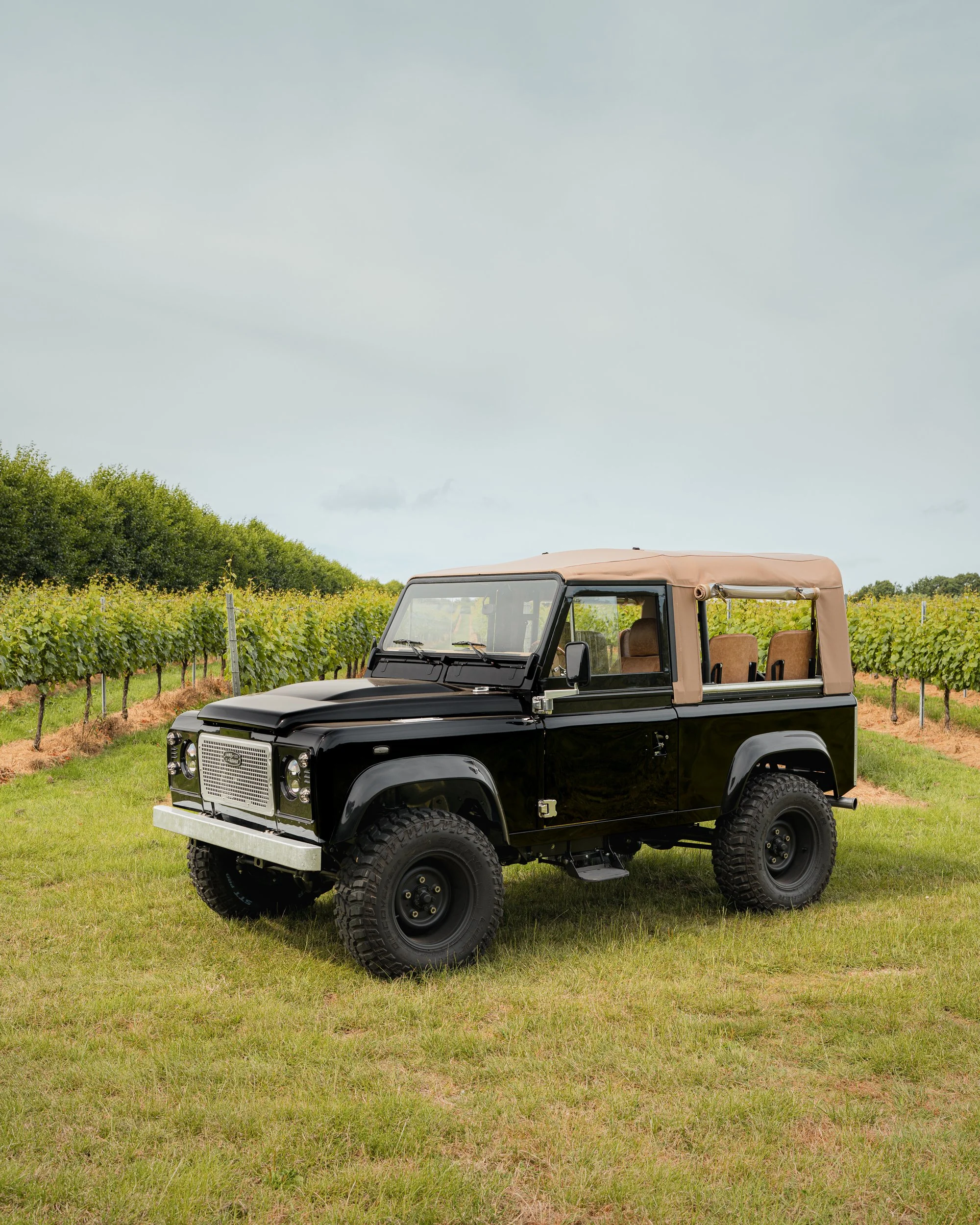
The Land Rover Defender 90 is the short-wheelbase, two-door classic. It is the most compact Defender in the lineup and the one most people picture when they think of the vehicle.
At Shoreline, the Defender 90 is one of our most requested platforms. It is lighter, more agile and more responsive than the 110, and it suits a certain kind of owner and a certain kind of driving. Here is what to know if you are planning a custom Defender 90 build.
The short answer
A custom Defender 90 is a compact, four-seat classic Defender rebuilt to your spec. The key decisions are the edition, the roof (soft top or hard top), the engine (V8 or diesel) and the interior. It suits drivers who value agility and the classic two-door look over rear-seat space.
Why build a Defender 90
The "90" refers to the 93-inch wheelbase, and that compact footprint is what gives the vehicle its character.
It is easy to live with in the city. In places like Miami, Los Angeles or London, the tight turning circle and shorter body make it genuinely practical. It fits in spaces a Defender 110 does not.
It is lighter. That makes it more agile, and it matters when you fit a bigger engine.
It has the classic proportions. The two-door silhouette, especially with the roof off, is one of the most recognizable shapes on the road.
Choosing an edition
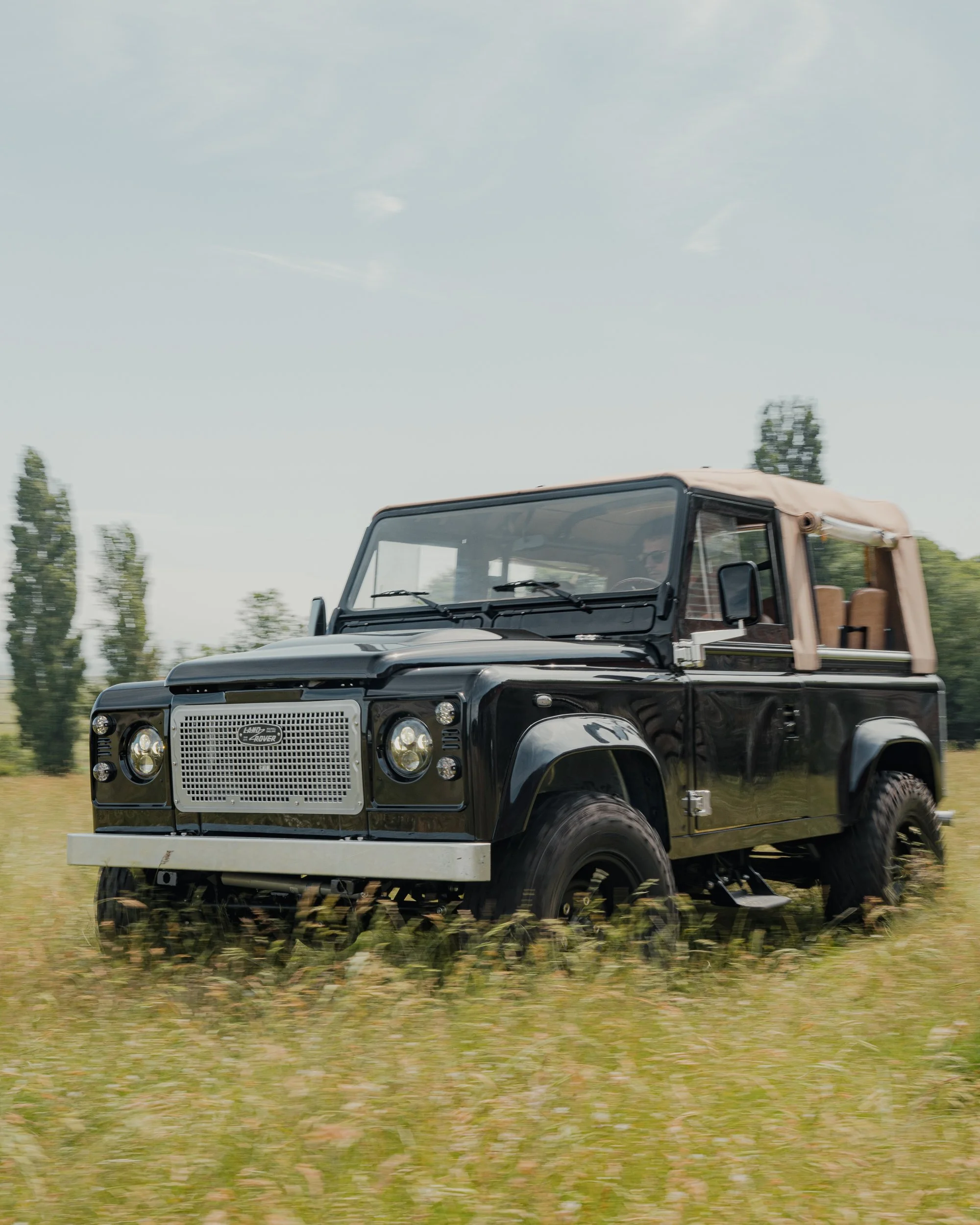
Most Defender 90 builds start from one of our editions and are then personalized. The Beach edition is the open-air coastal 90. The Heritage edition keeps the period-correct look. The Modern edition is the refined road car, and the Villain edition is the aggressive, off-road-styled build.
Soft top or hard top
The roof changes the character of a 90 more than anything else. A soft top gives you open-air driving and suits coastal and weekend use. A hard top gives you a quieter, more sealed cabin for daily driving in any weather. We compare every roof option in detail in Defender soft top vs hard top.
Engine choice
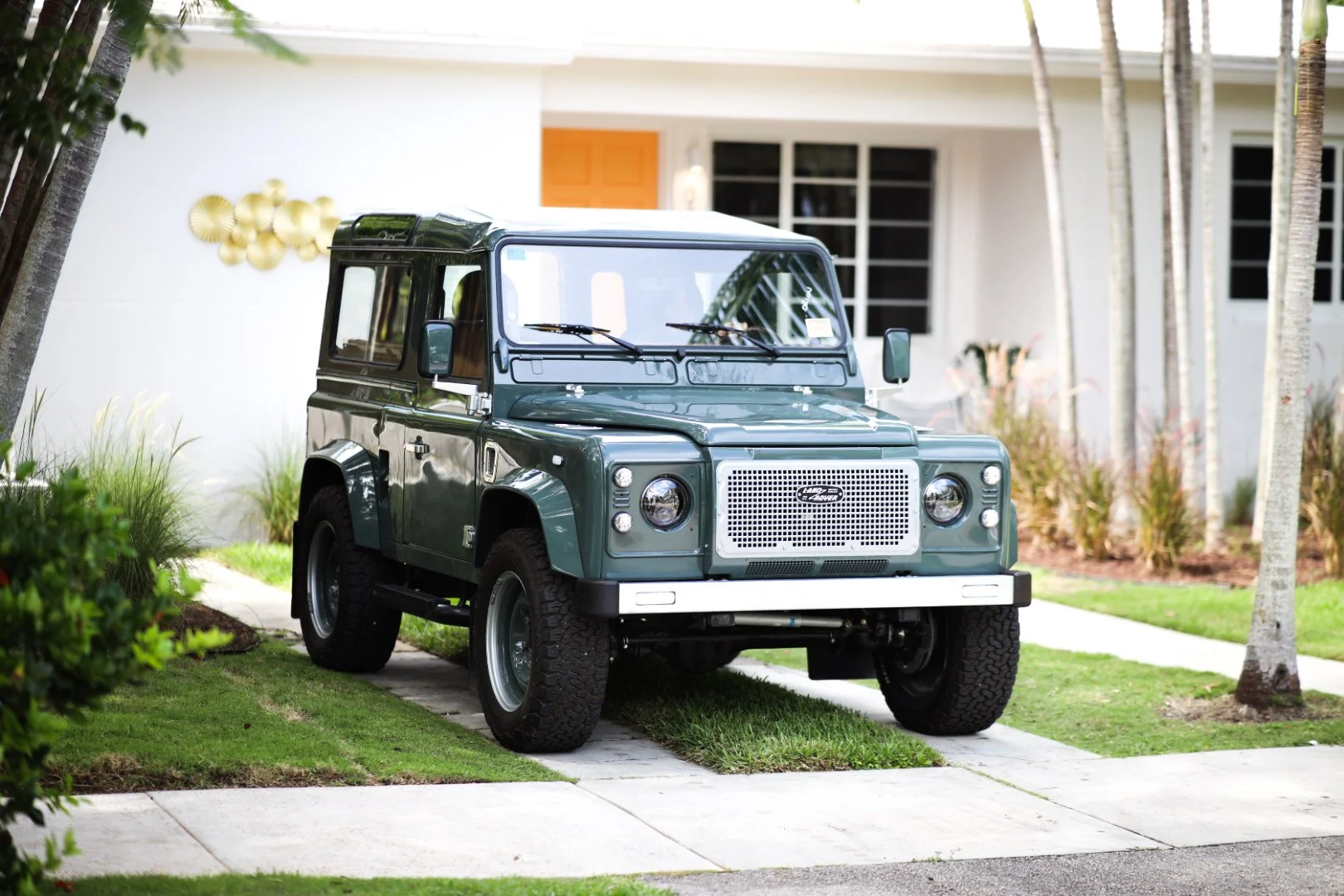
Because it is lighter, the Defender 90 responds especially well to power upgrades. A V8 makes it genuinely quick and easy to drive in modern traffic. Read our Defender 90 V8 guide for the full story. A rebuilt 300TDi or TD5 diesel keeps the original character instead; compare them in our 300TDi vs TD5 guide. Every option is on our engine options page.
Seating and space
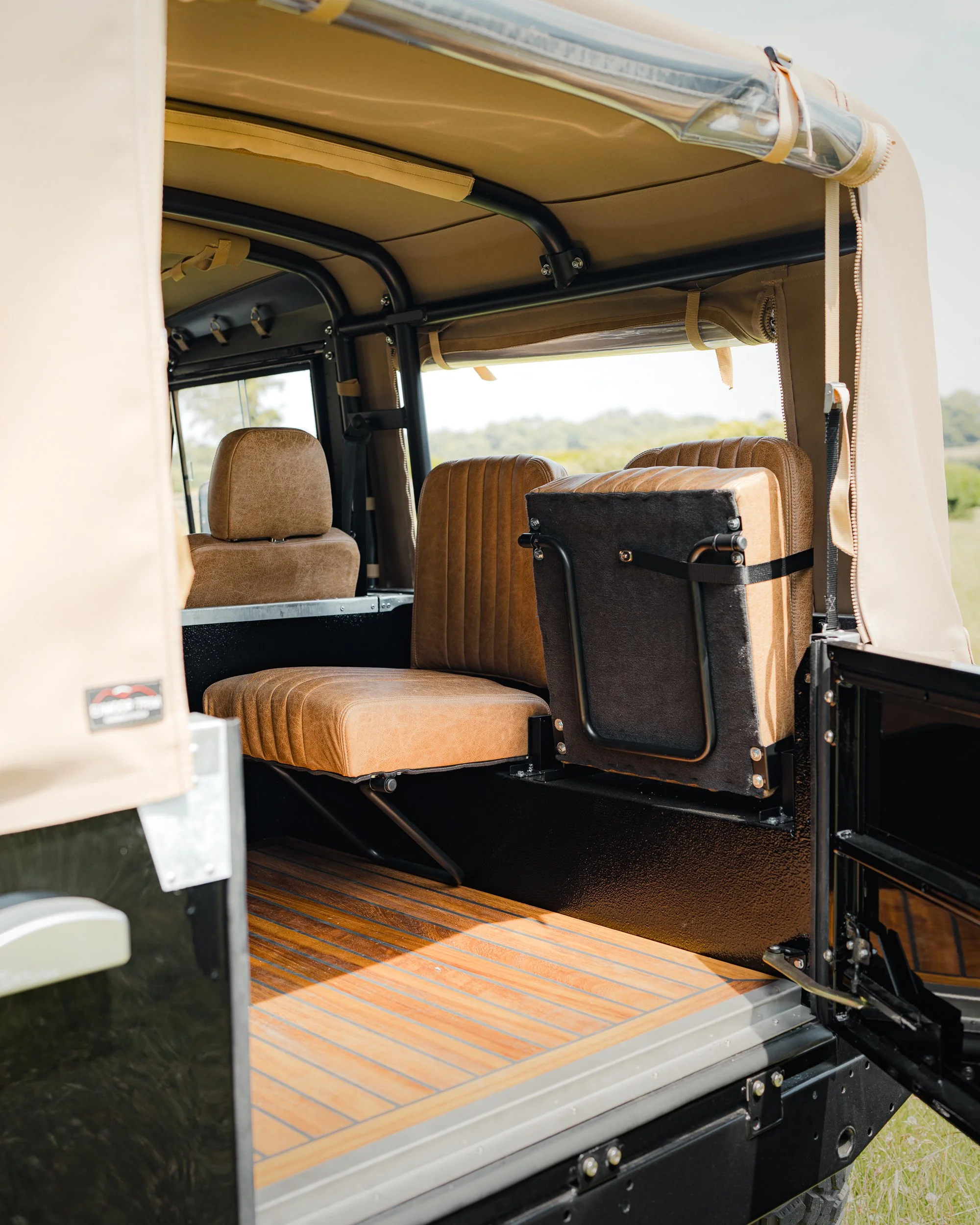
The Defender 90 is a four-seater. That is the trade-off for the shorter wheelbase. Up front there are two captain's chairs with a center console between them; in the rear, two forward-facing fold-up seats. With the rear seats up, cargo space is limited to a few bags. Fold them and the load area opens up more than most people expect.
The interior is finished to the same standard as any Shoreline build: hand-stitched leather, a properly finished dashboard, modern gauges, heated seats, climate control and premium audio. The cabin is smaller, but the finish is identical.
Who the Defender 90 is for
The Defender 90 is for clients who value the driving experience over outright practicality. It works well as a weekend car, a city vehicle, a coastal cruiser or a second vehicle alongside something larger, and it suits couples, solo drivers and anyone who does not need rear seat space every day.
If you need more room, more seats or more versatility, the 110 is the better platform. Our Defender 90 vs 110 guide walks through the differences.
Frequently asked questions
Four: two captain's chairs in the front and two forward-facing fold-up seats in the rear.
It refers to the wheelbase, which is 93 inches. The 110 has the longer 110-inch wheelbase.
A soft top suits open-air, coastal and weekend driving. A hard top is quieter and better for daily use in any weather. See our soft top vs hard top guide.
Yes. The LS3 V8 is our most popular Defender 90 engine. See our Defender 90 V8 guide.
Yes, especially as a hard top with an automatic gearbox. It is easy to park and quick in traffic. The main compromise is limited rear space.
Planning a Defender 90 build?
We will walk you through the edition, roof, engine and interior, and design a build around you.
GET IN TOUCH