

How to Build a Custom Land Rover Defender in 2026
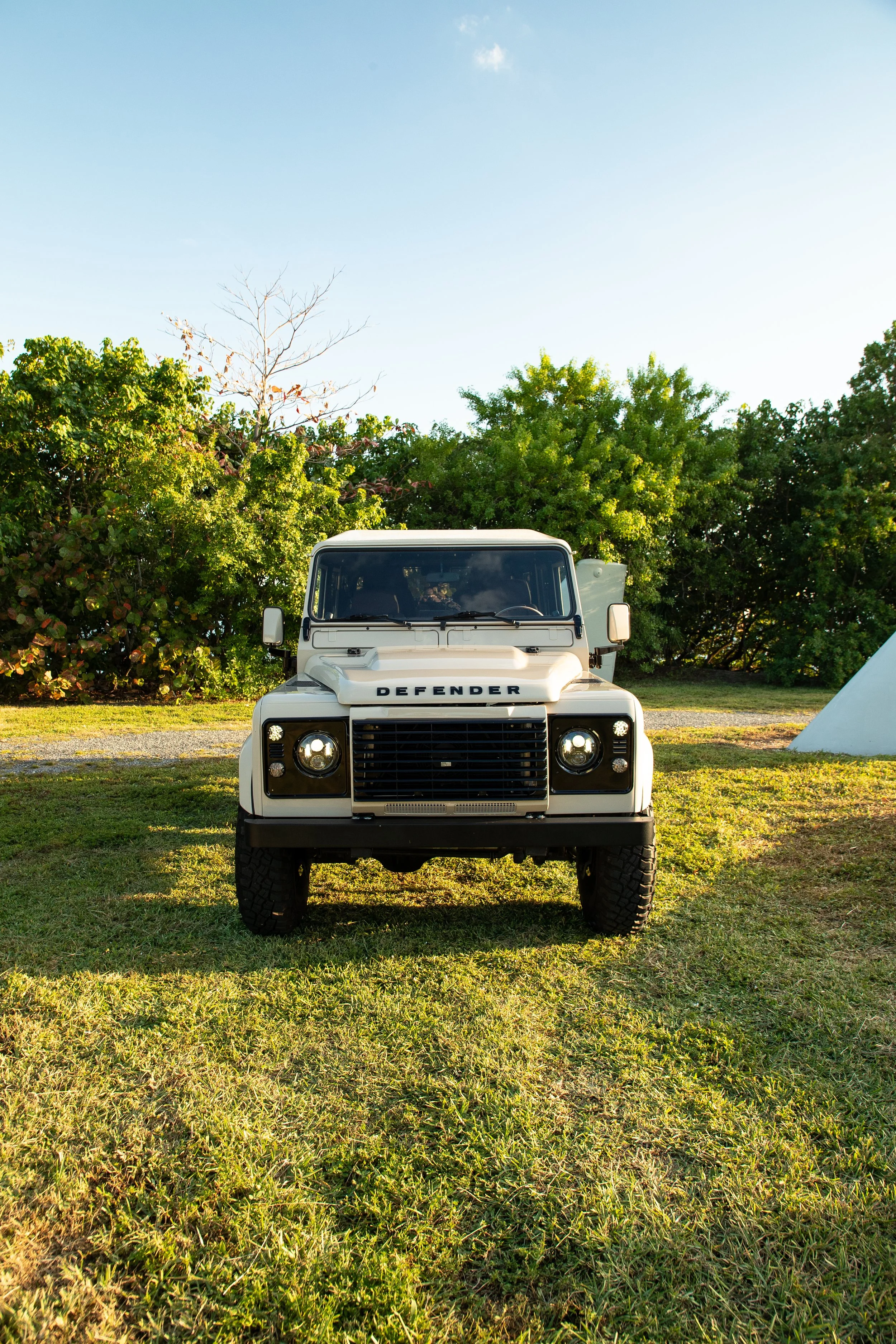
There are a lot of choices involved in a custom Land Rover Defender build. Chassis size, engine, transmission, interior, compliance. If you have never built one before, it can be difficult to know where to start or what actually goes into a custom Defender build.
This guide covers the five decisions that shape every build. These are the same questions we walk through with every client at Shoreline, and the answers will determine what your Defender looks like, how it drives, and how long it lasts.
1. Chassis: Defender 90 or Defender 110
This is the first decision because everything else follows from it. The chassis determines the size of the vehicle, the number of doors, the interior space, and how the vehicle feels on the road.
The Defender 90 is the short-wheelbase, two-door option. It is compact, agile, and well suited to city driving, weekend use, and coastal runs. It is the Defender at its most stripped-back. Available as a hard top or a Defender soft top, it works best for couples, single owners, or anyone who values the tighter proportions and sportier feel of the shorter body.
The Defender 110 is the longer wheelbase, four-door option. More interior room, more stability on the highway, and more versatility overall. It works well as a family vehicle, a long-distance tourer, or a daily driver. It is also available as a Station Wagon, a Double Cab pickup, or a soft top.
The right choice comes down to how you plan to use the car. If you are not sure, we can talk you through it. Most clients know which one they want within the first conversation.
2. Transmission: manual or automatic
For most of its production life, the classic Land Rover Defender came with a manual gearbox. That is still an option on a custom build, but it is no longer the only one.
A rebuilt R380 5-speed manual keeps the mechanical feel of the original vehicle. It is engaging to drive and it suits the character of a classic Defender restoration, especially on builds with a rebuilt original engine.
A 6-speed or 8-speed automatic is the better choice for a restomod Defender, particularly when paired with an LS3 V8 or a high-performance diesel. It makes highway cruising and city traffic significantly easier. For clients who plan to use the vehicle as a daily driver, the automatic is the most popular choice by a wide margin.
Neither is objectively better. It depends on how you drive and what you want the experience to feel like. We will recommend the right pairing based on your engine choice and how you plan to use the car.
3. Engine: what goes under the hood
The engine is the decision that defines the character of the build. For a deeper breakdown, read Diesel or V8: choosing the right engine for your custom Defender.
A rebuilt original diesel, either a 300TDi or a TD5, keeps the classic Defender experience intact. These are proven engines with distinctive character. Rebuilt properly, they are reliable, efficient, and well suited to clients who want the vehicle to feel the way it always did, just without the problems. That is the thinking behind our Heritage edition.
An LS3 V8 is the most popular engine choice for a Defender restomod. 430 horsepower, modern reliability, and the torque to keep up with highway traffic without hesitation. It transforms the way a classic Defender drives. Paired with the right automatic transmission, upgraded brakes, and performance suspension, it turns a 30-year-old truck into something that feels genuinely modern, as in our LS3-powered Villain builds.
A high-performance diesel package is a middle ground. More power than the original engine, better fuel efficiency than the V8, and a driving feel that sits between the two. It suits clients who want modern performance without moving away from diesel entirely. If you are weighing an electric option, see our guide to Tesla-powered Defender conversions.
We will recommend an engine based on your build edition, the chassis size, and how you plan to use the vehicle. The engine, the transmission, the cooling, the exhaust routing, the braking, and the suspension all need to work together. We engineer the drivetrain as a system, not a collection of parts.
4. Compliance: making sure you can register it
This is the decision most people do not think about until it is too late. If you live in a state with strict emissions regulations, such as California, New York, or Colorado, you cannot simply drop any engine into a classic Defender and register it for road use.
At Shoreline, we build CARB-compliant vehicles using the GM E-ROD system for clients in states that require it. This means the LS3 V8 is fitted with the correct emissions equipment from the outset, and the vehicle can be legally registered, smogged, and driven in all 50 states.
If you are buying a custom Defender from any builder, ask about compliance before you commit. A vehicle that cannot be registered in your state is not a vehicle you can drive. We handle this early in the process so there are no surprises at the end.
5. Value: what a custom Defender holds over time
A custom Land Rover Defender is a significant purchase. It is worth understanding how the value works compared to a new luxury SUV.
A mass-produced vehicle loses a large percentage of its value the moment it leaves the dealership. A properly built custom Defender does not follow the same curve. The restomod Defender market has grown significantly in recent years, and vehicles with full build documentation, professional engineering, and a known build history hold their value well. Our guide to buying a Land Rover Defender covers used, restored, and built-from-scratch options.
The factors that protect value are specific: a galvanized chassis, a ground-up build from a bare frame, Range Rover-standard paintwork, full photographic documentation, and a clear build record. A custom Defender with all of these is a different proposition from one without paperwork or provenance.
We are not financial advisors and we will not make promises about resale prices. What we will say is that every Shoreline Defender is built with full documentation, a nine-stage build process, and a 12-month warranty. We build vehicles to a standard that holds up over time, both mechanically and in terms of value.
Where to start
These five decisions cover the foundation of every custom Land Rover Defender build. There are more choices after these, including paint color, interior leather, dashboard finish, wheels, tires, and accessories, but they all follow from the decisions above. If budget is the next question, read our breakdown of Defender restoration cost.
Every Shoreline build starts with a conversation. Tell us how you want to use the car and we will walk you through the options. No pressure. We will design a build around you.