

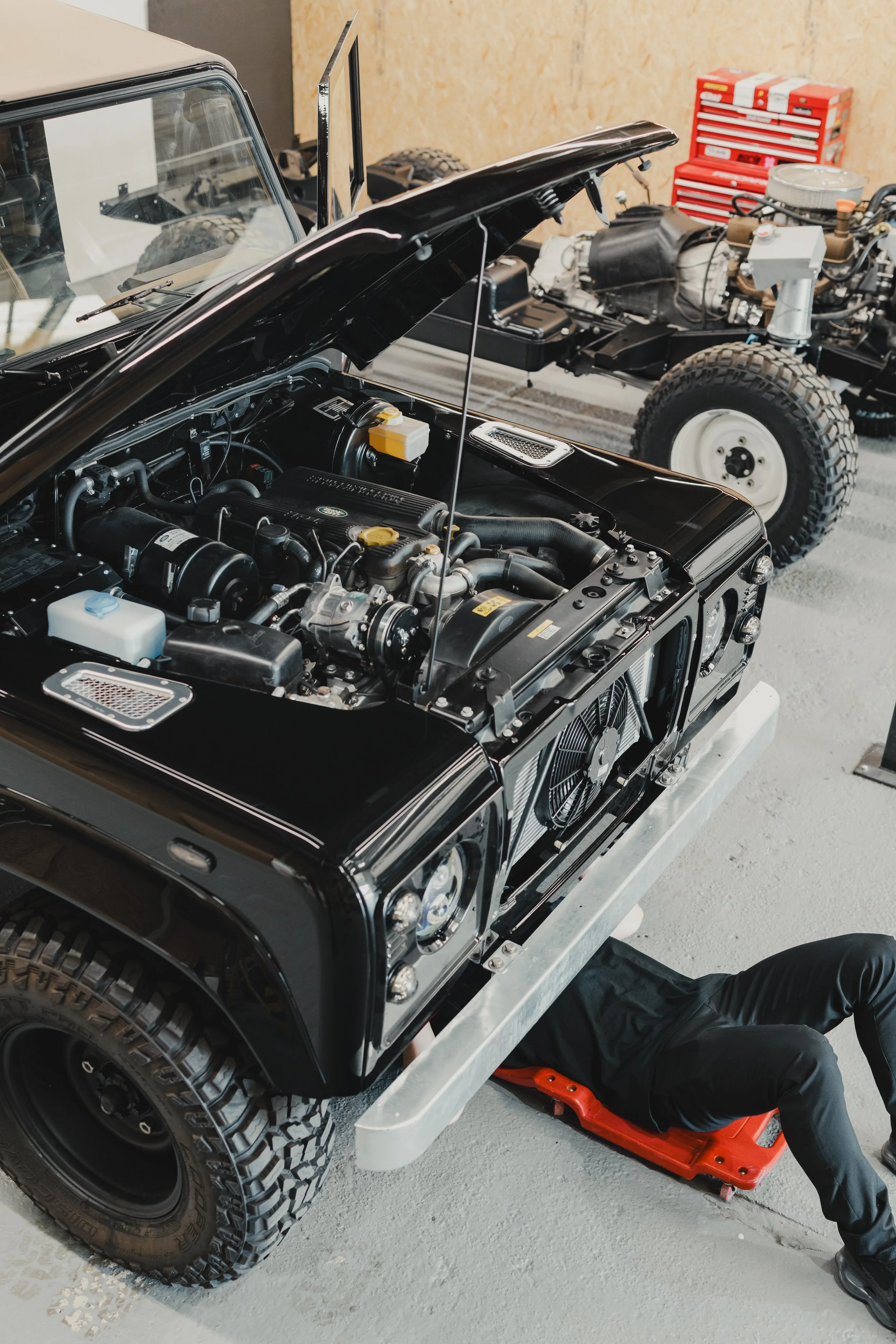
Defender V8: The Complete Guide to the LS3 Swap
The LS3 is the most requested engine in custom Defender building, and the reason is simple. A classic Defender with its original diesel is a wonderful thing at 45 mph and a tiring thing at 70. Fit a 6.2-litre GM V8 and the vehicle stops being a project you drive on weekends and becomes one you can take anywhere, at any speed, without planning the route around it.
That transformation is real. It is also not a drop-in. This guide covers what the LS3 actually is, what the swap requires beyond the engine itself, how the legality works in the United States, and who the swap genuinely suits.
The short answer
The LS3 is a 6.2-litre naturally aspirated V8 from GM producing around 430 horsepower and over 400 lb-ft of torque. In a Defender it is paired with a six-speed automatic and requires new engine mounts, a rebuilt cooling system, upgraded brakes, revised suspension and a full custom wiring loom. Done properly it is the most capable and most usable Defender configuration available. Done cheaply it is the fastest way to ruin a good chassis.
What the LS3 actually is
The LS3 is a Gen IV small-block V8 introduced by General Motors in the 2008 Corvette. It is a 6.2-litre, naturally aspirated, pushrod engine with an aluminium block and heads. In Corvette trim it produces in the region of 430 horsepower and 424 lb-ft of torque, and it makes that power without forced induction, without a highly strung state of tune, and without asking anything unusual of the person driving it.
Three things make it the default choice for engine swaps rather than a Coyote, a Hemi or a rebuilt Rover V8.
The first is physical size. A small-block Chevrolet V8 is remarkably compact for its displacement, largely because the pushrod valvetrain avoids the tall cylinder heads of an overhead-cam design. It fits in a Defender engine bay without cutting the bulkhead about, which cannot be said of every V8 people have tried.
The second is parts availability. The LS family has been in production in one form or another for decades and is the single most swapped engine platform in the world. Every bracket, adapter, manifold, sump and accessory drive you could want already exists, is made by multiple suppliers, and is in stock. If something fails in ten years' time, you will be able to fix it in any country you happen to be in.
The third is temperament. The LS3 makes its torque low and wide. It does not need revving to feel strong, which matters enormously in a vehicle geared for a diesel and shaped like a garden shed. It idles quietly, pulls from nothing, and never feels like it is working. That is exactly what you want in a Defender and exactly what a high-revving, peaky engine would get wrong.
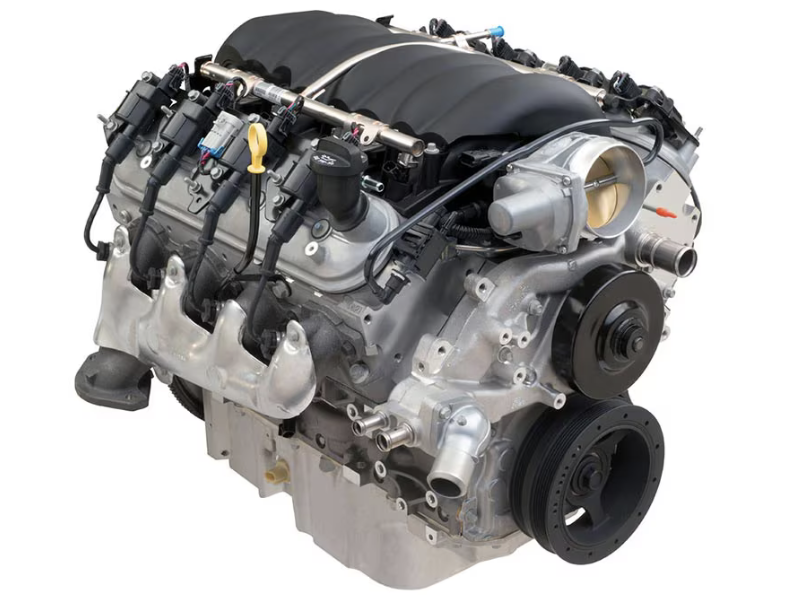
The LS3 in crate form. Compact for 6.2 litres, which is what makes it fit where other V8s do not.
Why not the original Rover V8?
It is a fair question, because the Defender was factory-fitted with a V8 in various markets and the Rover unit has genuine character. The all-aluminium Rover V8 traces back to a Buick design of the early 1960s and sounds glorious.
It also makes roughly a third of the LS3's power, drinks fuel at a rate that surprises people who assumed a smaller engine would be thriftier, and carries a well-documented tendency toward cylinder liner problems and head gasket failure when pushed. For a concours Heritage restoration where originality is the entire point, a properly rebuilt Rover V8 is the right answer. For a vehicle you intend to drive across states, it is not.
What the swap actually involves
This is where most of the money goes, and where the difference between a good LS3 Defender and a bad one is decided. Dropping a 430-horsepower engine into a chassis engineered around 110 horsepower changes the requirements of every system attached to it.
- Engine mounts and crossmember. Custom fabricated mounts, with the engine positioned to keep the weight back and the propshaft angles sensible. Get this wrong and you get vibration you will never fully chase out.
- Cooling. The single most common failure point in cheap swaps. An LS3 rejects substantially more heat than a 300 TDi. That means a correctly sized aluminium radiator, electric fans on a proper controller, and an oil cooler. A V8 Defender that overheats in traffic is a V8 Defender that is not finished.
- Transmission. The 6L80E six-speed automatic, managed by a control module matched to the engine. The original five-speed manual is not rated for the torque and the gearing is wrong for the power band.
- Transfer case and driveshafts. Uprated or rebuilt transfer case, new driveshafts with correct phasing, and often a revised handbrake arrangement to suit.
- Brakes. Vented discs front and rear with uprated calipers and a servo matched to the new engine's vacuum. Original Defender brakes are marginal at original power. They are not acceptable at four times it.
- Suspension and steering. Revised spring and damper rates to carry the different weight distribution, uprated steering damper, and usually a power steering box rebuild or upgrade.
- Fuel system. A new tank or in-tank pump assembly capable of delivering fuel injection pressures, plus new lines throughout. Diesel fuel systems cannot be adapted.
- Wiring. A full custom loom. Not a modified original loom. The engine management, transmission control, sensors and safety systems all need to talk to each other properly, and a 30-year-old Defender harness is not the place to start.
- Exhaust. Custom stainless system from the manifolds back, routed around the chassis and gearbox with adequate clearance and heat shielding.
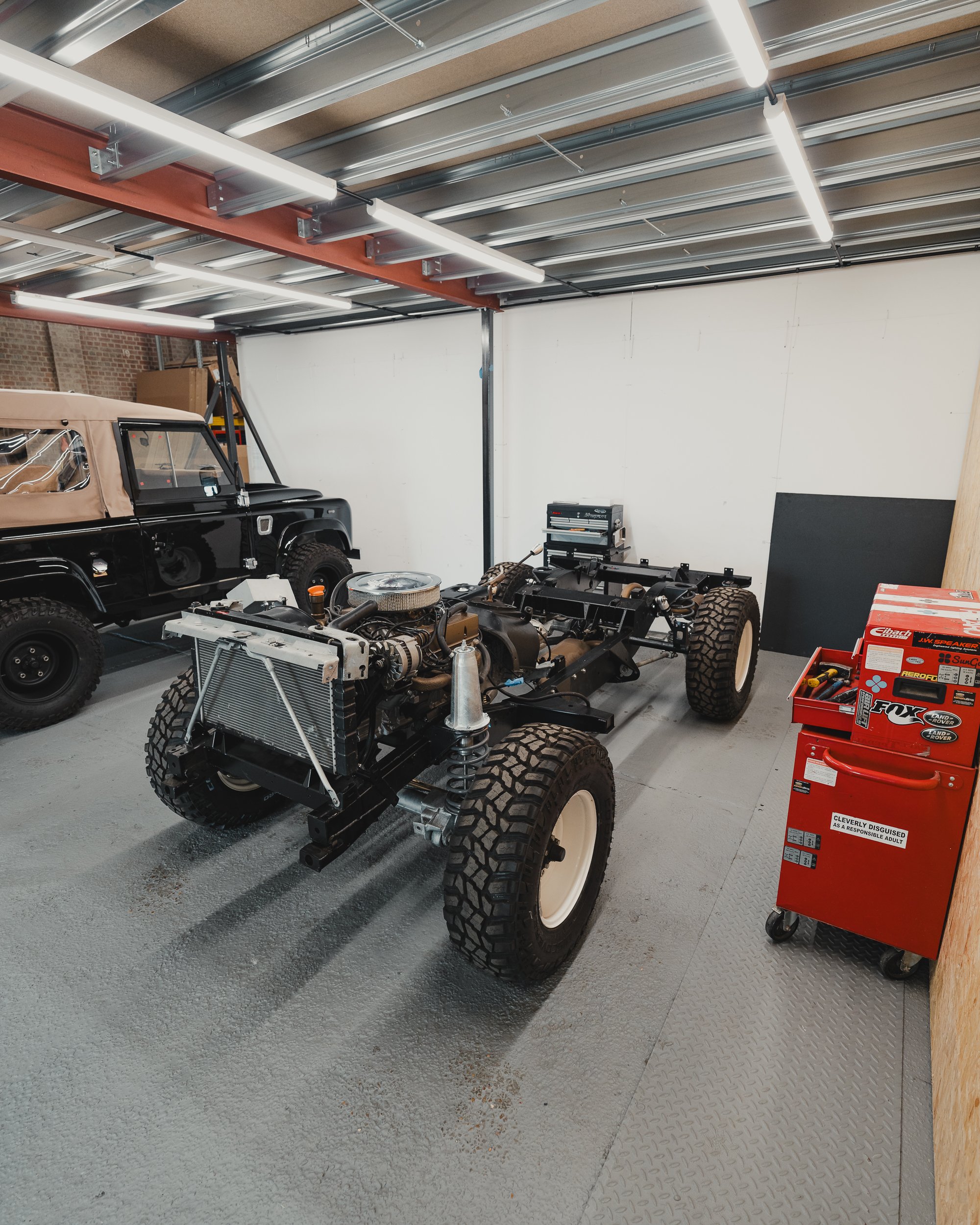
A V8 swap is a chassis-up job. Cooling, brakes and driveline are all resolved before the body goes back on.
None of that is optional. It is the difference between an engine swap and a vehicle. When you see LS3 Defenders advertised at prices that look too good, this list is what has been skipped.
Legality in the United States
This matters more than most buyers realise, and it is where a lot of imported swap vehicles come unstuck.
GM Performance offers the LS3 in an emissions-legal configuration known as E-ROD. The package includes catalytic converters, oxygen sensors, an evaporative emissions system and an engine calibration designed around them, and it carries a CARB Executive Order number. That Executive Order is the legal mechanism that makes the engine acceptable in an emissions-controlled swap, and it is why the E-ROD package exists at all.
An important nuance: holding a CARB Executive Order does not make a swap automatically legal everywhere by default. California still requires the completed vehicle to pass a BAR referee inspection, which checks that all the emissions equipment is present, correctly installed and functioning. Rules also vary between states, and a vehicle's model year and import status affect what applies to it. Anyone telling you a V8 swap is simply "50-state legal" with no further steps is skipping the part that actually takes work.
We build to the E-ROD specification precisely so that the compliance path exists and is documented. Confirm the requirements for your own state before committing to a build.
What it is like to live with
Honestly? Transformative, with one caveat.
The transformation is in usability. An LS3 Defender cruises at 75 mph without drama, overtakes without planning, climbs a grade without dropping two gears, and sits in traffic without you watching the temperature gauge. The automatic gearbox removes the last piece of friction. You stop driving it like a classic and start driving it like a car, which for most owners is the entire point of commissioning a build.
The caveat is fuel. A 6.2-litre V8 pushing a brick through the air returns what you would expect it to return. Owners typically see figures in the low-to-mid teens in mpg terms, and worse in town. If running cost is a primary concern, this is not your engine, and you should be looking at the diesels or the EcoBoost instead.
There is also a character question that nobody talks about honestly. Some of what people love about a classic Defender is the deliberateness of it, the sense that you and the vehicle are both working. The LS3 removes that. Most owners are delighted. A few miss it. It is worth being clear with yourself about which you are before you spend the money.
LS3 in a 90 or a 110?
Both work. The LS3 is fitted across both platforms and the installation is fundamentally the same.
The 90 is the more dramatic of the two. Less weight over a shorter wheelbase makes the power more immediate and the vehicle feel genuinely quick. It is also the configuration that demands the most respect, because a short-wheelbase vehicle with a high centre of gravity and 430 horsepower is not a combination to treat casually.
The 110 is the more complete vehicle. The extra wheelbase settles the ride, the additional weight takes the edge off the delivery in a way that suits touring, and the practicality means you will actually use it. For most clients building a V8 as their primary Defender, the 110 is the better answer.
If you have not settled that question yet, our guide to the Defender 90 versus the 110 covers the platform decision in full.
Is the LS3 right for your build?
You want a Defender you can drive daily, at highway speed, over long distances, with an automatic gearbox and power in reserve. This is the configuration most US clients commission.
Running cost matters, you want the original mechanical character, or the vehicle is destined for overland and off-road use where torque and range beat outright power.
You want instant torque and near-silent running, your driving is mostly regional rather than remote, and you have somewhere reliable to charge.
The full range of options, including the 200 TDi, the Ford EcoBoost and our electric conversions, is set out on our Defender engine options page. If you are weighing the two classic diesels against each other, we have covered that separately in 300 TDi vs TD5.
Frequently asked questions
An LS3 Defender is a classic Land Rover Defender fitted with a GM LS3 6.2-litre V8 in place of its original engine. The swap includes a six-speed automatic gearbox, a rebuilt cooling system, uprated brakes and suspension, and a full custom wiring loom. It is the most popular engine configuration in Defender restomod building.
Around 430 horsepower and over 400 lb-ft of torque in standard naturally aspirated form. That compares to roughly 110 horsepower for a 300 TDi and 122 for a TD5, which gives a sense of how substantially the vehicle changes.
It can be, but it depends on the specification and the state. The GM E-ROD version of the LS3 carries a CARB Executive Order, which is the mechanism that allows the engine in an emissions-controlled swap. California additionally requires a BAR referee inspection of the finished vehicle, and requirements differ elsewhere. Confirm the rules in your own state before commissioning a build.
A six-speed automatic, controlled by a module matched to the engine. The original Defender five-speed manual is not rated for the torque the LS3 produces and the ratios are wrong for the power delivery. A manual conversion is possible but is not the standard configuration.
Expect figures in the low-to-mid teens in mpg, and lower in town. A 6.2-litre V8 moving a vehicle with the aerodynamics of a classic Defender is not economical, and no amount of tuning changes that meaningfully. If running cost is a priority, a diesel or the 2.3-litre EcoBoost is the better choice.
Yes. The LS3 fits both the Defender 90 and the Defender 110 and the installation is essentially the same across both. The 90 feels quicker because there is less weight to move, and it is a popular combination for that reason.
Neither is better in the abstract. The LS3 is better for highway driving, daily use and outright performance. A diesel is better for fuel economy, range, low-speed off-road work and preserving the original mechanical character of the vehicle. The right answer depends entirely on how you intend to use it.
Cooling, brakes, suspension, transfer case, driveshafts, fuel system, exhaust and the complete wiring loom. A Defender chassis was engineered around roughly a quarter of the LS3's output, and every system connected to the engine needs to be brought up to match. A swap that addresses only the engine is not a finished vehicle.
Thinking about a V8 build?
Tell us how you plan to drive it and where it will be registered. We will talk you through the specification, the compliance path and whether the LS3 is genuinely the right call.
GET IN TOUCH