

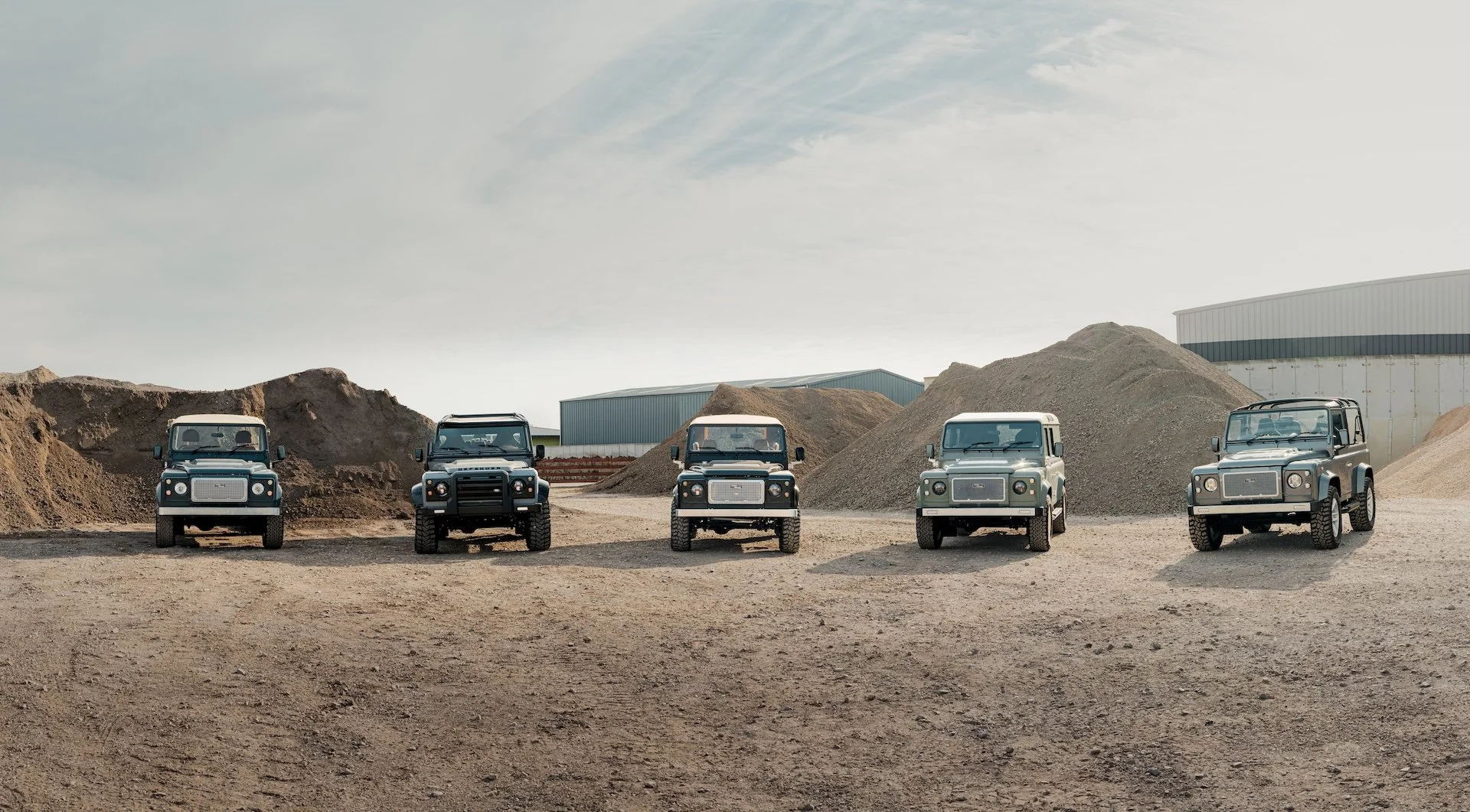
The Defender 90 and the Defender 110 are the two platforms we build on at Shoreline. They share a name and a lineage but they are different vehicles, designed for different purposes. The 90 is compact and direct. The 110 is spacious and versatile. Choosing between them is the first decision in a custom Defender build, and it shapes everything else.
This guide covers the real differences between the two platforms, what each one is best at, and how to decide which one is right for how you plan to drive.
The short answer
The Defender 90 is a 3-door, short-wheelbase vehicle that seats four. The Defender 110 is a 5-door, long-wheelbase vehicle that seats five to seven. The 90 is more agile and more distinctive. The 110 is more practical and more comfortable over distance. Both are available across all four Shoreline editions.
The Defender 90
The Land Rover Defender 90 has a 93-inch wheelbase and a 3-door configuration. Two front doors and a rear tailgate. It seats four: two up front and two on a rear bench. The cargo area sits directly behind the rear seats.
The D90 is the shorter, lighter, and more nimble of the two platforms. On the road it feels compact and purposeful. In tight spaces, parking lots, and city streets, the shorter wheelbase makes a noticeable difference. It turns tighter, fits into smaller gaps, and is easier to maneuver than the 110.
It is also the more visually striking vehicle. The proportions of a short-wheelbase Defender, particularly a soft-top 90, are hard to match. The body looks balanced and purposeful. It does not have the visual length of the 110. It looks like it was designed to do exactly one thing well.
The D90 is the most popular platform for Beach edition builds. Open-air, soft-top, coastal driving. It is also popular as a weekend vehicle, a city car, or a second vehicle alongside a more practical daily driver.

The Defender 110
The Land Rover Defender 110 has a 110-inch wheelbase and a 5-door configuration. Four side doors plus a rear door. It seats five in the standard layout: two up front, three on a middle-row bench. An optional rear-facing bench in the cargo area can bring that to seven.
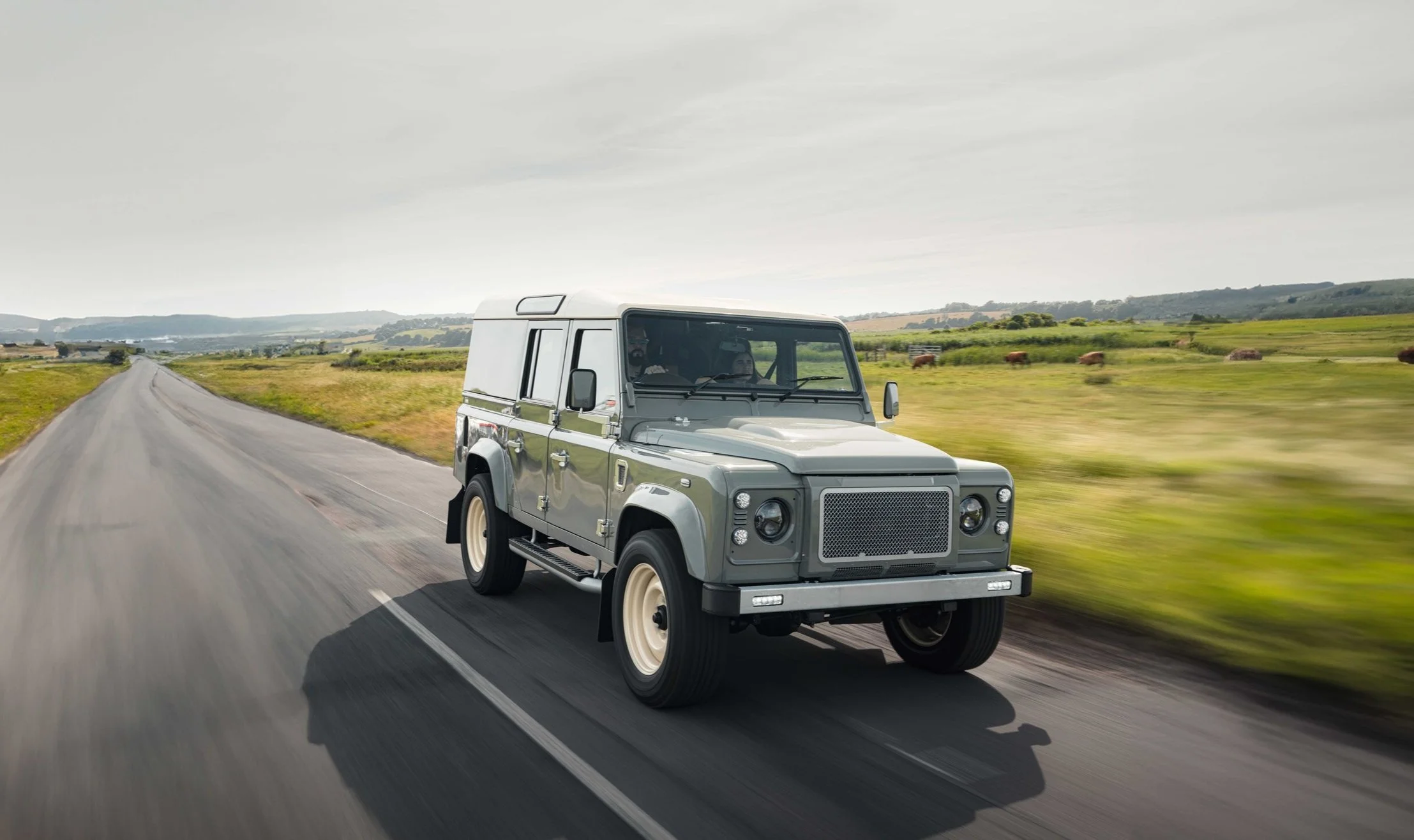
The D110 is the more practical vehicle. The extra wheelbase means more interior space, more cargo room, and a more comfortable ride over long distances. The longer body smooths out bumps and reduces pitch at speed. It is a better highway cruiser and a better road trip vehicle.
With the middle row, the 110 works as a genuine family vehicle. Kids, dogs, luggage, and gear all fit in a way they simply do not in the 90. The 110 is also available as a Station Wagon (hard top with full-height rear cabin), a soft top, and a Double Cab pickup configuration.
The D110 is the most popular platform for Heritage and Modern edition builds. Clients who want a daily driver, a tourer, or a vehicle that works for a family tend to choose the 110. It gives up some of the 90's visual compactness in exchange for genuine usability.
How they compare
Size and dimensions
The Defender 90 is approximately 152 inches long. The Defender 110 is approximately 178 inches long. Both are the same width and height. The 110 is about 26 inches longer, which translates directly into more interior space and a longer cargo area.
In terms of wheelbase, the 90 sits at 93 inches and the 110 at 110 inches. The longer wheelbase on the 110 provides better stability at highway speeds and a smoother ride over uneven surfaces. The shorter wheelbase on the 90 provides a tighter turning circle and better off-road articulation on steep terrain.
Seating and space
The Defender 90 seats four. Two front seats and a 2-person rear bench behind the front seats, facing forward. In some builds, the rear bench is replaced with additional cargo space or a load-bay configuration.
The Defender 110 seats five as standard with a middle-row bench that seats three. An optional rear load-bay bench adds two more seats, bringing the total to seven. The 110 also benefits from rear air conditioning as an option, which makes the middle row significantly more comfortable in warm climates.
If you regularly carry passengers or need rear seating for a family, the 110 is the only practical choice. The 90 is a four-seat vehicle and that does not change regardless of configuration.
Driving experience
The Defender 90 feels lighter and more responsive behind the wheel. It changes direction more quickly, feels more connected through the steering, and has a sense of agility that the longer 110 does not. It is the better vehicle for winding roads, coastal routes, and driving for the sake of driving.
The Defender 110 is more composed at speed. The longer wheelbase settles the ride, reduces pitching over bumps, and tracks more steadily on the highway. It is the better vehicle for long-distance drives, daily commuting, and mixed-use driving where comfort matters more than agility.
Both platforms are available with the same engine options. The LS3 V8, the 300 TDi, the TD5, the Ford EcoBoost, and the electric conversion all fit either chassis. The LS3 is slightly more popular in the 90 due to the lighter weight, while the TD5 and 300 TDi are popular choices for the 110 in Heritage and overland configurations.
Availability and body styles
The Defender 90 is available as a hard top or a soft top. The soft-top 90 is the Beach edition in its purest form. The hard-top 90 works well for Heritage, Villain, and Modern builds.
The Defender 110 is available as a Station Wagon (the most common configuration), a soft top, or a Double Cab pickup with a flat rear bed. The Station Wagon is the most popular 110 configuration for custom builds. The Double Cab is rarer and sought after by collectors.
Value and collectability
Both the Defender 90 and Defender 110 hold their value well when properly built with full documentation. The D90, particularly the soft-top configuration, tends to command a slight premium in the resale market due to its shorter production numbers and the visual appeal of the proportions. The D110 Station Wagon is the most versatile and therefore the most broadly popular, which supports consistent demand.
The Defender 110 Double Cab is the rarest of the standard configurations. Good Double Cab donors are increasingly difficult to find, and the combination of pickup utility with five seats makes them desirable.

What about the Defender 130?
The Defender 130 is a long-wheelbase variant with a 127-inch wheelbase. It was produced in smaller numbers than the 90 or 110 and is rarer as a donor vehicle. The 130 is typically used for crew cab or high-capacity utility applications rather than lifestyle builds.
At Shoreline, we focus on the Defender 90 and Defender 110 platforms. These are the two configurations that best serve the Heritage, Beach, Villain, and Modern editions. If you have a specific interest in a 130 build, get in touch and we can discuss feasibility.
Which one should you build?
Build a Defender 90 if you want a compact, visually striking vehicle for weekends, coastal driving, or city use. If you want the open-air Beach experience at its best. If the vehicle is your second car, your fun car, or the one you take out when you want to enjoy the drive.
Build a Defender 110 if you want a vehicle that works every day. If you carry passengers, need rear seating, or plan long-distance trips. If the Defender is your primary vehicle and needs to handle the full range of daily life.
If you are not sure, get in touch. We build both platforms across all four editions and can talk through the options based on how you plan to use the vehicle. Most clients know within the first conversation. The ones who want both usually end up building both.
Frequently asked questions
The Defender 90 is a short-wheelbase, 3-door vehicle that seats four. The Defender 110 is a long-wheelbase, 5-door vehicle that seats five to seven. The 90 is about 26 inches shorter overall. Both share the same engine options and build standards. The 90 is more compact and agile. The 110 is more practical and comfortable over distance.
A Defender 90 seats four: two front seats and a 2-person rear bench. There is no middle row. The seating configuration is fixed regardless of roof or body style.
A Defender 110 seats five as standard: two front seats and a 3-person middle-row bench. An optional rear load-bay bench can increase seating to seven. Rear air conditioning is available as an option.
The Defender 110 is the better daily driver for most people. It has more space, a smoother highway ride, and seating for a family. The 90 works well as a daily in urban environments where the shorter length is an advantage, but it is less comfortable over long distances.
The numbers refer to the approximate wheelbase in inches. The 90 is the short-wheelbase 3-door. The 110 is the medium-wheelbase 5-door. The 130 is the long-wheelbase variant, typically used for crew cab or utility builds. Shoreline builds on the 90 and 110 platforms.
Yes. The LS3 6.2-liter V8 fits both the Defender 90 and Defender 110. The V8 is slightly more popular in the 90 because the lighter vehicle makes the most of the power. Every Shoreline V8 build is CARB-compliant for 50-state registration.
In their original, unrestored form, reliability is a common issue on a vehicle that is 25 to 40 years old. A Defender that has been properly rebuilt from the ground up, with a new wiring loom, rebuilt cooling, upgraded brakes, and a restored chassis, is a fundamentally different vehicle. Every Shoreline build is backed by a 12-month warranty.
A classic Defender 90 is approximately 152 inches (3,860 mm) long, 70 inches (1,790 mm) wide, and 78 inches (1,980 mm) tall. The wheelbase is 93 inches (2,360 mm).
A classic Defender 110 Station Wagon is approximately 178 inches (4,520 mm) long, 70 inches (1,790 mm) wide, and 78 inches (1,980 mm) tall. The wheelbase is 110 inches (2,794 mm).
Not sure which one to build?
Tell us how you plan to use it. We will recommend the right platform and walk you through the options.
GET IN TOUCH