

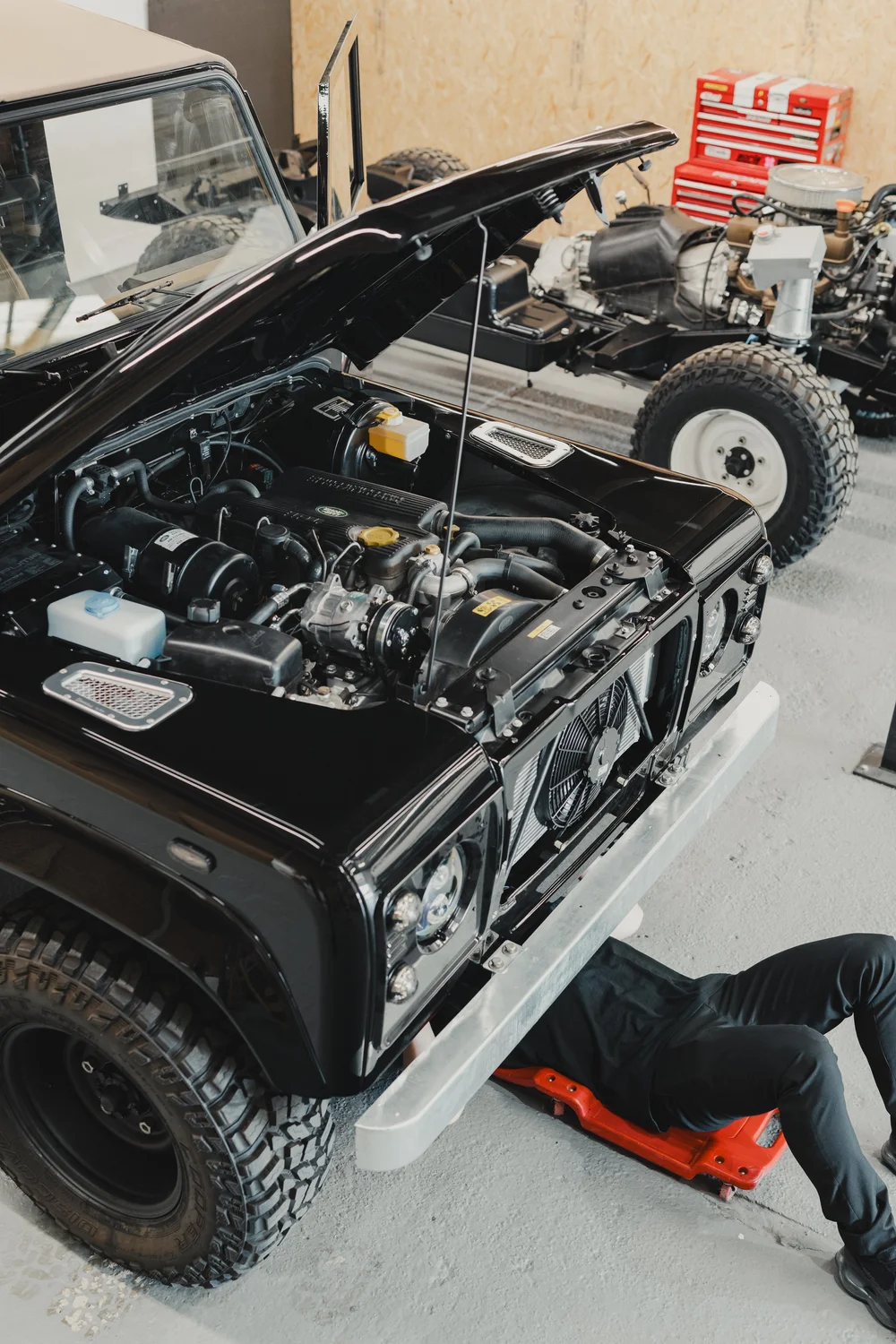
Defender Engine Options
Diesel, petrol, V8, or electric. Every Land Rover Defender engine we offer, and how to choose the right one for your build.
Drivetrain
Every engine option is matched to the transmission, cooling, braking, and suspension as a complete system. The right choice depends on how you plan to use the vehicle.
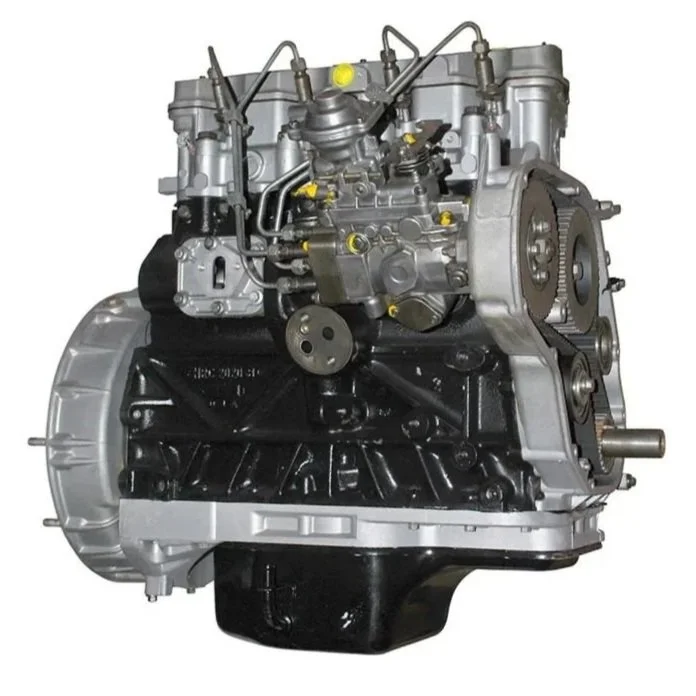
200 TDi
The 200 TDi is a 2.5-liter four-cylinder turbodiesel and one of the earliest turbocharged engines fitted to the Defender. Known for its mechanical simplicity and durability, it is a direct-injection engine with a reputation for running reliably in harsh conditions. Shoreline 200 TDi engines are fully rebuilt and tuned for dependable, everyday performance. A straightforward engine for clients who want the original diesel character at its most honest.
Manual transmission. Automatic optional.
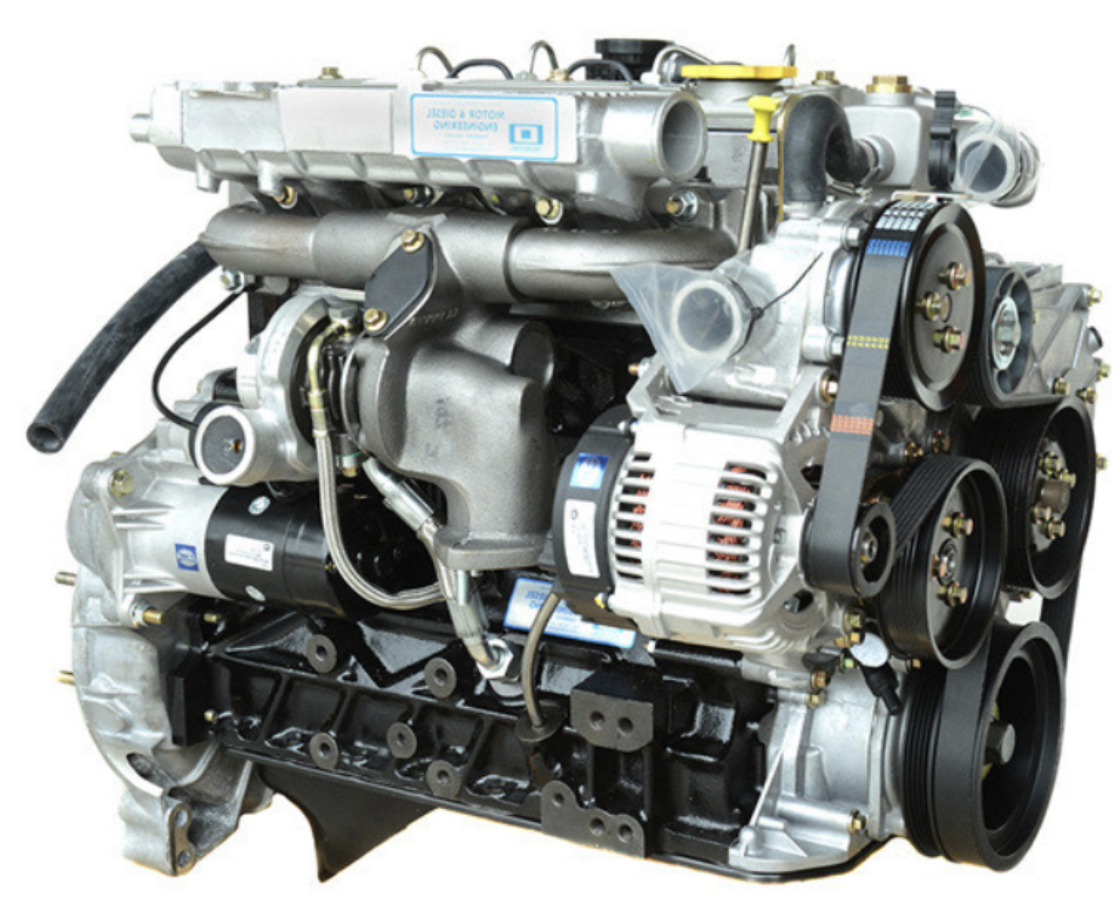
300 TDi
The 300 TDi is a 2.5-liter four-cylinder turbodiesel and the most popular classic Defender engine. Mechanical simplicity, direct injection, and intercooling give it good fuel efficiency and reliable performance, particularly in off-road and overland use. Shoreline 300 TDi engines are rebuilt with our in-house tuning pack and increased to 2.8L for improved torque and real-world capability. The go-to engine for Heritage builds. Compare the 300 TDi vs TD5.
Manual transmission. Automatic optional.
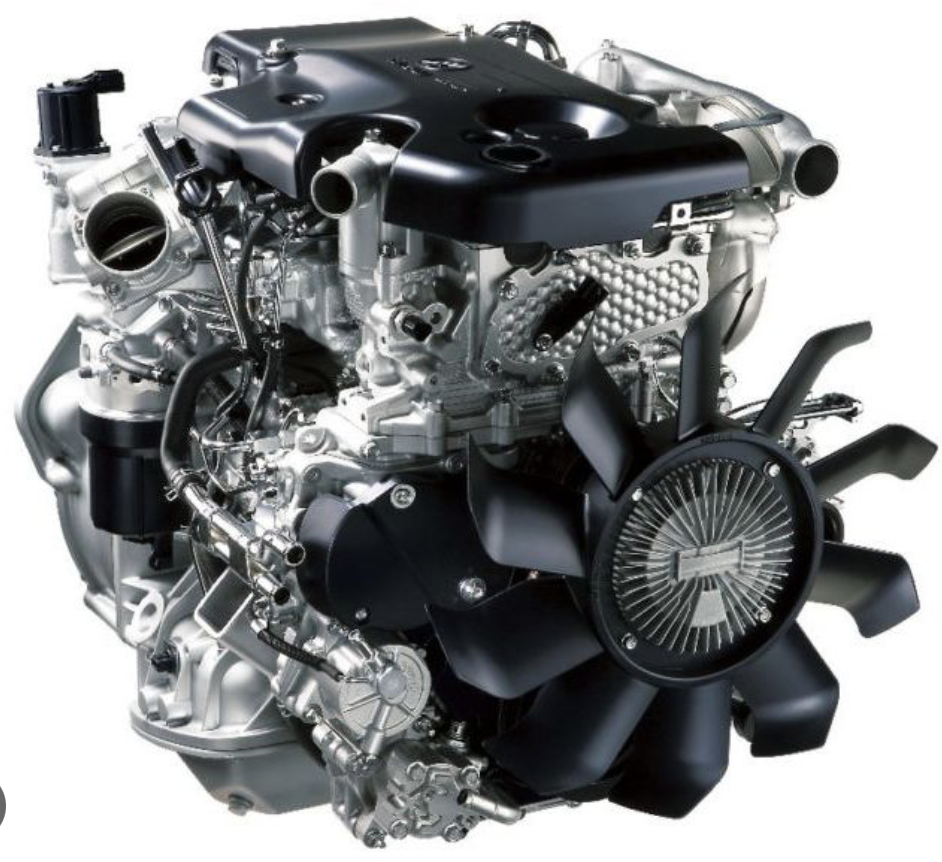
TD5
The TD5 is a 2.5-liter five-cylinder turbodiesel known for its durability and off-road performance. It introduced electronic management systems to the Defender, including fly-by-wire throttle, which improved efficiency and reliability over the earlier mechanical engines. Shoreline TD5 engines are rebuilt and tuned with a stage 2 performance package for excellent real-world power delivery. A refined diesel with more mid-range pull than the 300 TDi. Read our 300 TDi vs TD5 comparison.
Manual transmission. Automatic optional.
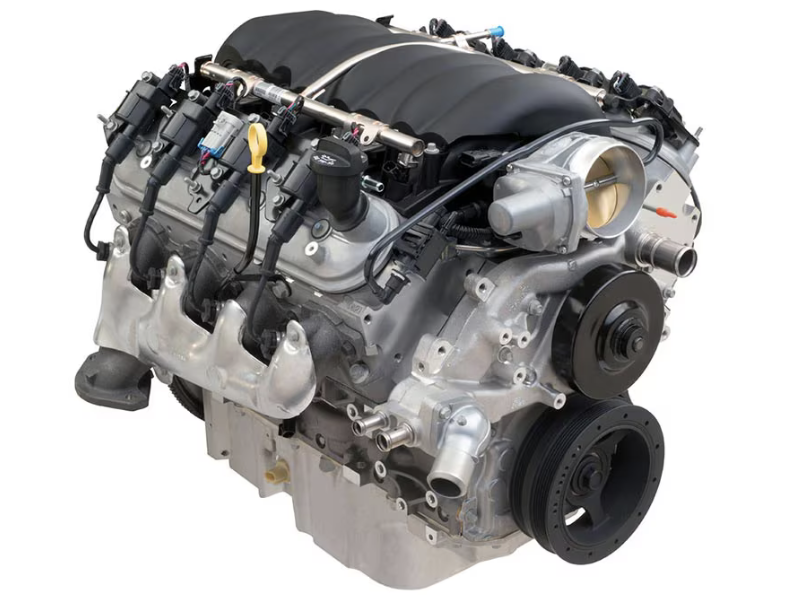
LS3 V8
The GM LS3 is a 6.2-liter naturally aspirated V8 producing over 430 horsepower and more than 540 Nm of torque. Paired with a 6-speed automatic gearbox matched to the engine through an intelligent control module, the LS3 transforms the Defender into a vehicle that cruises comfortably at highway speeds with power in reserve. The most popular engine for Shoreline restomod builds and the one most US-based clients choose. CARB-compliant with the E-ROD package for 50-state registration. Read the full Defender V8 LS3 swap guide.
6-speed automatic. Manual optional.
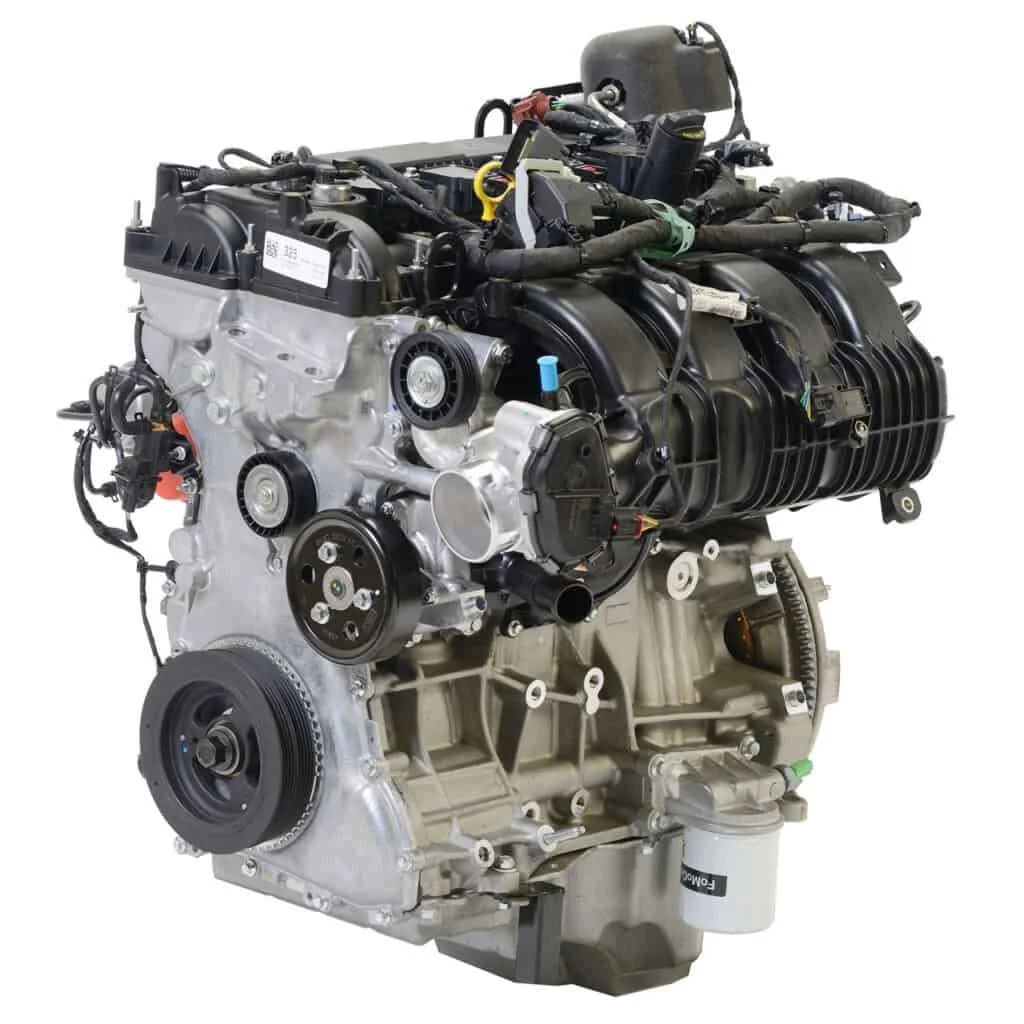
Ford 2.3L EcoBoost
The Ford 2.3-liter EcoBoost is a turbocharged four-cylinder petrol engine producing approximately 310 horsepower. It offers a strong balance between modern performance and fuel efficiency, sitting between the classic diesels and the LS3 V8 in both power output and running costs. Compact and lightweight, it fits well in the Defender engine bay and pairs with a modern automatic transmission. A good option for clients who want petrol power without the fuel consumption of a full V8.
Automatic transmission.

Electric
Electric power redefines what a Defender can be. Instant torque, near-silent operation, and zero local emissions. Whether using a Hyper9-based system for simplicity and lightness or a Tesla Model 3 drive unit for 300 horsepower and long-range touring, the experience is different but unmistakably Defender. A commanding driving position, a connection to the surroundings, and the knowledge you are shaping the next chapter of its story.
Single-speed reduction drive.
Engine FAQ
A diesel Defender engine, such as a 300 TDi or TD5, offers better fuel efficiency, more low-end torque, and the mechanical character of the original vehicle. A gas engine, such as the LS3 V8 or Ford EcoBoost, delivers more horsepower, smoother acceleration, and easier highway cruising. Diesel suits Heritage builds and clients who want the classic feel. Gas suits restomod builds and clients who want modern performance.
For daily driving, particularly in the US, the LS3 V8 paired with a 6-speed automatic transmission is the most popular choice. It provides 430 horsepower, smooth acceleration, and the reliability to handle highway commuting and city traffic every day. For lighter daily use or shorter distances, the Ford 2.3L EcoBoost offers a good balance of performance and fuel economy.
Neither is objectively better. It depends on how you plan to use the vehicle. Diesel is better for fuel economy, off-road use, and preserving the original Defender character. Gas is better for highway performance, daily commuting, and clients who want a restomod Defender that drives like a modern vehicle. The 300 TDi is the most popular diesel. The LS3 V8 is the most popular gas option.
The 300 TDi is a 2.5-liter four-cylinder turbodiesel that was fitted to Land Rover Defenders from 1994 to 1998. TDi stands for Turbocharged Direct Injection. It is known for mechanical simplicity, good fuel economy, and reliable performance. Shoreline rebuilds the 300 TDi with an in-house tuning pack and increases capacity to 2.8L for improved torque.
TD5 stands for Turbocharged Diesel, 5-cylinder. It is a 2.5-liter five-cylinder turbodiesel engine that replaced the 300 TDi in 1998 and was fitted to Defenders through 2007. The TD5 engine introduced electronic fuel injection and fly-by-wire throttle, making it smoother and more efficient than the earlier mechanical diesels.
An LS3 Defender is a classic Land Rover Defender fitted with a GM LS3 6.2-liter V8 engine. The LS3 produces over 430 horsepower and is paired with a modern automatic transmission, upgraded cooling, and performance brakes. It is the most popular engine swap for Defender restomod builds and is CARB-compliant for registration in all 50 US states when fitted with the E-ROD package.
Yes. Shoreline builds are available with either manual or automatic transmission depending on the engine. The LS3 V8 and Ford EcoBoost are typically paired with a modern automatic. The 300 TDi, TD5, and 200 TDi come standard with a manual gearbox, with an automatic transmission available as an option on each. The Land Rover Defender automatic transmission option is the most popular choice for daily-driver builds.
Yes. Shoreline offers EV Defender conversions using either a Hyper9 motor for lighter, shorter-range builds or a Tesla Model 3 drive unit for up to 300 horsepower and 250 to 300 miles of real-world range. The electric conversion includes a custom battery pack, new wiring, electric power steering, regenerative braking, and CCS fast charging. The vehicle retains its classic exterior and gains a near-silent, zero-emissions drivetrain.
Diesel engines use compression ignition and have no spark plugs. They produce more torque at lower RPM and are generally more fuel efficient. Gas (petrol) engines use spark ignition, rev higher, and typically produce more horsepower. In a Defender, diesel engines sound distinctively different at idle, with a characteristic clatter that gas engines do not have. The choice between gas and diesel comes down to how you want the vehicle to feel and how you plan to use it.
All six engine options are available on both the Defender 90 and Defender 110 platforms. The 200 TDi, 300 TDi, TD5, LS3 V8, Ford EcoBoost, and electric conversion can all be fitted to either wheelbase. The engine recommendation depends on the build edition and how you plan to use the vehicle. The LS3 V8 is the most common choice for the Defender 90 due to its lighter weight. The TD5 and 300 TDi are popular choices for the Defender 110 in Heritage and overland configurations.