

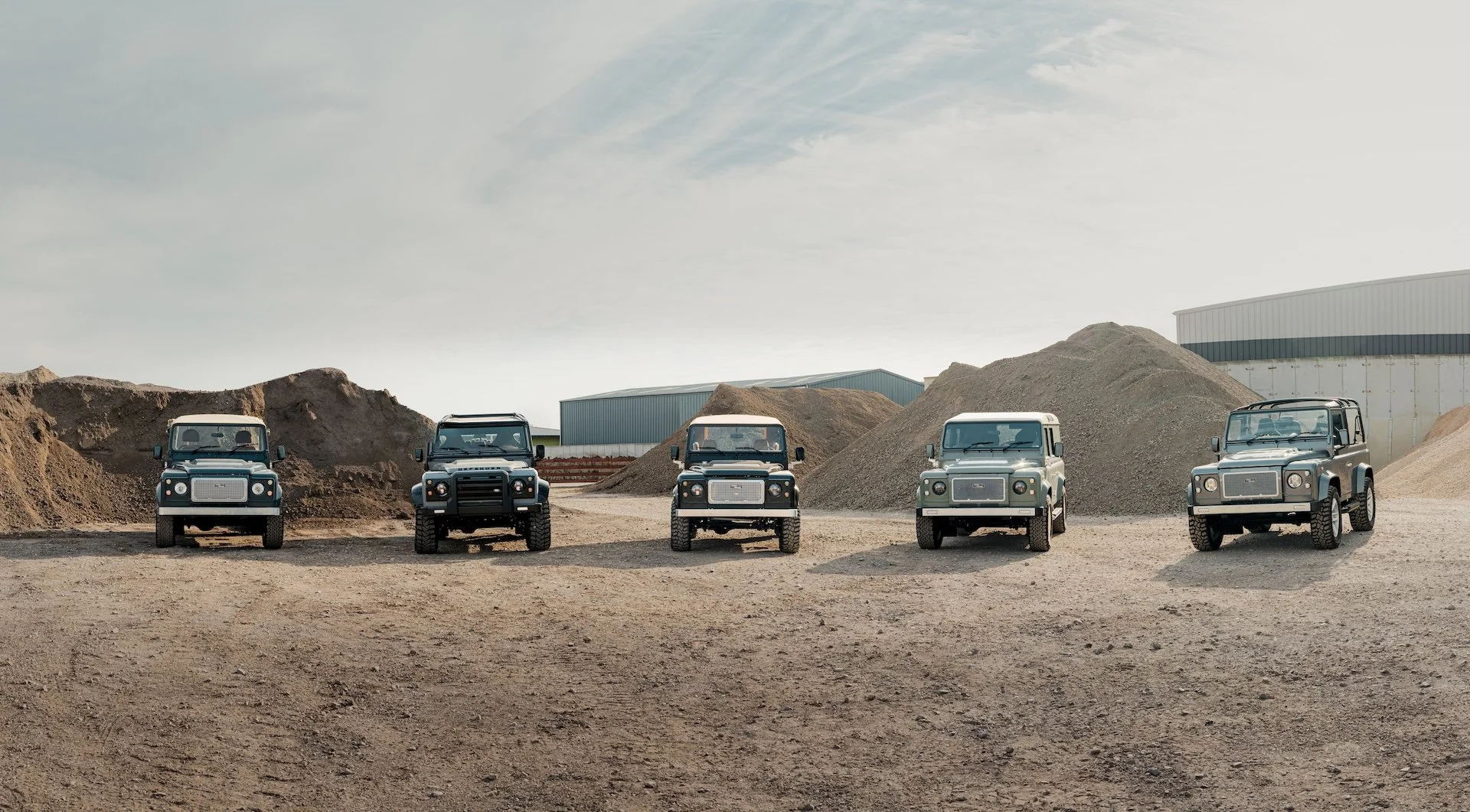
If you have looked at the price of a classic Land Rover Defender recently, the numbers probably surprised you. A vehicle that sold for a few thousand pounds in the 1990s now commands tens of thousands, and a properly restored or custom-built Defender can reach well into six figures. The question is fair: why are Land Rover Defenders so expensive?
The answer is not one thing. It is a combination of factors that have pushed the classic Defender market to where it is today. Here is what is actually driving the price.
The short answer
Classic Land Rover Defenders are expensive due to a permanently fixed supply after production ended in 2016, a surge in global lifestyle demand, the scarcity of clean donor vehicles, and the labor-intensive nature of a proper ground-up restoration.
They stopped making them
This is the most straightforward reason. Land Rover produced the Defender for over 30 years, from 1983 to 2016. When production ended, the supply became fixed. No more classic Defenders will ever be built. Every year, the number of surviving vehicles gets smaller as some are scrapped, damaged beyond repair, or left to rust.
The new Land Rover Defender that went on sale in 2020 shares the name but not much else. It is a modern SUV built on a unibody platform. The classic Defender, the one with the aluminum body panels, the boxy silhouette, and the bolt-together construction, is gone. What remains is what was already built, and the market has responded accordingly.
Whether you are looking at a Defender 90, a Defender 110, or a Defender 130, the same principle applies. Fixed supply, growing demand, rising prices.
Demand has grown far beyond the original market
The classic Land Rover Defender was originally a working vehicle. It was bought by farmers, the military, utility companies, and aid organizations. It was designed for function, not fashion.
That changed over the last 15 years. The Defender became a lifestyle vehicle. It appeared in films, including the James Bond franchise. It became popular in cities like Miami, Los Angeles, and London as a statement vehicle. Collectors who had never set foot on a farm started buying them. The audience for the vehicle expanded from a niche group of enthusiasts to a global market of buyers who wanted the look, the presence, and the character of a classic 4x4 Defender.
This shift in demand is what moved prices from affordable to premium. When a vehicle that was built in limited numbers is wanted by a much larger group of buyers, the price reflects it.
The condition of surviving vehicles varies enormously
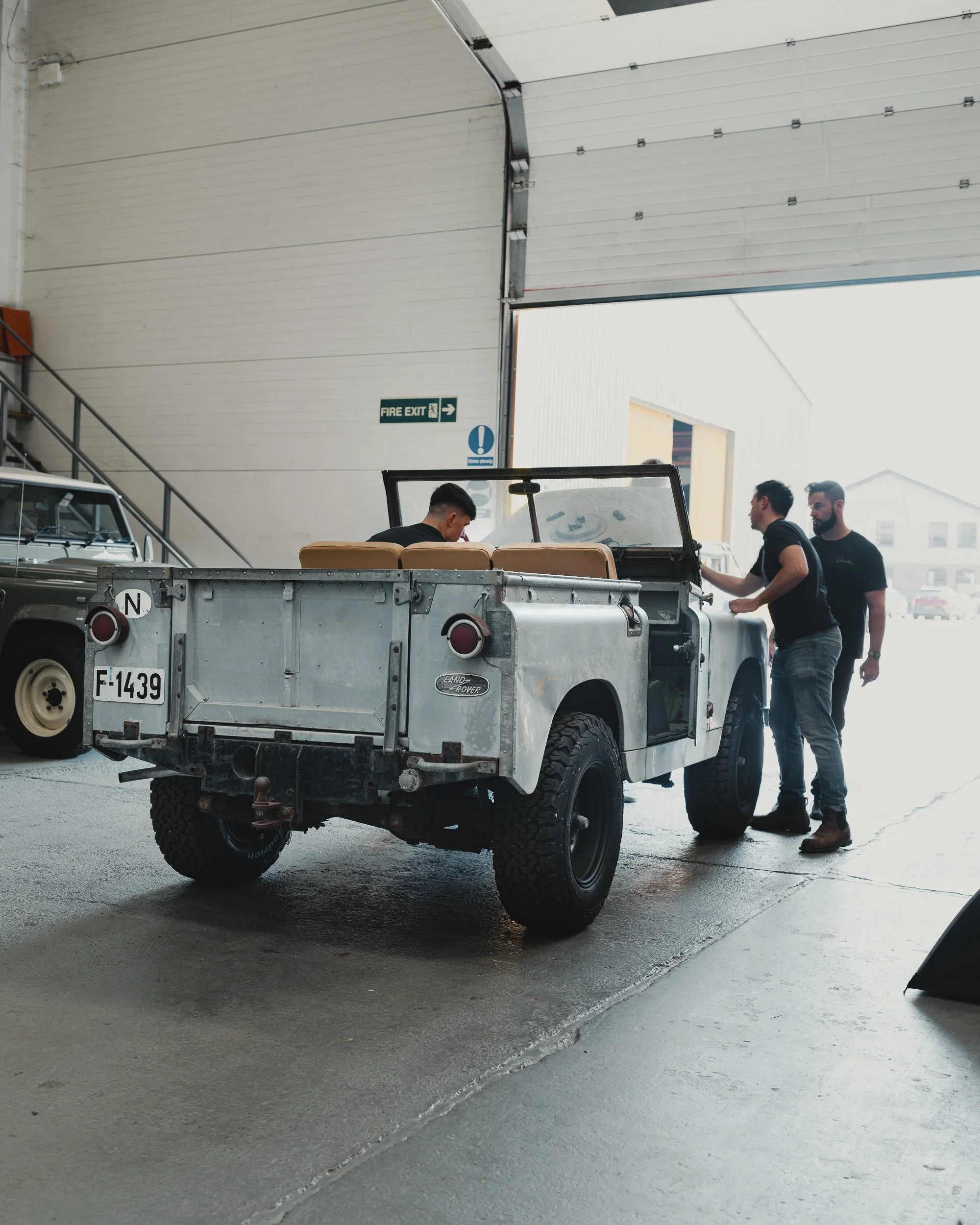
Not all old Land Rovers are equal. A vintage Land Rover Defender that has been stored in a dry climate with regular maintenance is a very different vehicle from one that spent 30 years on a farm in coastal weather.
Most surviving Defenders fall into the second category. They were work vehicles. They were used hard, maintained inconsistently, and exposed to conditions that accelerate corrosion and wear. Finding a classic Defender with a solid chassis, clean metalwork, and a genuine service history is difficult. Finding one that does not need significant work is rare.
This is where the price starts to climb. A Defender in good original condition commands a premium because there are so few of them. A Defender in poor condition is cheaper to buy but expensive to restore. Either way, the total cost of ownership is higher than the purchase price suggests.
Restoration and custom builds are labor-intensive
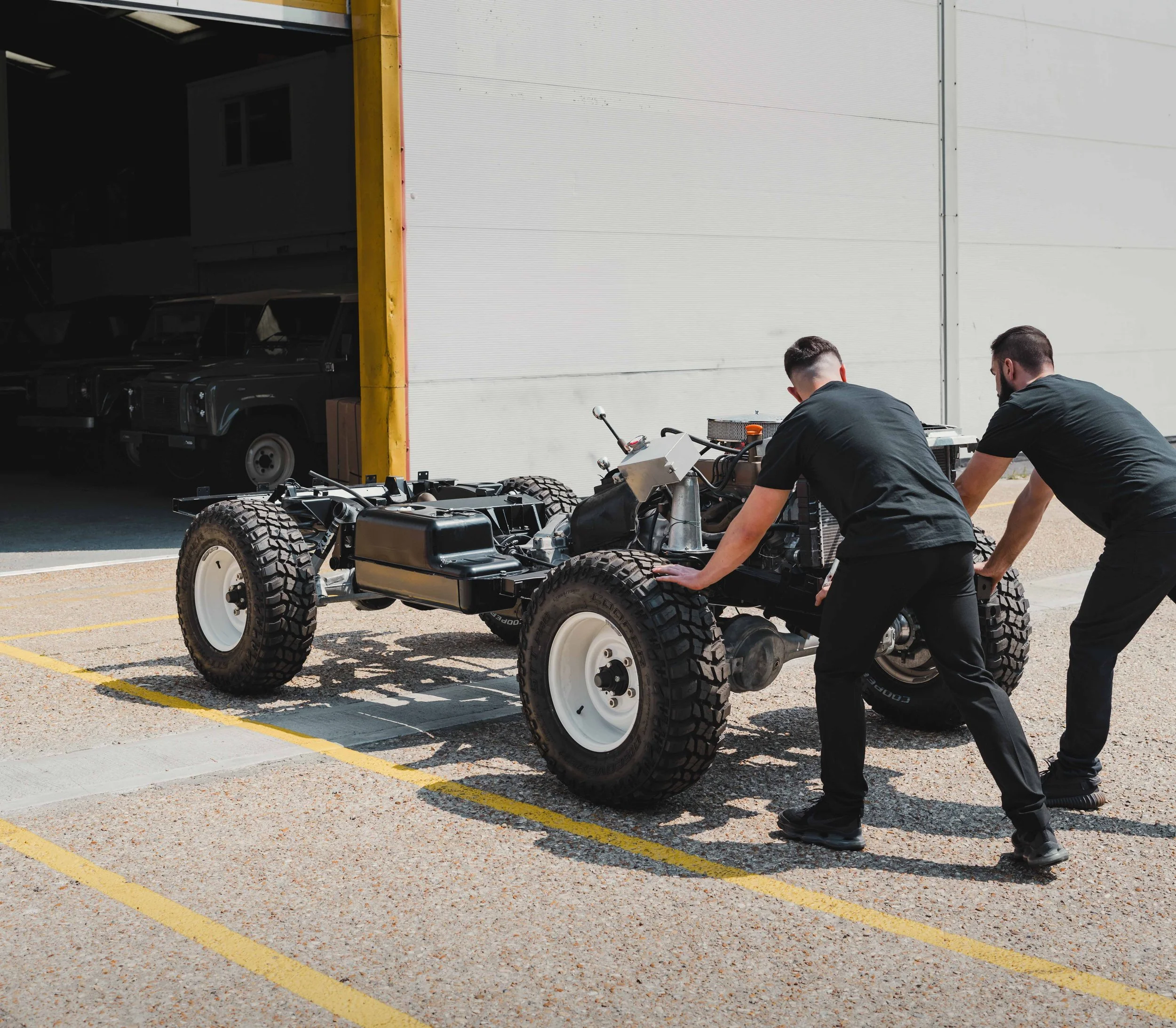
A properly restored or custom-built Defender is not a quick job. At Shoreline, a ground-up build takes 4 to 8 months. The vehicle is stripped to a bare chassis. Every mechanical system is rebuilt or replaced. The body is prepared and painted to Range Rover standards. The interior is built by hand. The vehicle is tested, inspected, and road-tested for 500 miles before delivery.
That level of work costs what it costs. The chassis needs to be restored and treated for corrosion. The entire wiring loom needs to be replaced. Brakes, suspension, axles, differentials, and cooling systems are all rebuilt or replaced with new components. The engine is either fully rebuilt or swapped for a modern unit like the LS3 V8. The paint process follows multiple stages with the same tolerances as a modern Range Rover.
None of this can be rushed. A Defender 110 Station Wagon, a Defender 90 soft top, or a Defender 130 all require the same standard of work. The price of a custom Defender reflects the hundreds of hours of skilled labor that go into making it right.
The right donor vehicles are getting harder to find
A good build starts with a good donor. Not every old Land Rover is worth building from. The condition of the chassis, the body, and the core metalwork determines whether a vehicle is a viable starting platform or a parts source.
Good donors are getting scarce. The best ones have already been bought by builders and collectors. The ones that remain are often in worse condition, which means more work is needed before the build can even begin. Sourcing a genuine classic Defender with the right year, the right wheelbase, and the right starting condition takes time and access to the right networks.
This scarcity feeds directly into the price. When the raw material costs more and takes longer to find, the finished vehicle reflects that.
The market treats them differently from modern vehicles
A new luxury SUV loses a significant percentage of its value in the first few years. That is normal depreciation for a mass-produced vehicle.
A vintage Land Rover Defender does not follow the same pattern. The classic Defender market has shown consistent value growth over the last decade, and properly built vehicles with full documentation tend to hold their value well. Some appreciate.
The factors that protect value are specific: a restored chassis, a ground-up build from a reputable builder, Range Rover-standard paintwork, full photographic documentation of the build process, and a clear provenance. A Defender with all of these is treated by the market as a collectible, not a depreciating vehicle.
This is not a guarantee. We are not financial advisors and will not make promises about future values. But the trend over the last 10 years has been clear, and it shows no sign of reversing.
The classic Defender offers something modern vehicles do not
Price is ultimately driven by what people are willing to pay, and people are willing to pay for the classic Defender because it delivers something that no modern vehicle can replicate.
The shape. The flat panels, the exposed rivets, the boxy silhouette that was designed for function and became iconic because of it. There is no modern vehicle that looks like a classic Defender. The Range Rover Defender shares the name but not the design language.
The driving experience. A classic Defender, particularly one rebuilt as a restomod with an LS3 V8 or a properly rebuilt diesel, offers a mechanical, connected driving experience that modern vehicles have engineered out. You feel the road. You are involved in the drive.
The presence. A classic Land Rover Defender on the road stops people. It does not blend in. It does not look like anything else in traffic. That presence is part of what people are paying for, and it is something that cannot be manufactured by a modern production line.
The personalization. A custom Defender is built to one specification. The owner chooses the color, the interior, the engine, the wheels, and every finishing detail. No two are the same. That level of individuality is not available on a vehicle you order from a dealership configurator.

What the price actually buys you
The cost of a classic Land Rover Defender, whether used, restored, or custom-built, reflects a combination of scarcity, demand, build quality, and the time involved in doing the work properly.
At Shoreline, the price of a custom Defender covers a ground-up build from a restored chassis, Range Rover-standard paintwork, a hand-built interior, a fully rebuilt or new drivetrain, a 500-mile road test, full photographic documentation, and a 12-month warranty. Every vehicle goes through our nine-stage build process and is delivered worldwide from our workshops in the UK and Miami.
The classic Defender is expensive because it is rare, because the work is real, and because there is nothing else like it on the road. That has not changed, and the market reflects it.
Considering a custom Defender?
Tell us what you have in mind. We will walk you through the options, the spec, and the timeline.
GET IN TOUCH