

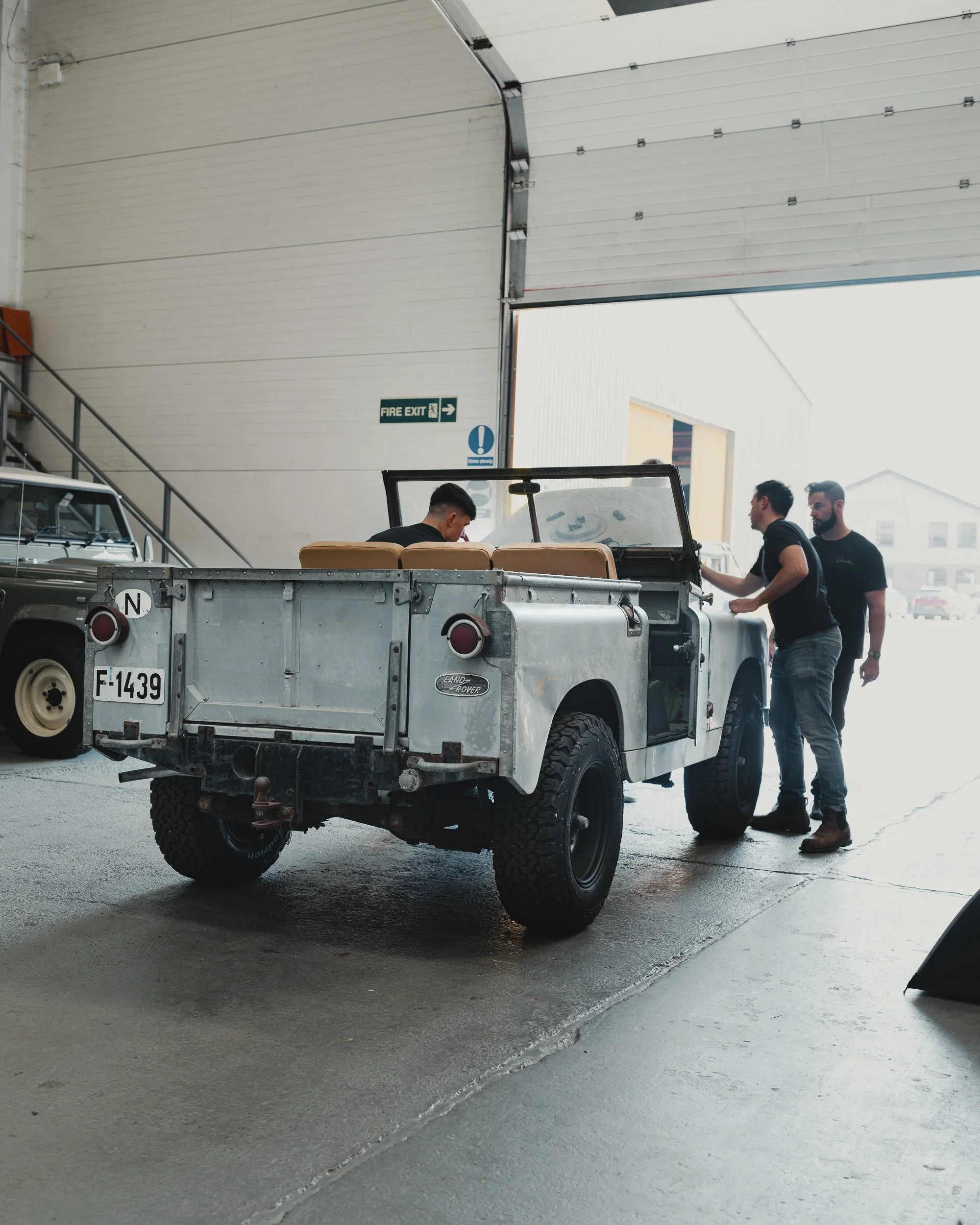
The classic Land Rover Defender was in production for nearly 70 years. From the original Series I in 1948 through to the final Defender rolling off the line in Solihull in January 2016, it was one of the longest-running vehicle production runs in automotive history. So why did Land Rover stop making it?
The answer involves regulation, cost, and a design that was never intended to last this long. Here is what actually happened, and what it means for the classic Defender market today.
The short answer
The classic Land Rover Defender was discontinued in 2016 because it could no longer meet modern safety and emissions regulations without a complete redesign. Rising manufacturing costs, an aging production process, and tightening global standards made it unviable to continue building the original vehicle.
The design was 70 years old
The classic Defender's fundamental architecture traces back to the late 1940s. The ladder-frame chassis, the aluminum body panels bolted to a steel frame, the flat windscreen, the mechanical simplicity. These were design decisions made in post-war Britain for a vehicle that needed to be built cheaply, repaired easily, and used in conditions where nothing else would survive.
That design worked for decades. It was updated incrementally, with new engines, improved interiors, and revised suspension, but the core structure never changed. By the 2010s, the Defender was still fundamentally the same vehicle it had been in the 1980s. The rest of the automotive industry had moved on. The Defender had not.
This was part of its appeal. It is also what made it impossible to keep building.
Safety regulations caught up
The most significant factor in the Defender's discontinuation was safety legislation. European regulations, specifically the Euro NCAP standards and EU pedestrian impact requirements, tightened progressively through the 2000s and 2010s. The classic Defender could not meet them.
The flat front end, the upright windscreen, and the rigid body structure that made the Defender so recognizable were exactly the things that modern pedestrian safety standards were designed to prevent. Meeting these requirements would have meant redesigning the front of the vehicle, adding crumple zones, and integrating electronic safety systems into a chassis that predated computers entirely.
Airbags, electronic stability control, advanced braking systems, and impact absorption zones are standard on modern vehicles. Retrofitting them into a 1940s chassis architecture was not practical. The cost of re-engineering the Defender to pass modern crash tests would have been enormous, and the result would not have been the same vehicle.
Emissions standards tightened
Alongside safety, emissions regulations played a significant role. The Euro 6 emissions standard, which came into effect in 2014, required levels of exhaust cleanliness that the Defender's existing engine and exhaust systems could not achieve without substantial modification.
Land Rover fitted the 2.2-liter Ford-sourced diesel to the Defender in its final years, which helped, but the vehicle's overall emissions profile, including fuel economy and CO2 output, was not competitive with modern SUVs. Bringing it fully into compliance with evolving global emissions standards would have required a new powertrain, new exhaust treatment systems, and extensive re-certification in every market the Defender was sold.
For a vehicle that sold in relatively low volumes compared to the Range Rover or Discovery, the investment was difficult to justify.
Manufacturing costs were unsustainable
The Defender was built differently from every other vehicle in the Land Rover range. The aluminum body panels were hand-finished. The assembly process was labor-intensive. The production line at Solihull had been updated over the years but was still fundamentally a low-volume, high-touch operation.
Modern vehicle manufacturing relies on automation, robotics, and high-volume production to keep costs down. The Defender's build process did not lend itself to that model. Each vehicle required more hands-on time, more specialized skills, and more manual fitting than a modern unibody SUV.
As labor costs rose and Land Rover invested heavily in the new aluminum-intensive platforms for the Range Rover and Discovery, the old Defender production line became increasingly expensive to maintain relative to the revenue it generated. The vehicle was profitable, but not at the margins that a modern automotive business requires.
The US market was already gone
Land Rover stopped selling the Defender in the United States in 1997. US federal safety and emissions standards, specifically the requirements for airbags, crash protection, and catalytic converter performance, made it impractical to continue certifying the vehicle for the American market.
This matters because the US is the largest luxury vehicle market in the world. Losing access to it meant that the classic Defender's addressable market was significantly smaller than it could have been. By the time production ended in 2016, the Defender was primarily sold in the UK, Europe, Africa, and parts of Asia and South America.
The irony is that the US is now one of the strongest markets for restored and custom-built classic Defenders, thanks to the 25-year import exemption that allows vehicles older than 25 years to bypass federal safety and emissions standards. The demand was always there. The vehicle just could not be sold new.

Land Rover chose to start again
Rather than re-engineer the classic Defender to meet modern standards, Land Rover chose to design a completely new vehicle. The new Defender, which launched in 2020, shares the name but almost nothing else with the original. It is built on a modern aluminum monocoque platform, uses modern engines, and is packed with electronic systems.
The new Range Rover Defender is a capable and well-regarded vehicle. But it is a modern SUV, not a continuation of the classic. The two vehicles look different, feel different, and attract different buyers. The discontinuation of the classic was the end of a lineage, not a transition.
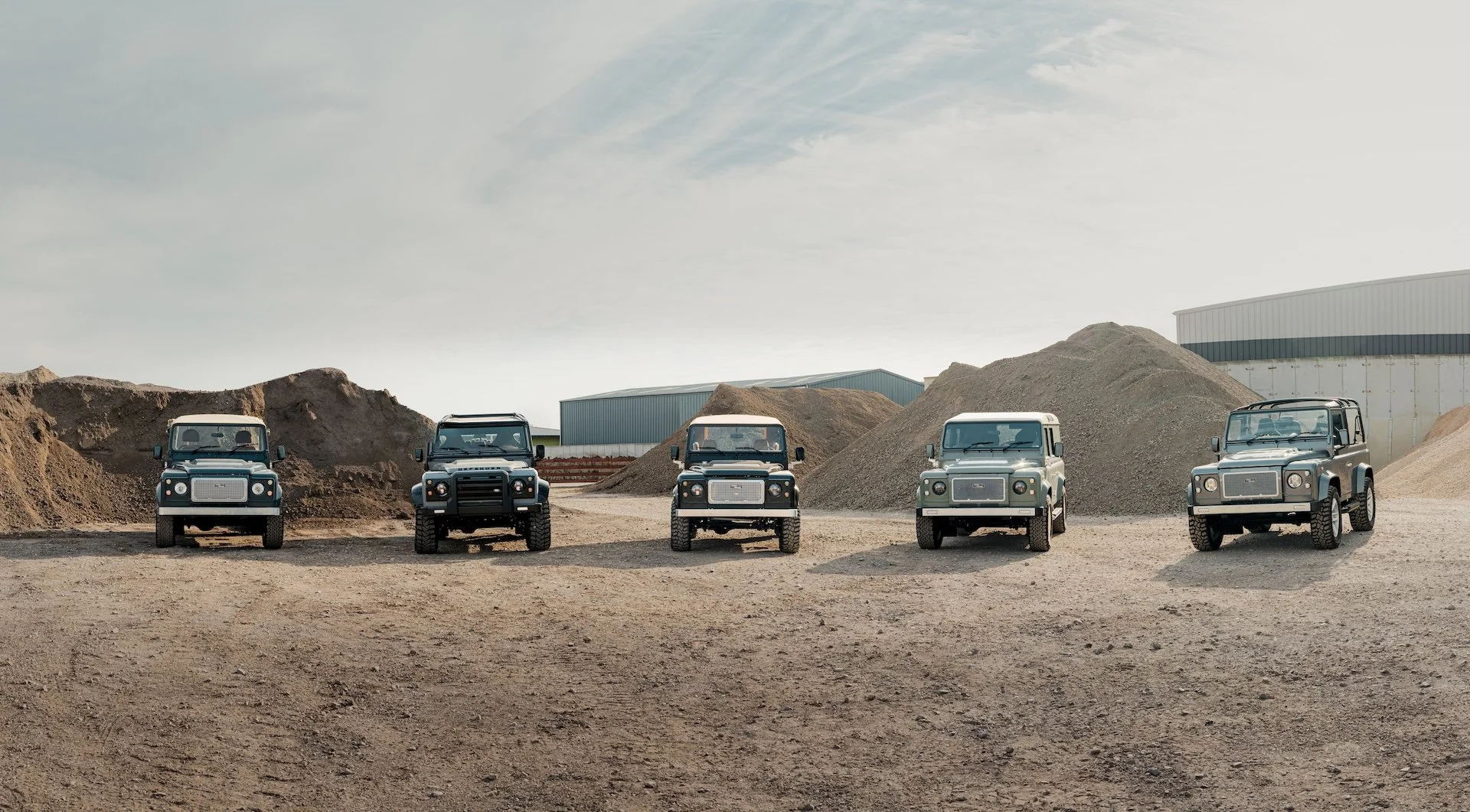
Land Rover marked the end with a series of special Heritage editions in the final production year. The last Defender built at Solihull was a Heritage-specification Defender 90 soft top, finished on January 29, 2016. It was the end of a production run that started in 1948.
What the discontinuation means for the market
The end of production is the single biggest factor behind the classic Defender's current market value. When Land Rover stopped building them, the supply became permanently fixed. Every year, the number of surviving vehicles decreases as some are scrapped, damaged, or left to deteriorate. The pool of viable donor vehicles for restoration gets smaller.
At the same time, demand has grown. The classic Defender's reputation, its presence on screen, and its association with a particular kind of lifestyle have expanded the buyer base from agricultural users and military enthusiasts to a global market of collectors, daily drivers, and custom build clients.
The result is straightforward economics. Fixed supply, rising demand, climbing values. A classic Defender 90 or Defender 110 in good condition is worth significantly more today than it was when production ended. A properly restored or custom-built Defender, with a restored chassis, modern drivetrain, hand-finished interior, and full documentation, holds its value in a way that few modern vehicles can match.
The classic Land Rover Defender was discontinued because regulations and economics made it impossible to keep building. But the vehicle itself, the shape, the character, the driving experience, has only become more desirable since it stopped being available new. That is what drives the market today, and it is why builders like Shoreline exist.
What Shoreline does with what is left
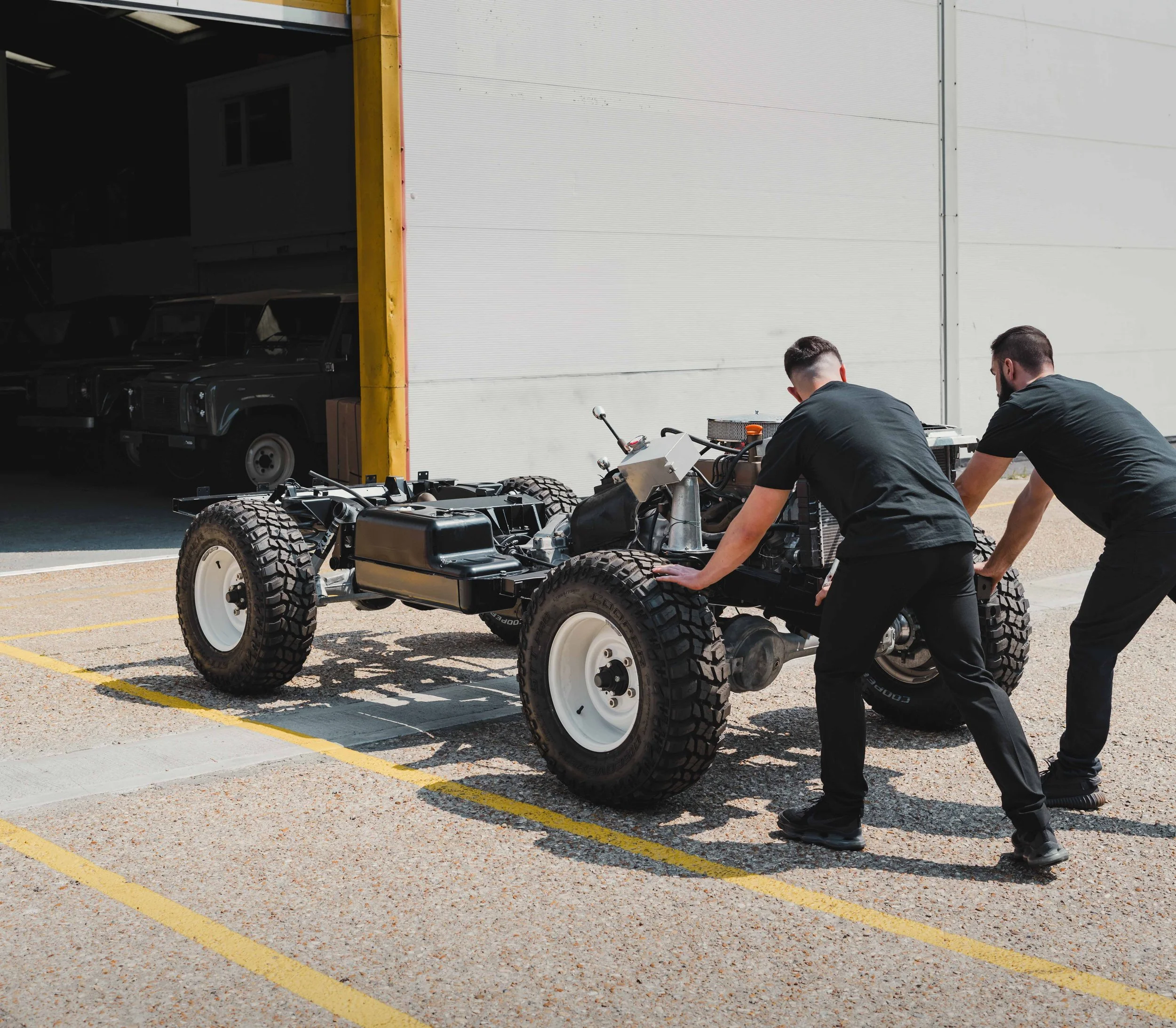
At Shoreline, every vehicle we build starts with a classic Defender that was manufactured before production ended. We source genuine donor vehicles, strip them to the bare chassis, and rebuild them from the ground up with modern systems, modern reliability, and the same character that made the original special.
The classic Defender cannot be built new. But it can be rebuilt properly. A restored chassis, a new wiring loom, a rebuilt or upgraded engine, Range Rover-standard paintwork, a hand-stitched interior, a 500-mile road test, and a 12-month warranty. That is what a Shoreline build delivers.
The Defender was discontinued. What it represents was not.
Considering a custom Defender?
Tell us what you have in mind. We will walk you through the options, the spec, and the timeline.
GET IN TOUCH