

Diesel or V8: Choosing the Right Engine for Your Custom Defender
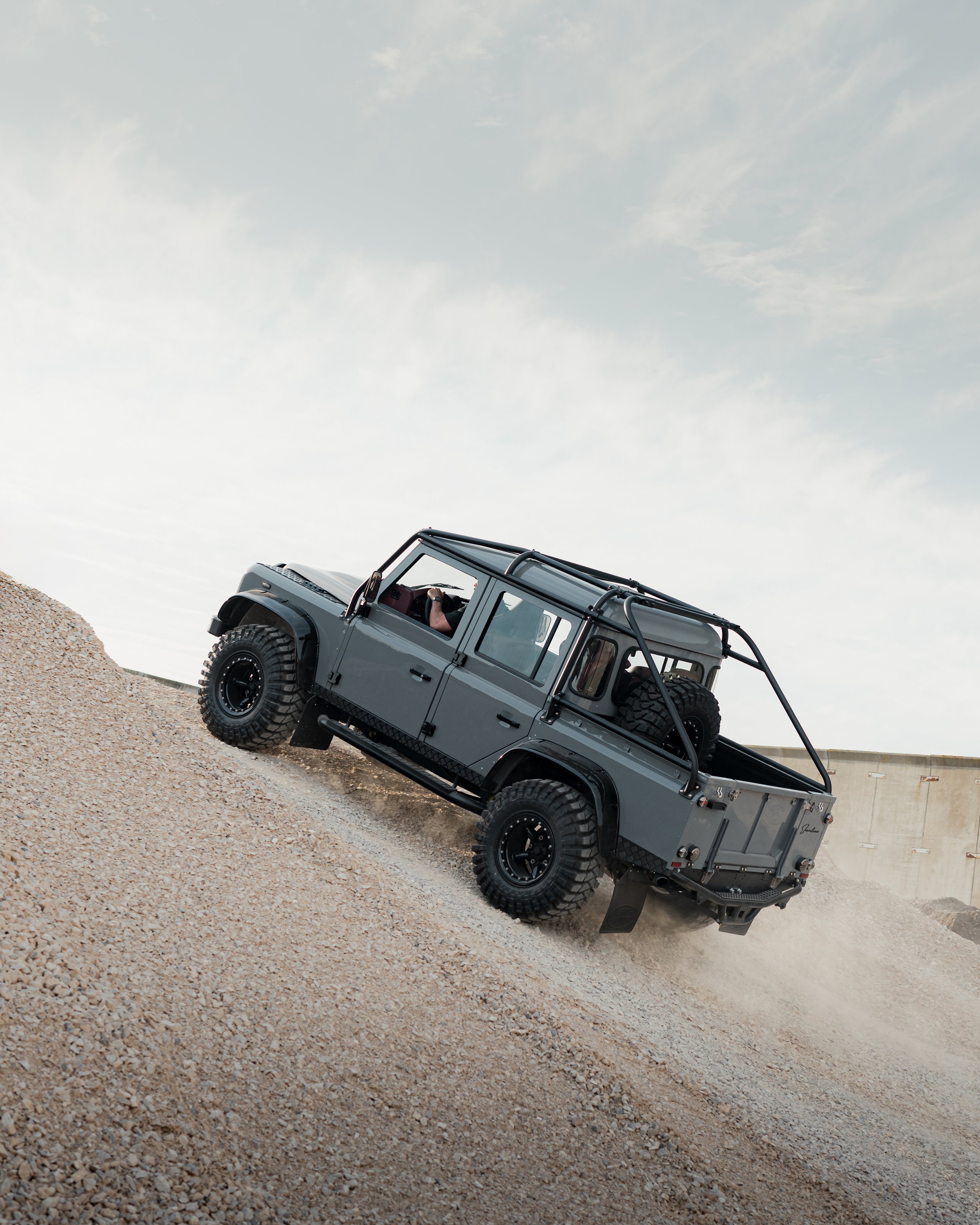
The engine is the decision that defines the character of a custom Land Rover Defender more than any other choice in the build. It determines how the vehicle sounds, how it accelerates, how it feels on the highway, what it costs to run, and how it holds up over time.
At Shoreline, we build with three engine options: a rebuilt 300TDi diesel, a rebuilt TD5 diesel, and a GM LS3 V8. Each one suits a different kind of build and a different kind of driver.
If you are weighing gas vs diesel for your custom Defender, here is an honest breakdown of what each option delivers and where it falls short.
The rebuilt 300TDi
The 300TDi is the engine most closely associated with the classic Land Rover Defender. It is a 2.5-liter four-cylinder turbodiesel that was fitted to Defenders from 1994 to 1998. It is mechanically simple, well understood, and has a distinctive character that diesel enthusiasts value.
Rebuilt properly, the 300TDi is a reliable engine. It produces around 110 horsepower, which is modest by modern standards but adequate for the kind of driving the Defender was originally designed for. It is best suited to lower speeds, shorter distances, and a driving style that is more deliberate than urgent.
Fuel economy is good. The 300TDi is efficient for its size and delivers reasonable range from a tank. For clients building a Heritage edition Defender 90 or Defender 110 who want the vehicle to feel the way it originally did, the 300TDi is the natural choice.
Where it falls short is on the highway. Merging into fast-moving traffic, overtaking, and sustained high-speed cruising are not what this engine was designed for. In the UK, where speed limits are lower and distances shorter, it works well. On US interstates, it can feel underpowered.
Best for: Heritage builds, weekend driving, rural use, clients who want the classic diesel character and mechanical simplicity.
The rebuilt TD5
The TD5 is the 300TDi's successor. It is a 2.5-liter five-cylinder turbodiesel that was fitted to Defenders from 1998 to 2007. It produces around 120 horsepower with noticeably more torque than the 300TDi, and it has electronic fuel injection rather than the mechanical system on the earlier engine.
The TD5 is a smoother, more refined diesel. It has more mid-range pull, which makes it more comfortable at highway speeds and more capable under load. It is still not fast by modern standards, but it is meaningfully better on the road than the 300TDi.
The trade-off is complexity. The electronic injection system makes the TD5 slightly more involved to maintain than the purely mechanical 300TDi. Rebuilt properly, it is just as reliable, but it requires a builder who understands the system.
The TD5 suits clients who want diesel character with a bit more capability. It is the engine we recommend for Defender 110 builds that will see a mix of road and trail use, or for clients who want more than the 300TDi offers without moving to a V8.
Best for: Mixed-use builds, clients who want diesel but need more highway ability, Defender 110 overland configurations.
The LS3 V8
The LS3 is a 6.2-liter naturally aspirated V8 producing over 430 horsepower. It is the most popular engine choice for a Defender restomod at Shoreline, and it is the engine that transforms the driving experience most dramatically.
The difference between a diesel Defender and an LS3 Defender is not subtle. Acceleration is immediate and smooth. Highway merging and overtaking require no planning. The vehicle cruises comfortably at 75 mph with power in reserve. Paired with a 6-speed or 8-speed automatic transmission, it makes a classic Land Rover Defender as easy to drive as a modern SUV.
The LS3 is one of the most reliable performance engines GM has produced. It is widely supported in the US. Any qualified mechanic can service it, and parts are readily available. For a custom Defender that will be used as a daily driver, this matters.
The trade-off is fuel consumption. The LS3 uses more fuel than either diesel option. It runs on standard gasoline, which is widely available, but economy is not its strength. For most clients, the driving experience outweighs the running cost. For clients who prioritize fuel efficiency, the diesel is the better choice.
The other consideration is character. The LS3 is a modern engine. It is smooth, powerful, and refined. It does not have the mechanical character or the distinctive sound of a rebuilt diesel. Some clients prefer that refinement. Others want the original diesel feel. Neither is wrong.
Best for: Daily driving, highway use, US-based builds, clients who want modern performance in a classic Defender, Villain and Modern edition builds.
How to choose
The difference between gas and diesel in a custom Defender build comes down to how you plan to use the vehicle and what you want the experience to feel like.
If you want the classic Defender character preserved, a rebuilt diesel is the right choice. The 300TDi for pure simplicity and heritage builds. The TD5 for a bit more capability and refinement.
If you want a classic Land Rover Defender that drives like a modern vehicle, the LS3 V8 is the right choice. It is the engine that makes a Defender work as a daily driver on US roads.
There is no objectively correct answer. The right Land Rover Defender engine depends on the build, the platform, and the person behind the wheel. A Defender 90 Heritage in Keswick Green with a 300TDi is a different vehicle from a Defender 110 Villain in Beluga Black with an LS3. Both are built to the same standard. Both are Shoreline Defenders. They just serve different purposes.
We walk every client through this decision during the design consultation. If you are not sure which direction to go, that is fine. That is what the conversation is for.
Where to start
Get in touch. Tell us how you plan to use the vehicle. We will recommend the right engine based on the build, the platform, and how you drive.
We will design a build around you.