

Choosing a Color for Your Custom Defender Build
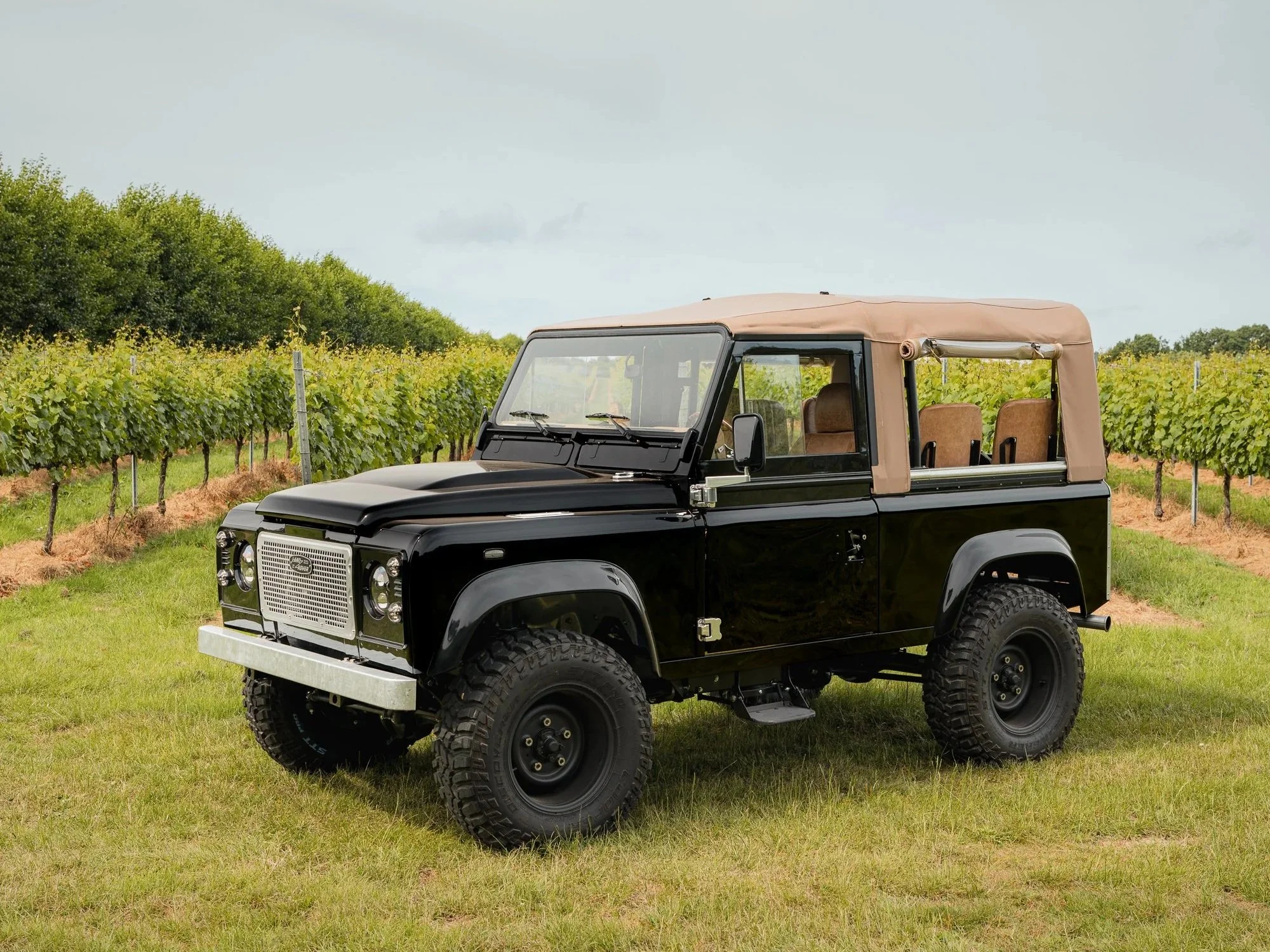
The color is one of the most personal decisions in a custom Defender build. It sets the tone for the entire vehicle. It determines how the Defender looks on the road, how the interior pairs with the exterior, and whether the build leans heritage or modern.
At Shoreline, we paint every vehicle to Range Rover standards using a multi-stage process. The color options are wide, but most clients narrow it down quickly once they see the build edition, the interior samples, and the look they want to achieve.
Here is how to think about it.
Heritage colors
These are the colors that Land Rover used on classic Defenders throughout the 1980s and 1990s. They carry history. They look period-correct. And they suit Heritage and Beach edition builds where the goal is a classic Land Rover Defender that looks like it belongs to the era it was built in.
Arles Blue. A bright, warm blue that has become one of the most popular colors in the classic Defender world. It is coastal without being loud. Pairs well with tan leather interiors and looks particularly good on a Defender 90 soft top.
Keswick Green. A deep, rich green that is closely associated with the original Land Rover identity. It is the classic expedition color. Works well on a Heritage Defender 110 with saddle brown leather.
Bahama Gold. A warm, sandy tone that sits between gold and beige. Less common than the greens and blues, which is part of its appeal. Suits heritage builds where the client wants something distinctive without being flashy.
Coniston Green. Lighter and brighter than Keswick. It has a military association and works well on stripped-back builds with steel wheels and minimal chrome.
Pastel Green. Softer and more contemporary than the traditional greens. Popular on Beach edition builds, especially paired with a canvas soft top and teak decking.
Shara Dust. A muted, earthy tone that looks restrained and understated. It works well on both Defender 90 and Defender 110 builds and pairs with almost any interior color.
These are starting points. We can match any original Land Rover color from the heritage palette, and we have access to the full range of period-correct references.
Modern and custom colors
Not every client wants a heritage finish. For Villain and Modern edition builds, the color palette shifts toward contemporary automotive finishes.
Beluga Black. A deep, glossy black that is the standard choice for the Villain edition. It gives the wide-body Defender 110 its aggressive presence. Pairs with black leather and contrast stitching.
Nardo Grey. A flat, satin grey that has become one of the most requested modern finishes across the automotive world. It looks striking on a Defender and works well in both gloss and satin.
Santorini Black. A solid black with a slightly different tone to Beluga. Popular for stealth builds where every piece of trim, badging, and hardware is blacked out to match.
Carpathian Grey. A darker grey with depth and warmth. More refined than Nardo, less stark than black. It suits Modern edition builds where the look is premium rather than aggressive.
Java Black. A deep, near-black tone with a subtle green or brown undertone depending on the light. It is more interesting than a standard black and less commonly seen.
We also work with custom color matching. If you have a specific shade from another manufacturer, a Porsche color, a Ferrari reference, or something from outside the automotive world entirely, we can match it. The paint process supports any color. The only requirement is that it works with the build.
How the paint process works
Paint is one of the areas where the gap between a Shoreline build and an average Defender restoration is most visible.
An original classic Land Rover Defender left the factory with significant variation in panel fit and a paint finish that was functional but not refined. Panel gaps were uneven. Orange peel in the paint was common. Soundproofing was minimal.
At Shoreline, the body is prepared before paint begins. Every panel is hand-aligned. Doors, wings, bonnet, tailgate. Panel gaps are checked to millimeter precision. The body is stripped, sanded, primed, and prepped through multiple stages before the color coat is applied.
The paint itself follows the same multi-stage process used on modern Range Rovers. Primer, color coat, clear coat. Each stage is inspected before the next is applied. The result is a finish that is consistent, deep, and durable.
Soundproofing and corrosion protection are applied at this stage as well. By the time the body is painted, it is sealed, insulated, and protected in a way the original factory finish never was.
Choosing the right color
The color should work with the build, not against it.
Heritage colors suit Heritage and Beach editions. They reference the vehicle's history and look period-correct alongside classic steel wheels, heritage badging, and tan or saddle leather interiors.
Modern and custom colors suit Villain and Modern editions. They push the Defender away from its agricultural roots and toward a more contemporary presence. Dark finishes, satin wraps, and blacked-out trim all lean in this direction.
The interior pairing matters as much as the exterior. Arles Blue with tan leather is one of the most popular combinations we build. Beluga Black with black leather and white stitching is another. Keswick Green with saddle brown is a classic for a reason.
During the design consultation, we send physical paint samples alongside the leather and trim swatches. You see the color, the leather, and the stitching together in your own light before making a final decision. This is not something to choose from a thumbnail on a screen.
Where to start
If you have a color in mind, tell us during the first conversation. If you do not, we will walk you through the options based on the edition and the interior direction.
Get in touch. We will design a build around you.