

How Reliable Is a Land Rover Defender?
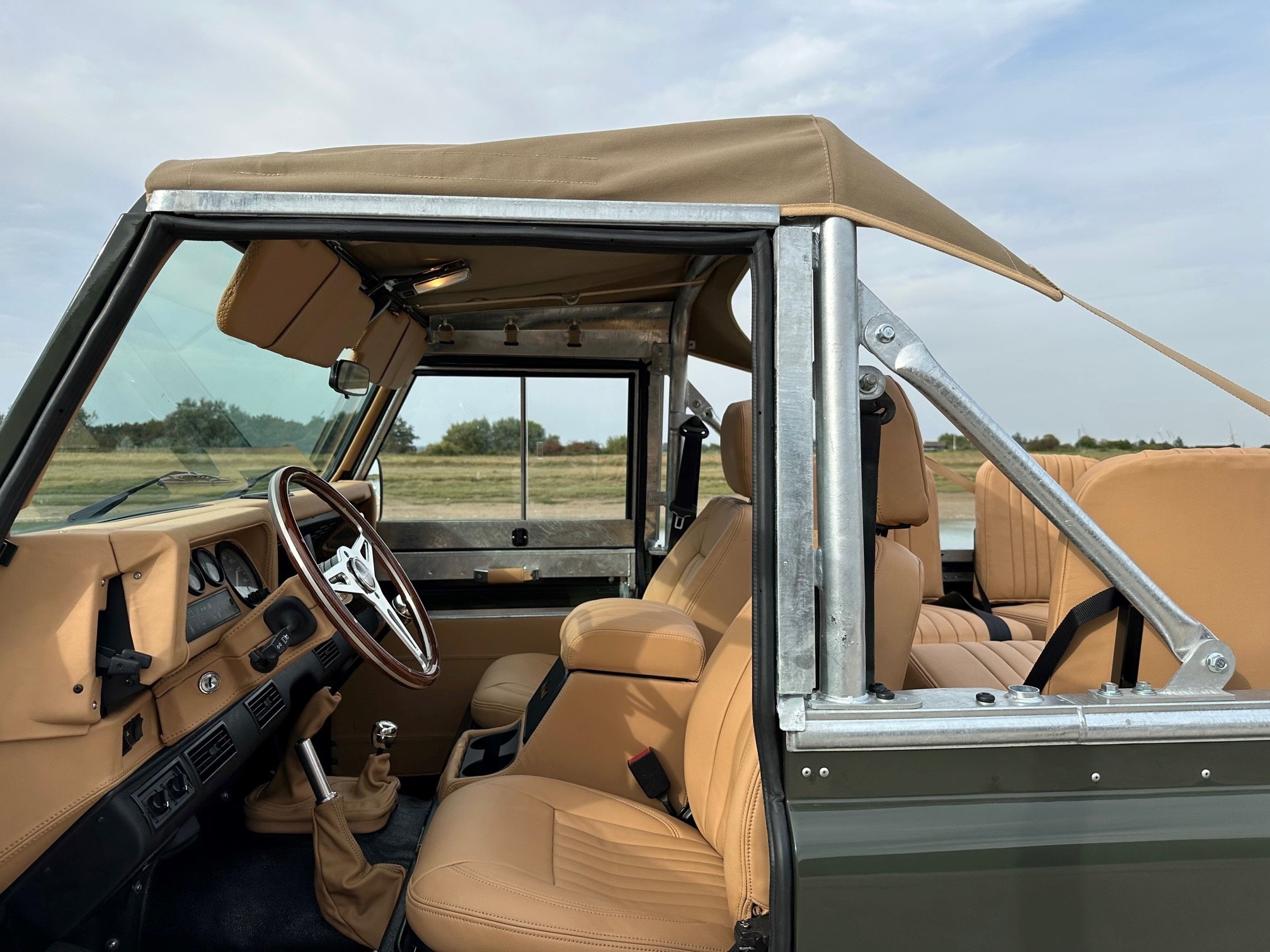
It is the most common question we get from people considering a classic Land Rover Defender: is it reliable?
The honest answer depends entirely on what has been done to the vehicle. An original, unrestored Defender will let you down. A Defender that has been properly rebuilt from the ground up is a different vehicle entirely.
Here is what that actually means.
What fails on an original Defender
The classic Land Rover Defender was built as a utility vehicle. It was designed to be simple, repairable, and tough enough for farm work, military service, and expedition use. It was not designed to be reliable in the way that a modern vehicle is reliable.
The vehicles that are still on the road today are 25 to 40 years old. At that age, certain systems fail consistently, and understanding what those are is the difference between a vehicle you enjoy owning and one that leaves you on the side of the road.
Wiring
The original wiring harness is the single most common failure point in a classic Land Rover Defender. British wiring from the 1980s and 1990s was not built to last decades. Connections corrode. Insulation breaks down. Shorts develop. The result is intermittent electrical faults that are difficult to trace and expensive to fix one at a time.
This is not a rare problem. It is the standard experience of owning an unrestored Defender with original wiring.
Cooling system
The original cooling systems on most classic Defenders were marginal when new. After 30 years of use, they are often inadequate. Radiators corrode internally, hoses perish, thermostats stick, and water pumps wear out. Overheating is one of the most common issues reported by classic Defender owners, particularly in warmer climates or in stop-and-go traffic.
An overheating engine causes damage quickly. If the cooling system has not been rebuilt, it is a matter of when, not if.
Fuel system
Original fuel tanks corrode from the inside. Fuel lines degrade. Fuel pumps and injectors wear out. On a 300TDi or TD5 diesel that has been sitting or running on old fuel, the entire fuel system can need replacing. Contaminated fuel is one of the most common causes of poor running and difficult starting on older Defenders.
Chassis corrosion
The original Defender chassis is mild steel. It was not galvanized from the factory. After decades of exposure to road salt, water, and weather, most original chassis frames have some degree of corrosion. In many cases, the corrosion is structural. A chassis that looks solid on the surface can be compromised underneath.
Defender reliability starts with the chassis. If the frame is corroded, no amount of mechanical work on top of it will make the vehicle safe or reliable in the long term.
Brakes and suspension
Original brake components wear out. Calipers seize. Lines corrode. Pads and discs need replacing. On a vehicle that has been sitting for any length of time, the braking system is often one of the first things that needs attention.
Suspension bushings perish, springs sag, and shock absorbers lose their damping. The ride quality on a Defender with original suspension is rough at best. On one with worn components, it is unsafe.
Seals and gaskets
Land Rover Defenders leak. Oil from the engine, the gearbox, the transfer case, the axles. Coolant from the radiator, the hoses, the head gasket. Leaks are so common on original Defenders that many owners consider them normal. They are not normal. They are symptoms of worn seals and gaskets that should be replaced.
Are Land Rover Defenders reliable after a rebuild?
Yes. When the work is done properly.
The reason original Defenders are unreliable is not a design flaw. It is age. The systems that fail are systems that were never intended to last 30 or 40 years without being replaced. When those systems are rebuilt or replaced with new components, the reliability changes completely.
A custom Land Rover Defender that has been stripped to a bare chassis and rebuilt from the ground up is a mechanically new vehicle in a classic body. The wiring is new. The cooling system is new. The fuel system is new. The brakes are new. The seals are new. The chassis is galvanized. Every system that is known to fail on an original Defender has been addressed before the vehicle ever reaches the owner.
That is the difference between a classic Defender and a custom Defender. One is 30 years old. The other is engineered to modern standards using a 30-year-old design.
What Shoreline does specifically
Every Shoreline Defender is a ground-up build. Here is what that means for reliability.
The entire wiring loom is replaced with a new, modern harness. Not patched. Not repaired. Replaced. This eliminates the single most common failure point in any classic Defender.
The cooling system is rebuilt entirely. Custom aluminum radiators, new hoses, new thermostat, new water pump, high-flow fans. The system is engineered for the specific engine and climate, whether that is a 300TDi in the UK or an LS3 V8 in Florida.
The fuel system is new. Tank, lines, pump, injectors. Clean fuel delivery from the start.
The chassis is galvanized. Either the original frame is replaced with a new hot-dipped galvanized unit, or it is stripped, inspected, strengthened, and treated. Corrosion is eliminated as a long-term concern.
Brakes, suspension, axles, differentials, driveshafts. All rebuilt or replaced. The mechanical systems are engineered to work together, not pieced together from whatever was available.
Every build undergoes a 24-hour systems inspection and a 500-mile road test before delivery. If something is not right, it gets fixed before the vehicle leaves the workshop. The 12-month warranty on every Shoreline build exists because the vehicle has been through this process. The warranty is a reflection of the standard the work is done to.
The gap between restored and rebuilt
This is an important distinction. A Defender that has been "restored" can mean anything from a fresh coat of paint to a partial mechanical service. It does not necessarily mean the wiring has been replaced, the chassis has been treated, or the cooling system has been rebuilt.
A Defender that has been rebuilt from the ground up means every system has been addressed. That is what changes the Land Rover Defender reliability equation. Not the badge, not the year, not the model. The work.
If you are looking at a classic Land Rover Defender and the seller tells you it has been restored, ask what that means specifically. Ask about the wiring. Ask about the chassis. Ask about the cooling. The answers will tell you whether the vehicle is reliable or whether it is a problem waiting to surface.
The bottom line
Are Land Rover Defenders reliable? In their original, unrestored form, no. They are characterful, capable, and iconic, but they are not reliable by modern standards.
A classic Defender that has been properly rebuilt from the chassis up is a different answer. With new wiring, new cooling, new brakes, a galvanized chassis, and a properly rebuilt or replaced engine, a custom Land Rover Defender is as reliable as any vehicle on the road.
The reliability is not in the name. It is in the build.
If you are considering a Defender and reliability matters to you, get in touch. We will walk you through what a ground-up build involves and what it means for long-term ownership.
Get in touch. We will design a build around you.