


If you have decided your Defender should be a diesel, the decision comes down to two engines. The 300 TDi is the last of the purely mechanical Land Rover diesels. The TD5 is the first of the electronic ones. They sit either side of a genuine dividing line in the vehicle's history, and which side you land on shapes how the vehicle drives, how you maintain it, and where in the world you can take it.
Plenty has been written about both by people with strong opinions. This is the version without the tribalism: what each engine is, what each one is actually good at, what goes wrong with them, and how to choose.
The short answer
Choose the 300 TDi if you value mechanical simplicity, want an engine you or any workshop can fix anywhere, and intend to travel somewhere remote. Choose the TD5 if you want more power, smoother running and better refinement, and you are comfortable with an engine that needs diagnostic equipment when something goes wrong. The TD5 is the better road vehicle. The 300 TDi is the better expedition vehicle.
The 300 TDi
The 300 TDi is a 2.5-litre four-cylinder turbodiesel with direct injection and an intercooler. It was fitted to the Defender from 1994 until 1998, and also appeared in the Discovery 1 and the Range Rover Classic. It produces roughly 111 brake horsepower and around 195 lb-ft of torque, delivered low in the rev range where a Defender wants it.
What defines the 300 TDi is what it does not have. There is no engine management computer. Fuelling is handled by a mechanical injection pump, and the engine will run without any electrical input beyond the starter and the fuel cut-off solenoid. Disconnect the battery entirely once it is running and it keeps going.
That sounds like a trivia point. It is not. It means a 300 TDi can be diagnosed by ear and by feel, repaired with hand tools, and kept running by a competent mechanic in a country where nobody has ever plugged a laptop into a Land Rover. For anyone building a vehicle to cross continents, that is the whole argument.
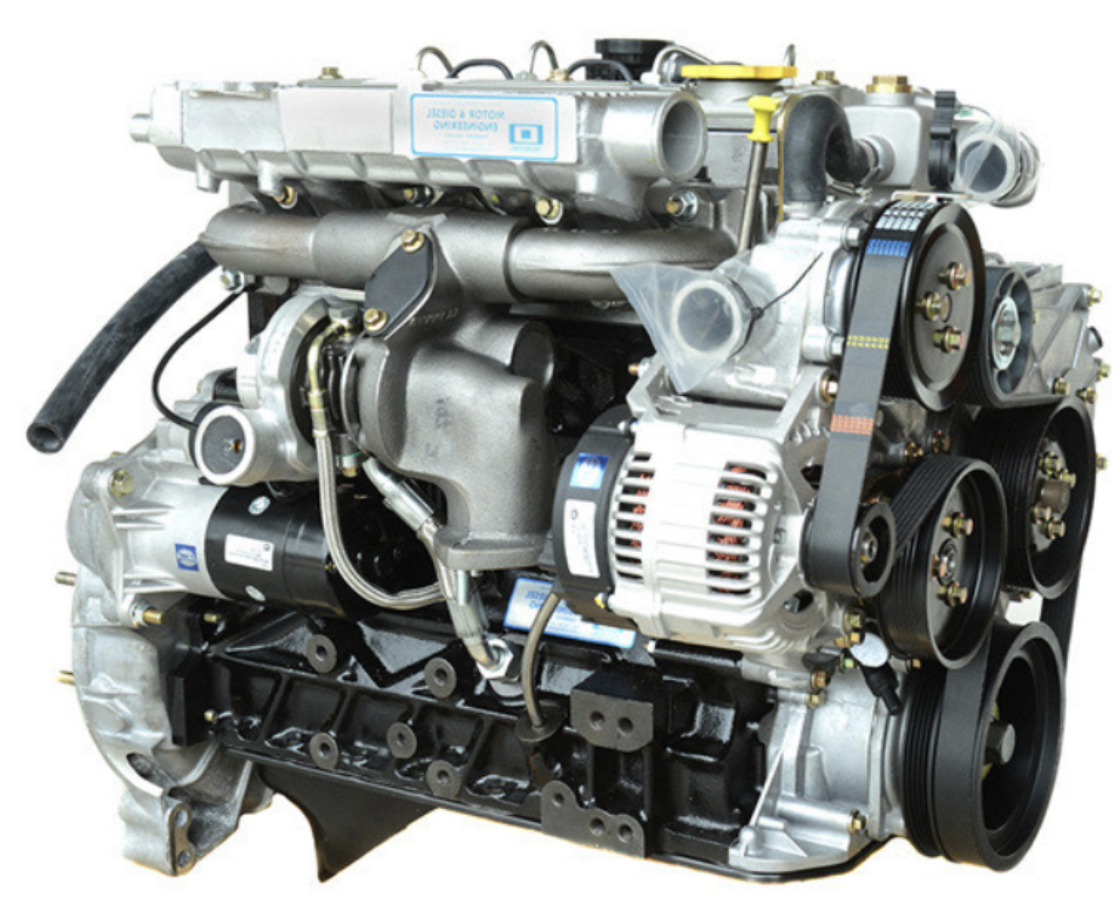
The 300 TDi. No ECU, no electronic injectors. Everything on it can be diagnosed by hand.
The TD5
The TD5 is a 2.5-litre five-cylinder turbodiesel that replaced the 300 TDi in 1998 and remained in the Defender until 2007. It also powered the Discovery 2. It produces roughly 122 brake horsepower and around 221 lb-ft of torque, a useful step up on both counts.
The bigger change is how it makes that power. The TD5 uses electronically controlled unit injectors managed by an ECU, with a drive-by-wire throttle. The engine can adjust fuelling continuously in a way a mechanical pump simply cannot, which is why it is quieter, smoother, cleaner and more flexible than the engine it replaced.
The five-cylinder layout also gives it a distinctive character. It sounds different to any other Land Rover diesel, with a hard, slightly offbeat note that owners tend to become fond of. It pulls more willingly through the mid-range and feels noticeably less agricultural at speed.
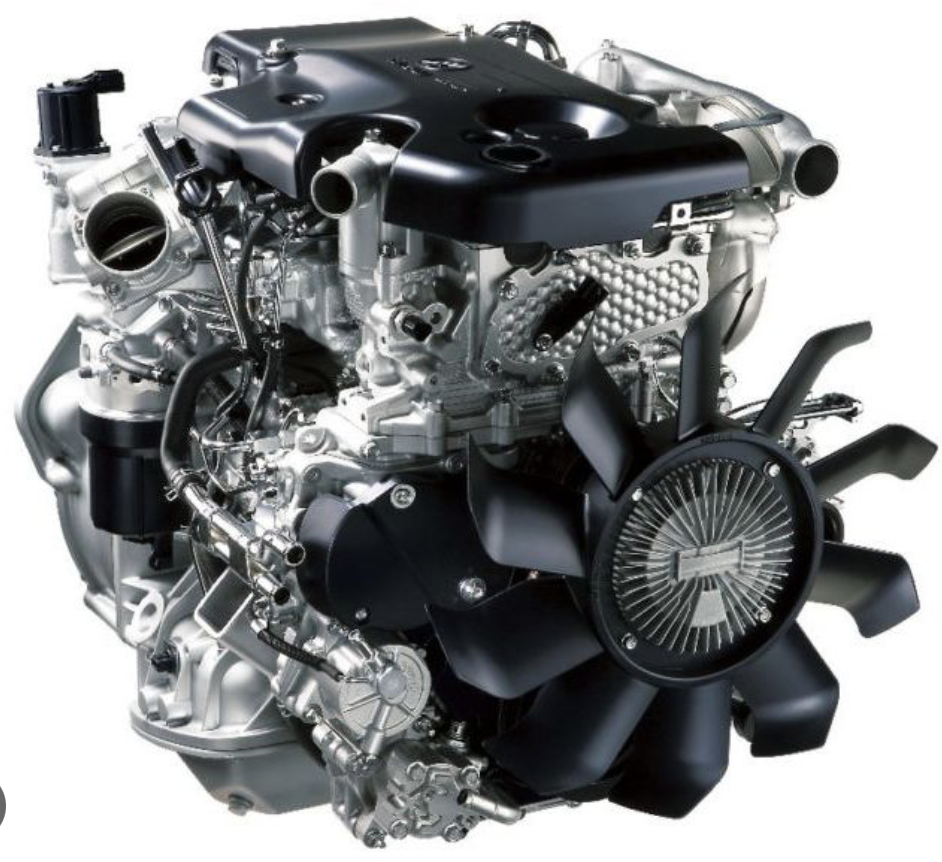
The TD5. Five cylinders, electronic unit injectors, and an ECU that needs a laptop when it sulks.
Head to head
TD5 wins. Roughly 122 bhp and 221 lb-ft against 111 bhp and 195 lb-ft. The difference is most obvious in the mid-range and when overtaking.
300 TDi wins, decisively. No ECU, no electronic injectors, no diagnostic port. Fixable with hand tools and a manual.
TD5 wins. Quieter at idle, smoother under load, less vibration through the cabin, and considerably better at sustained highway speed.
On fuel economy the two are closer than the power figures suggest. Both return figures in the high twenties to low thirties in imperial mpg depending on gearing, tyres, roof load and how the vehicle is driven. Neither is meaningfully more economical than the other in real-world use, and anyone quoting a large difference is usually comparing two vehicles rather than two engines.
What goes wrong with each
Both engines are now old enough that condition matters far more than specification. A well-maintained example of either will outlast a neglected example of the other. That said, each has characteristic weak points worth knowing before you buy a donor.
300 TDi
- Timing belt and tensioner. The belt drives the camshaft and injection pump and must be changed on schedule. Early tensioners in particular have a poor reputation. A snapped belt on this engine is expensive.
- Head gasket. Generally robust, but unforgiving if the engine has ever been allowed to overheat. Check the history and the coolant.
- Injection pump seals. Weeping pumps are common on high-mileage examples. Not catastrophic, but a rebuild is not cheap.
- Crankshaft dowel pin. A known failure mode on some units that can be addressed preventatively during a rebuild.
TD5
- Oil pump drive. The best-known TD5 issue, affecting earlier engines in particular. Failure is sudden and destroys the engine. Later units and properly rebuilt engines address it.
- Injector wiring harness. The loom running to the injectors under the rocker cover chafes and fails, producing misfires that are maddening to diagnose if you do not know to look there.
- Oil in the ECU. Oil can wick along the injector loom and find its way into the engine control unit. Preventable, expensive if ignored.
- Fuel pressure regulator. The in-tank regulator diaphragm fails and causes poor starting and power loss. A common and well-documented fault.

Donor condition decides more than engine choice does. Both of these engines are 20 to 30 years old.
None of this should put you off either engine. Every item on both lists is a known quantity with an established fix, and all of them are addressed as a matter of course in a full rebuild. The point is that a TD5 fault more often requires diagnostic equipment and a specialist, whereas a 300 TDi fault more often requires a spanner.
Tuning potential
Both respond well to development, but differently.
The 300 TDi is improved mechanically. Our own approach increases capacity to 2.8 litres alongside a tuning package, which transforms the torque delivery without compromising the simplicity that makes the engine worth having in the first place. It is still an engine you can fix by the roadside afterwards.
The TD5 responds to remapping, because there is an ECU to remap. A stage 2 package lifts both power and torque significantly and is a genuinely cost-effective upgrade. The ceiling is higher than the 300 TDi's and the work is less invasive, but you are further down the road of depending on electronics.
A note on US import eligibility. The Defender was not sold new in the United States after 1997, so almost every classic Defender in the country arrived under the 25-year import exemption, which applies from a vehicle's month of manufacture.
That means 300 TDi Defenders, built between 1994 and 1998, have been eligible for some years. TD5 Defenders are becoming eligible progressively: as of late 2026, examples built up to roughly the second half of 2001 have passed the 25-year mark, with later years following month by month. If you have your heart set on a specific TD5 year, check its build date against the rule before committing. Requirements can change, so verify current guidance rather than relying on this as legal advice.
So which one?
Build a 300 TDi if the vehicle is going overland, if you want to be able to fix it yourself, if you value mechanical honesty over refinement, or if it will spend its life somewhere that a Land Rover specialist is a long drive away. It is the purist's choice and it is the more characterful engine to drive slowly.
Build a TD5 if the vehicle will spend most of its time on roads, if you want the extra power and the smoother delivery, or if you are going to cover real distances in it. It is the better all-rounder and the easier engine to live with day to day.
For what it is worth, the 300 TDi remains the most requested diesel in our Heritage builds, and the TD5 is the one most often chosen by clients who intend to drive their Defender regularly rather than occasionally. Both are available across both the Defender 90 and the Defender 110.
If a diesel is not a settled decision, it is worth reading our guide to the Defender V8 swap, which covers the LS3 and what changes when you go down that route. The full range, including the Ford EcoBoost and our electric conversions, is on the Defender engine options page. And if you have not chosen a platform yet, Defender 90 vs 110 covers that decision.
Frequently asked questions
Neither is better outright. The TD5 has more power, better refinement and a higher tuning ceiling. The 300 TDi is mechanically simpler, easier to repair anywhere in the world, and needs no diagnostic equipment. Choose the TD5 for road use and the 300 TDi for remote or overland use.
The 300 TDi is a 2.5-litre four-cylinder turbodiesel fitted to the Land Rover Defender from 1994 to 1998. TDi stands for Turbocharged Direct Injection. It is entirely mechanical, with no engine management computer, and produces around 111 bhp and 195 lb-ft of torque.
Turbocharged Diesel, five cylinder. The TD5 is a 2.5-litre five-cylinder turbodiesel fitted to the Defender from 1998 to 2007. It uses electronically controlled unit injectors and produces around 122 bhp and 221 lb-ft of torque.
Well-maintained examples regularly exceed 250,000 miles, and higher figures are not unusual. Longevity depends far more on servicing history, cooling system condition and whether the engine has ever overheated than on mileage alone. A properly rebuilt 300 TDi effectively resets the clock.
The best-known issue is oil pump drive failure, which primarily affects earlier engines and is sudden and destructive when it occurs. Other common faults are the injector wiring harness chafing under the rocker cover, oil migrating along that loom into the ECU, and failure of the in-tank fuel pressure regulator. All are well documented and addressed during a proper rebuild.
Yes. The TD5 produces approximately 122 bhp and 221 lb-ft against the 300 TDi's 111 bhp and 195 lb-ft. The difference is most noticeable in the mid-range and at higher road speeds. Both can be tuned considerably beyond standard.
Yes, once the vehicle has passed the 25-year threshold, which is calculated from its month of manufacture. TD5 Defenders were built from 1998 to 2007, so they are becoming eligible progressively rather than all at once. Check a specific vehicle's build date against current rules before purchasing.
The 300 TDi. Its mechanical injection means it can be diagnosed and repaired without diagnostic equipment, specialist knowledge or a reliable electrical supply. In remote travel, an engine that any competent mechanic can fix with hand tools is worth more than the extra power of the TD5.
Yes. Both the 300 TDi and the TD5 are fitted across the Defender 90 and Defender 110 platforms, with a manual gearbox as standard and an automatic available as an option on each.
Still weighing up the diesels?
Tell us where the vehicle is going and how far you intend to take it. We will tell you honestly which of the two suits the build.
GET IN TOUCH