


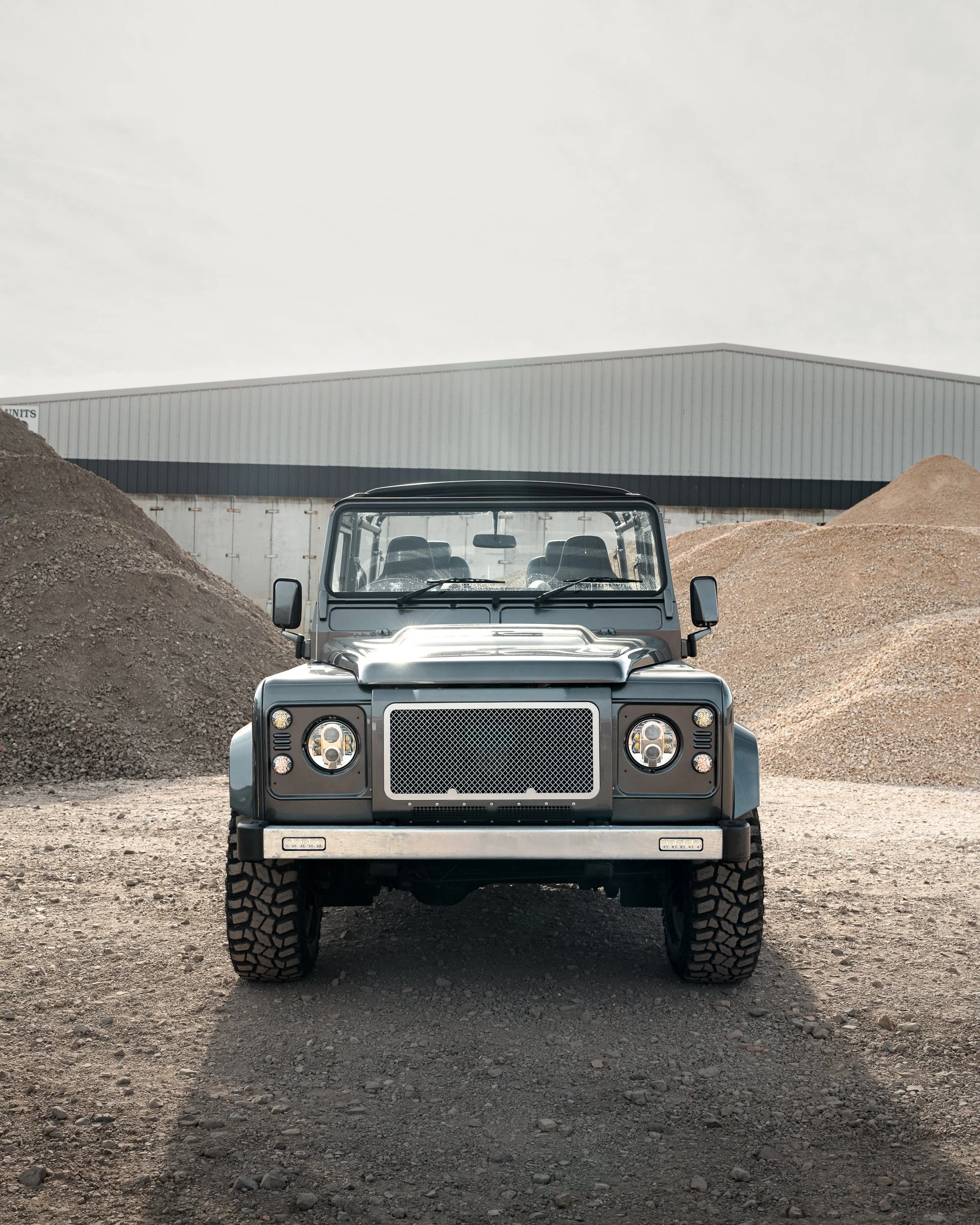
The Defender 90 is the lightest, shortest and most agile Defender we build. Put a modern V8 in it and it becomes something else entirely: a classic Land Rover that is genuinely quick, easy to drive in traffic and comfortable at highway speed.
The V8 Defender 90 is one of the most requested builds at Shoreline. This guide covers why the 90 suits a V8 so well, which engines we fit, what else has to change around them, and which edition to build on.
The short answer
A V8 Defender 90 pairs the short-wheelbase body with a 6.2-litre GM LS3 producing over 430 horsepower, or a California-compliant GM LT1, usually with a 6-speed or 8-speed automatic. Because the 90 is lighter than the 110, it does 0 to 60 in under 6 seconds. Brakes and suspension are upgraded to match.
Why the Defender 90 suits a V8
It comes down to weight. The 90 has a 93-inch wheelbase and a shorter, lighter body than the 110, so the same engine has less to move. A Defender 90 with an LS3 feels noticeably quicker and more responsive than the same engine in a 110, and the weight-to-power ratio shows in every overtake and every on-ramp.
It also changes what the 90 is for. With its original diesel, a classic Defender 90 is a wonderful thing on back roads and a tiring one on the highway. With a V8 and an automatic gearbox it cruises comfortably, keeps up with modern traffic without planning, and becomes a car you can use every day, not just at the weekend.
The V8 engines we fit
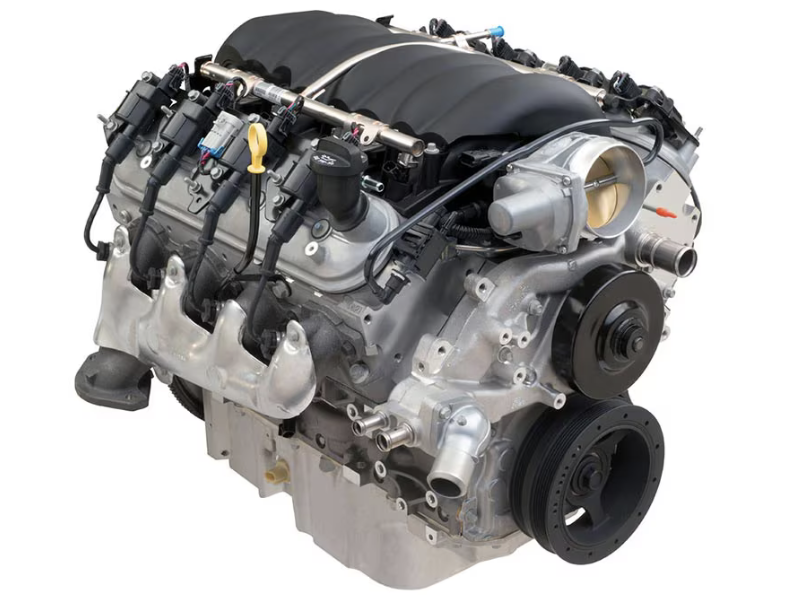
GM LS3 V8
The most popular engine for a V8 Defender 90. The LS3 is a 6.2-litre naturally aspirated V8 producing over 430 horsepower and more than 540 Nm of torque. It is proven, reliable and easy to service, and it is available in GM's emissions-legal E-ROD configuration, which is CARB-compliant for 50-state registration. Our Defender V8 LS3 swap guide covers the engine and the conversion in full.
GM LT1 V8
Offered as our California-compliant V8 option, for clients who want V8 performance with a newer-generation GM engine.
What about the original Rover V8?
Land Rover did fit V8s to the Defender in some markets, and a properly rebuilt Rover V8 is the right answer for a concours Heritage restoration where originality is the whole point. For a Defender 90 you intend to drive hard and often, the modern GM V8 is the more powerful, more reliable choice.
What changes around the engine
A V8 Defender 90 is not just an engine swap. Everything around the engine has to be engineered to match it.
Gearbox. Most V8 90s are paired with a smooth 6-speed or 8-speed automatic, which makes city traffic and highway driving effortless. A manual is still available if you prefer one.
Brakes. Upgraded brakes are essential with this much power in a short, light vehicle. Our Modern 90 uses the Shoreline LOF big brake upgrade.
Suspension and steering. The Shoreline Dynamic Ride suspension and steering upgrade keeps the 90 composed at speed, while Villain builds add an upgraded off-road suspension with 35-inch tires on beadlock wheels.
Chassis and cooling. Every build starts on a galvanized chassis, and cooling, fuel and electrical systems are rebuilt or replaced to suit the engine.
Which edition to build on
Modern. The road-focused V8 Defender 90: Dynamic Ride suspension, big brakes and a refined interior. The right choice if the car will mostly live on the road.
Villain. The more aggressive V8 90: wide arches, beadlock wheels, 35-inch tires and upgraded off-road suspension. The right choice if you want the look and capability to match the power.
Both can be built with a soft top or a hard top. See Defender soft top vs hard top for how the roof changes the car.
Living with a V8 Defender 90
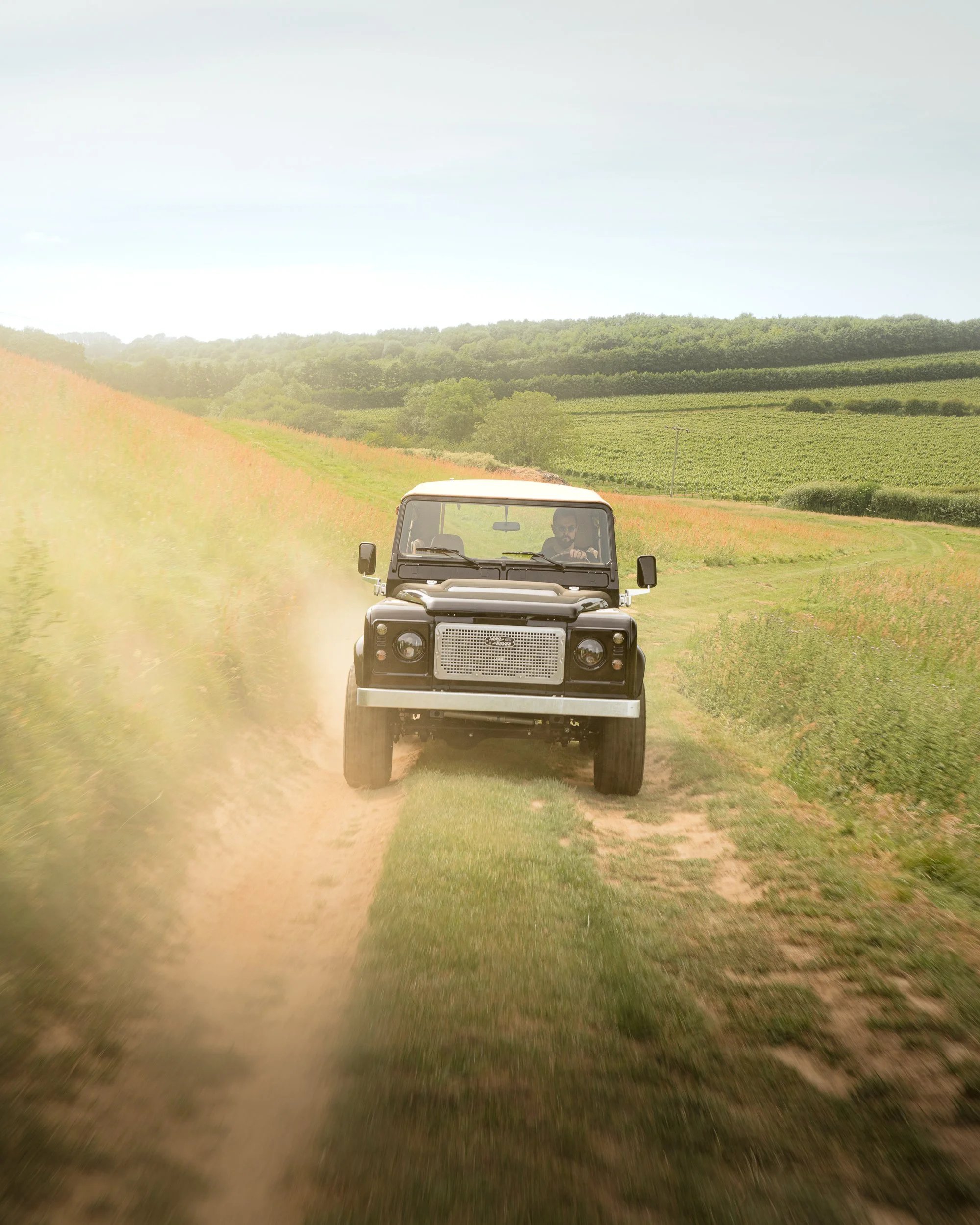
The transformation is in usability. A V8 90 cruises without drama, overtakes without planning and sits in traffic without you watching the temperature gauge. The trade-off is fuel: a 6.2-litre V8 uses more than the original diesel, and it is worth planning for that if you cover a lot of miles.
The other trade-off is space. The 90 is a four-seater with limited rear room. If you need more seats or more luggage space, a V8 Defender 110 may suit you better. Our Defender 90 vs 110 guide covers the differences, and our custom Defender 90 guide covers the rest of the 90 spec.
Buying a Defender 90 V8
Every Shoreline V8 Defender 90 is built from the ground up to your spec, goes through our nine-stage build process, a 24-hour systems inspection and a 500-mile road test, and is backed by our 12-month warranty. You can see current builds on our Our Cars page, or start a build of your own.
Frequently asked questions
With an LS3 producing over 430 horsepower in the lighter 90 body, a V8 Defender 90 does 0 to 60 in under 6 seconds.
We fit the GM LS3 V8, including the CARB-compliant E-ROD version, and the GM LT1 V8 as a California-compliant option.
Yes, when built correctly. The LS3 E-ROD package carries a CARB Executive Order for 50-state registration, and the LT1 is offered as a California-compliant option.
Yes. Most clients choose a 6-speed or 8-speed automatic, but a manual is available.
The 90 is lighter and quicker, so the V8 feels more dramatic. The 110 gives you more seats and more space. It depends on whether you value the drive or the practicality more.
Planning a V8 Defender 90?
Tell us how you want it to drive. We will walk you through the engine, gearbox, brakes and edition, and design a build around you.
GET IN TOUCH