

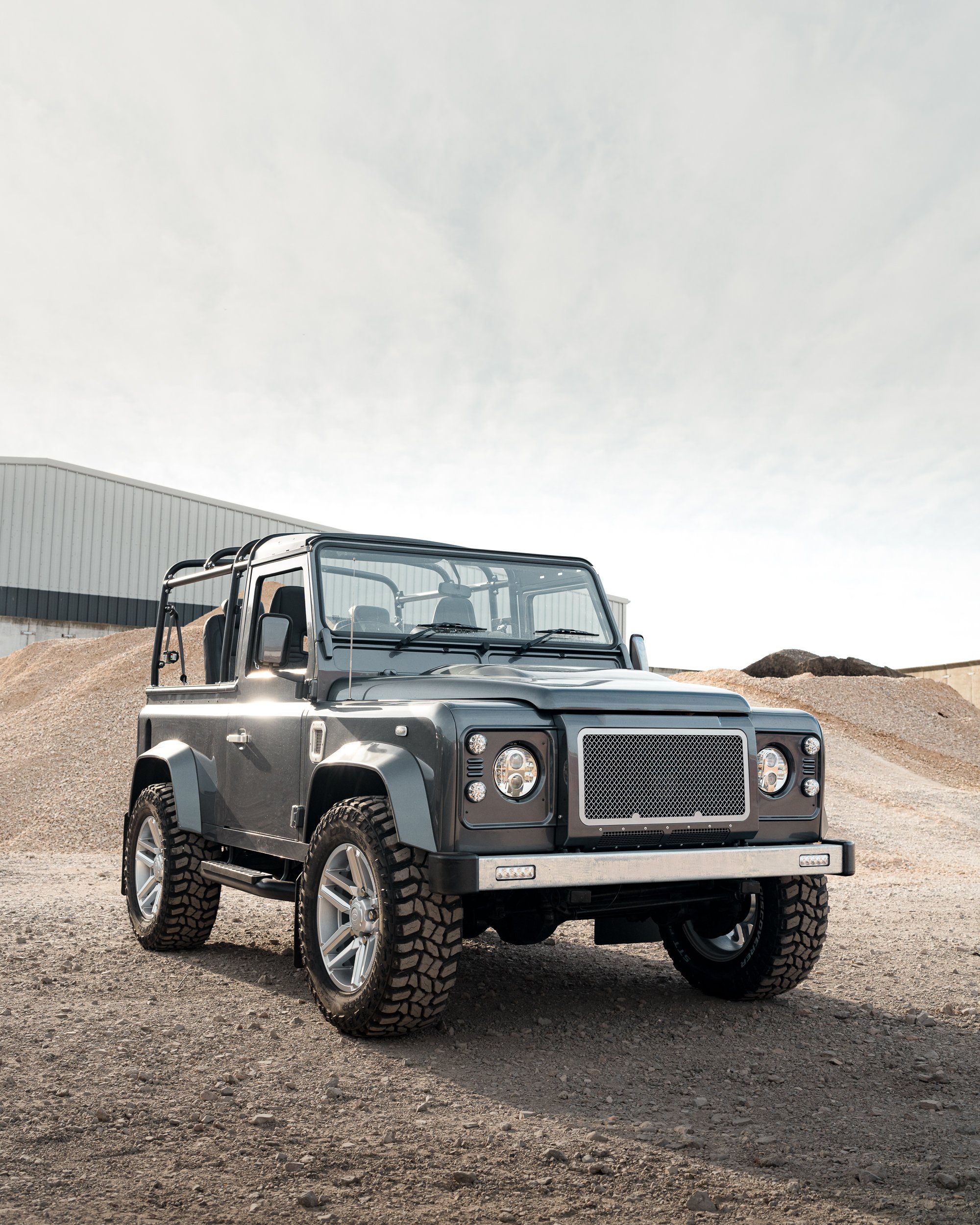
Land Rover Defender Restoration: The Complete Guide to Restomods, Cost and Process
Ask five shops what a Land Rover Defender restoration involves and you will get five different answers. "Restoration" is not a regulated term. It can mean a repaint and a service, or it can mean a vehicle stripped to the bare chassis and rebuilt, system by system, over months.
We build both faithful restorations and full Defender restomods, and through our Restoration Lab we put owners' own Defenders right. This guide brings everything together: what a proper restoration includes, how a restoration differs from a restomod and a refurbishment, what drives the cost, how long the work takes, and exactly how a Shoreline build comes together, stage by stage.
The short answer
A proper Land Rover Defender restoration strips the vehicle to the bare chassis and rebuilds or replaces every system, keeping the original engine type, manual transmission and period look. A Defender restomod follows the same ground-up process but upgrades the engine, transmission, brakes, suspension and interior for modern roads. A refurbishment fixes and upgrades the Defender you already own. Shoreline editions start from $135,000, and most builds take between 12 and 36 weeks depending on the specification.
What a Land Rover Defender restoration actually involves
The vehicle you get at the end of a restoration is defined by the scope of work, not the word on the invoice. A Defender that has been repainted and serviced looks good on delivery day. A Defender that has been rebuilt from the chassis up still looks and drives right years later. The difference rarely shows in a photo. It shows in year two.
On every Shoreline build, a proper Land Rover Defender restoration covers six areas, and none of them is optional.
- Chassis. The vehicle is stripped to the bare chassis, which is inspected, repaired, strengthened and treated for corrosion, or replaced where it is beyond saving. This is the foundation of a Defender that will still be driving in twenty years.
- Body and bulkhead. Panels are stripped, repaired or replaced, hand-aligned and painted. The bulkhead, one of the classic Defender's known rot points, is repaired or renewed.
- Drivetrain. The engine and transmission are rebuilt or replaced, with axles, differentials and the cooling system rebuilt to suit.
- Wiring. The entire loom is replaced with a new, modern harness. A 30-year-old wiring harness is one of the most common failure points on any classic Defender, so we never patch one.
- Brakes and suspension. Rebuilt or upgraded to match the engine and how the vehicle will be used.
- Interior. Seats, dashboard, door cards, headliner and soundproofing, built by hand in the workshop.
If a quote leaves any of these out, it is not cheaper. It is a narrower scope of work, and the parts that were skipped tend to come back as bills you did not budget for.
Restoration, restomod or refurbishment?
There are three ways to bring a classic Defender back, and choosing between them comes down to how you plan to use the vehicle and whether you are starting from a donor or from a truck you already own.
Ground-up rebuild with the original engine type, manual transmission and period look. For the collector and the weekend driver.
The same ground-up rebuild, with a modern engine, automatic transmission, upgraded brakes and suspension, and a new interior. For daily use.
Targeted repairs and upgrades to the Defender you already own, from a mechanical refresh to a full rebuild.
Classic Defender restoration: keeping the original character
A classic restoration preserves what made the original vehicle special while making it reliable enough to actually drive. The original engine platform, the original transmission type and the original proportions stay, and every system is rebuilt so the truck works the way it should, not the way a 30-year-old Defender usually does.
In practice that means a rebuilt original-type diesel, usually a 300TDi or TD5 depending on the year and model, a refurbished R380 five-speed manual, and a period-correct finish: heritage colors such as Arles Blue, Keswick Green or Bahama Gold, classic steel wheels, and an interior that reflects the original design without the original wear. No touchscreens and no digital dash. Our Heritage edition is built this way.
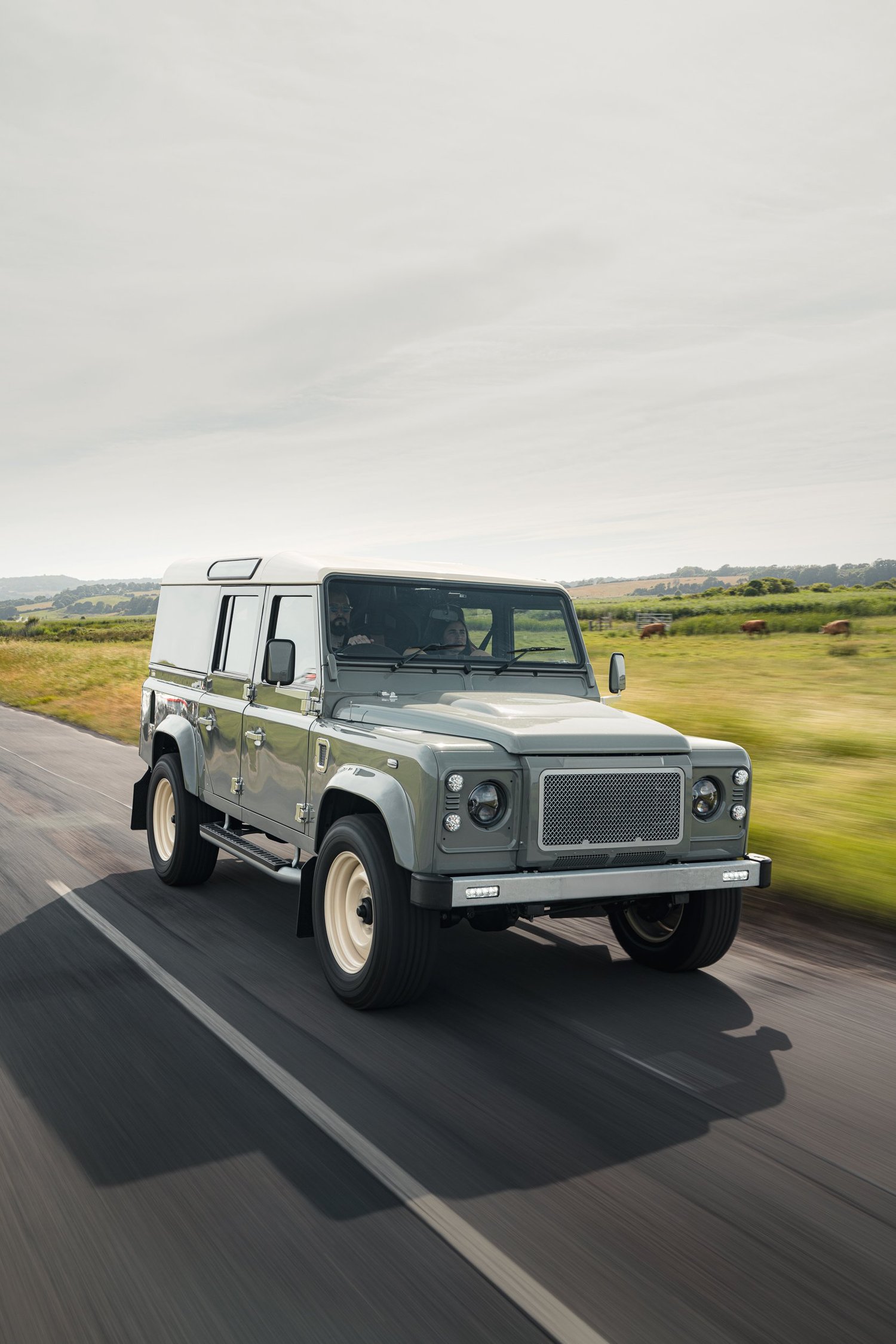
Defender restomod: classic shape, modern performance
"Restomod" is short for restoration plus modification. A Defender restomod keeps the silhouette, the presence and the feel of the original, and fixes the things that let it down: the lack of power, the cabin noise, the ride, the brakes and the dated interior.
Depending on the build, that means an LS3 V8 producing 430 horsepower, an EcoBoost, an EV conversion, or an uprated original diesel, paired with a smooth six-speed or eight-speed automatic. A manual is still available if you prefer one. The LS3 is the most popular choice for clients who want a Defender that keeps up with modern traffic, and our Defender V8 LS3 swap guide covers it in detail. You can compare every option on our Defender engine options page.
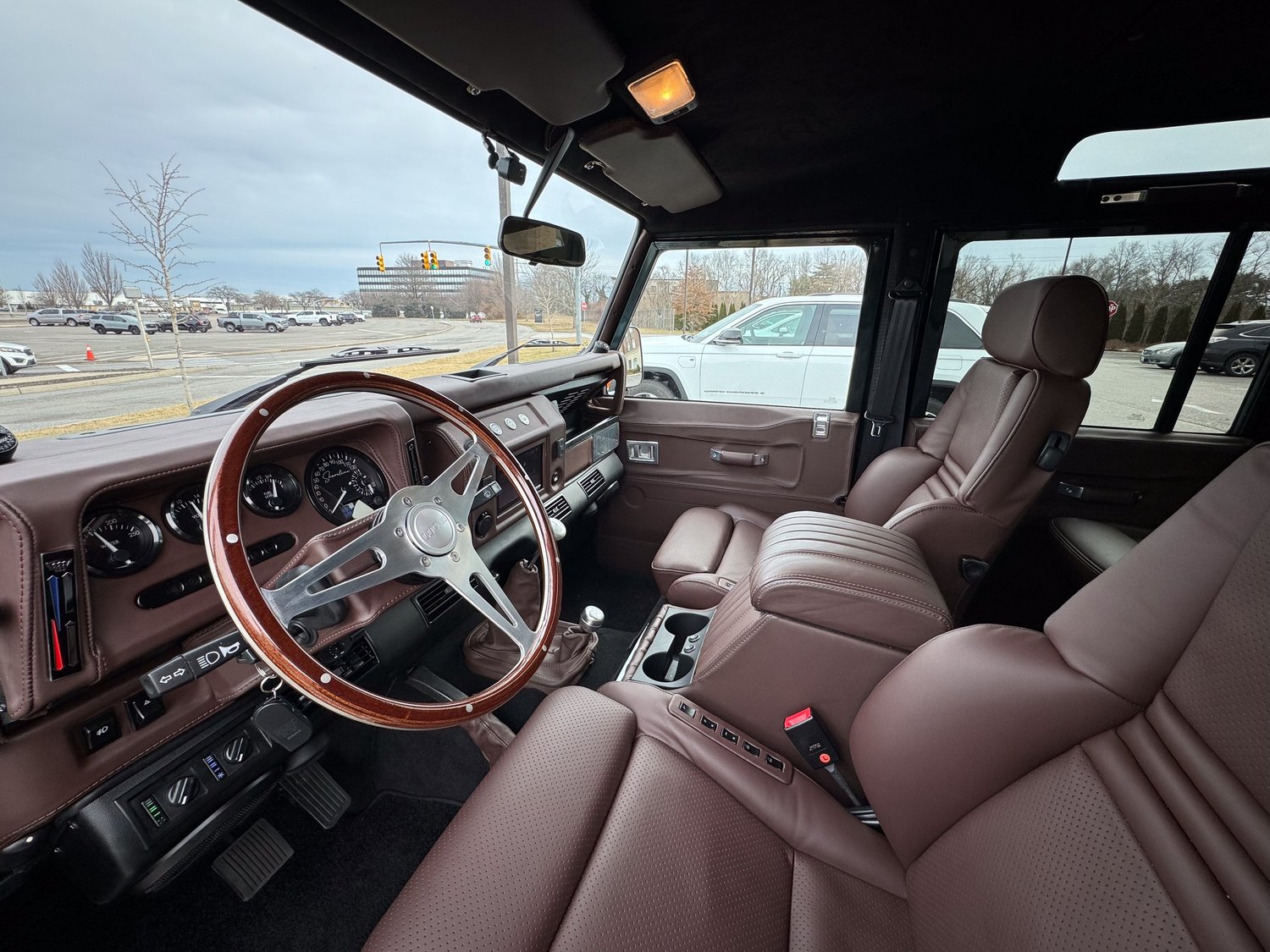
Brakes and suspension are upgraded to match. This is not optional: if you put a V8 in a classic Defender, the braking and suspension have to keep up. Inside, the cabin is built from scratch with hand-stitched leather, heated seats, full soundproofing, modern gauges, climate control and premium audio with Apple CarPlay. Our Modern and Villain editions are built this way.
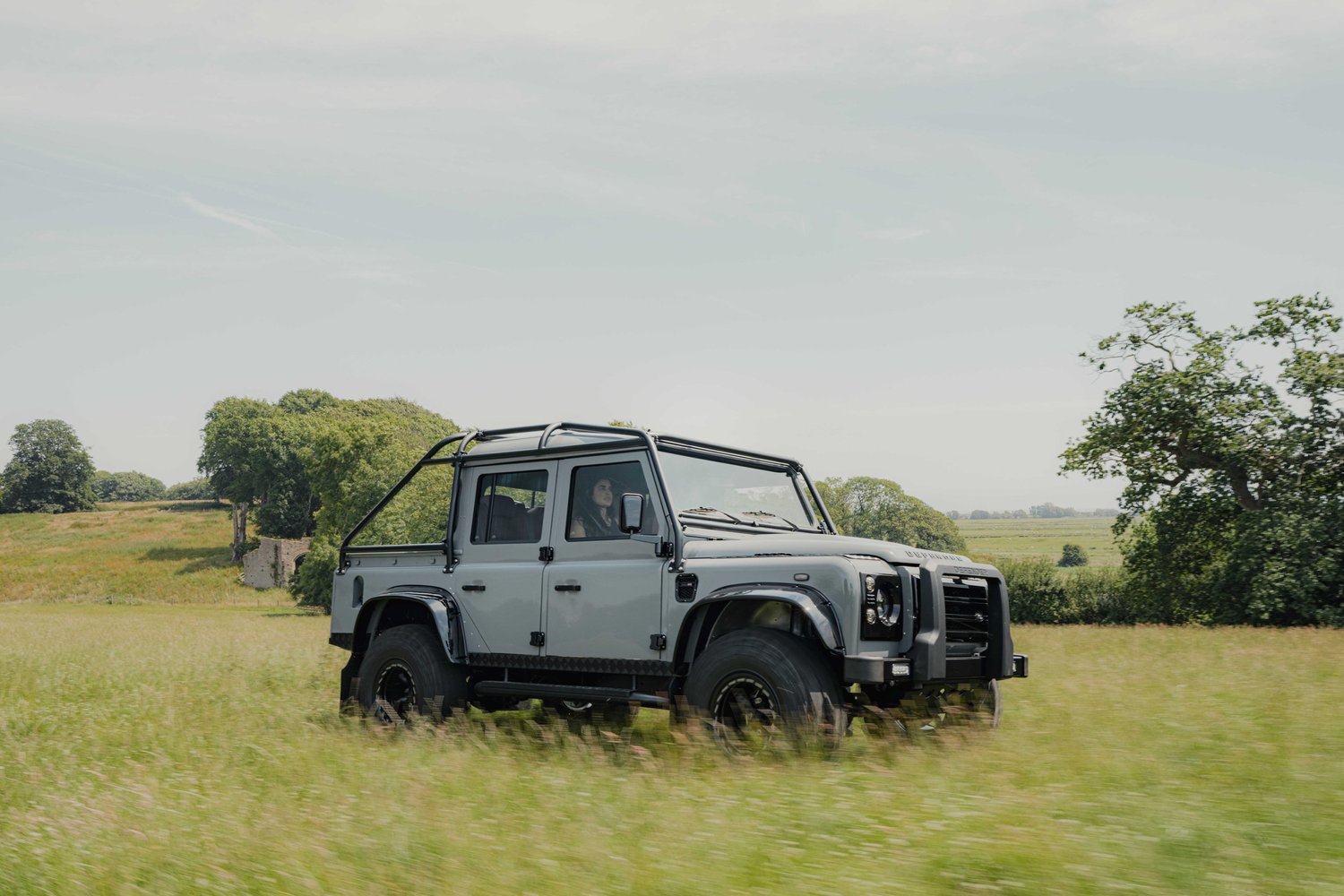
Defender refurbishment: putting your own truck right
Not every owner needs a new build. Our Restoration Lab takes on the Defender you already have, whether it needs a focused mechanical refresh, an interior retrim, a modern engine and automatic transmission, suspension and brake upgrades, or a full ground-up rebuild. Every job is carried out by the same team behind our Shoreline editions, and it follows three steps: consultation and design, disassembly and inspection, then craftsmanship and testing before the keys go back to you.
A good example is this Defender 90 refurbishment. The owner had grown afraid to drive it because of a "death wobble" at highway speed. We replaced the clutch kit, steering box and drag bar, set the alignment, traced and fixed every oil leak, and replaced a bulkhead that years of trapped water had rotted through. Working within the owner's budget, we prioritized the repairs that mattered most for safety and drivability.
What stays the same in every Shoreline build
Whether you choose a restoration or a restomod, the standard does not change.
The chassis is rebuilt first. Every build starts by stripping the vehicle to the bare chassis, then repairing, strengthening and treating the frame, or replacing it where needed. This prevents the corrosion that shortened the life of most original Defenders.
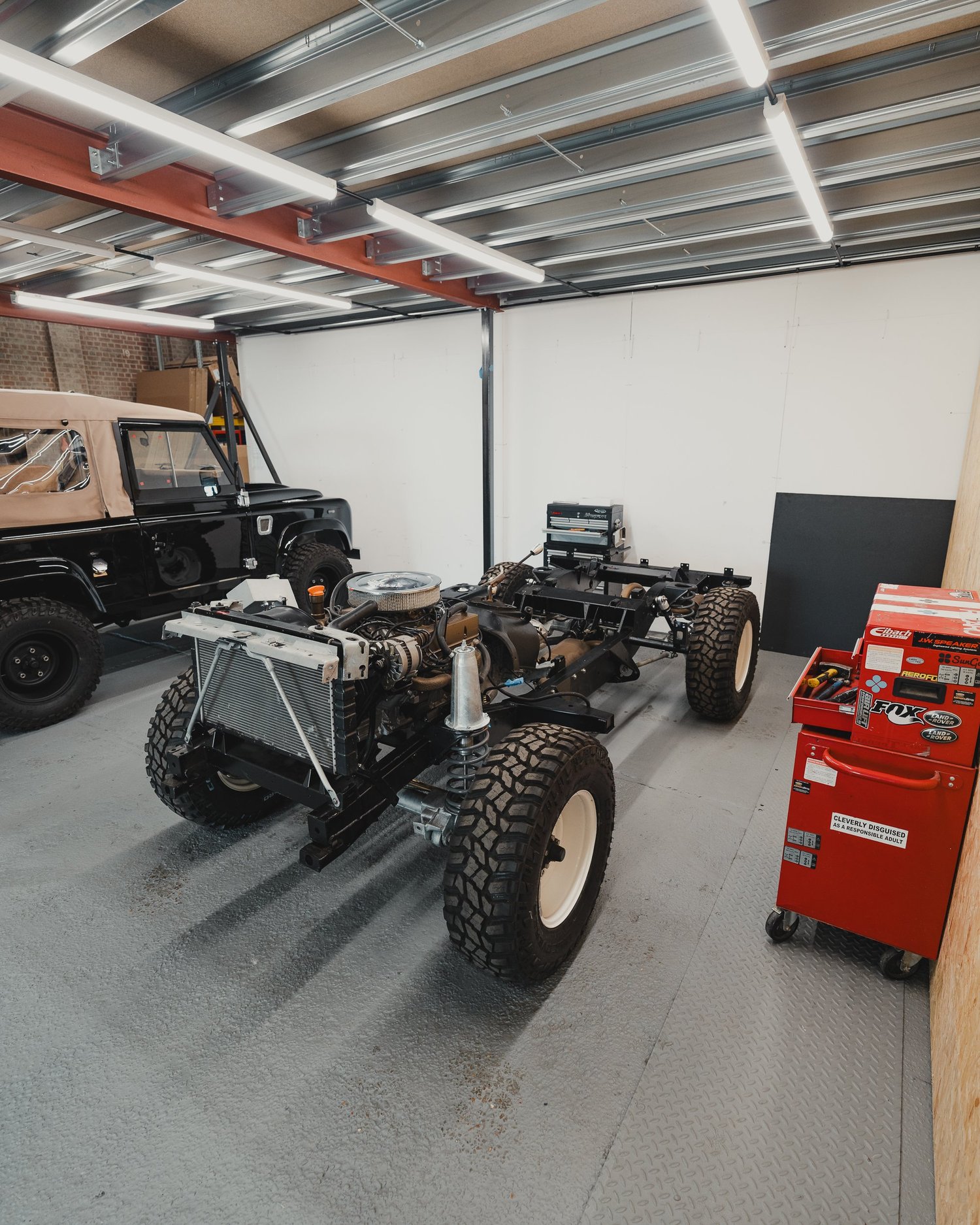
The body is finished to Range Rover standards. Panels are painted using the same processes and tolerances as a modern Range Rover, with multi-stage preparation, primer, color coat and clear coat, soundproofing throughout, and panel gaps checked to millimeter precision. That is a standard the original factory never worked to.
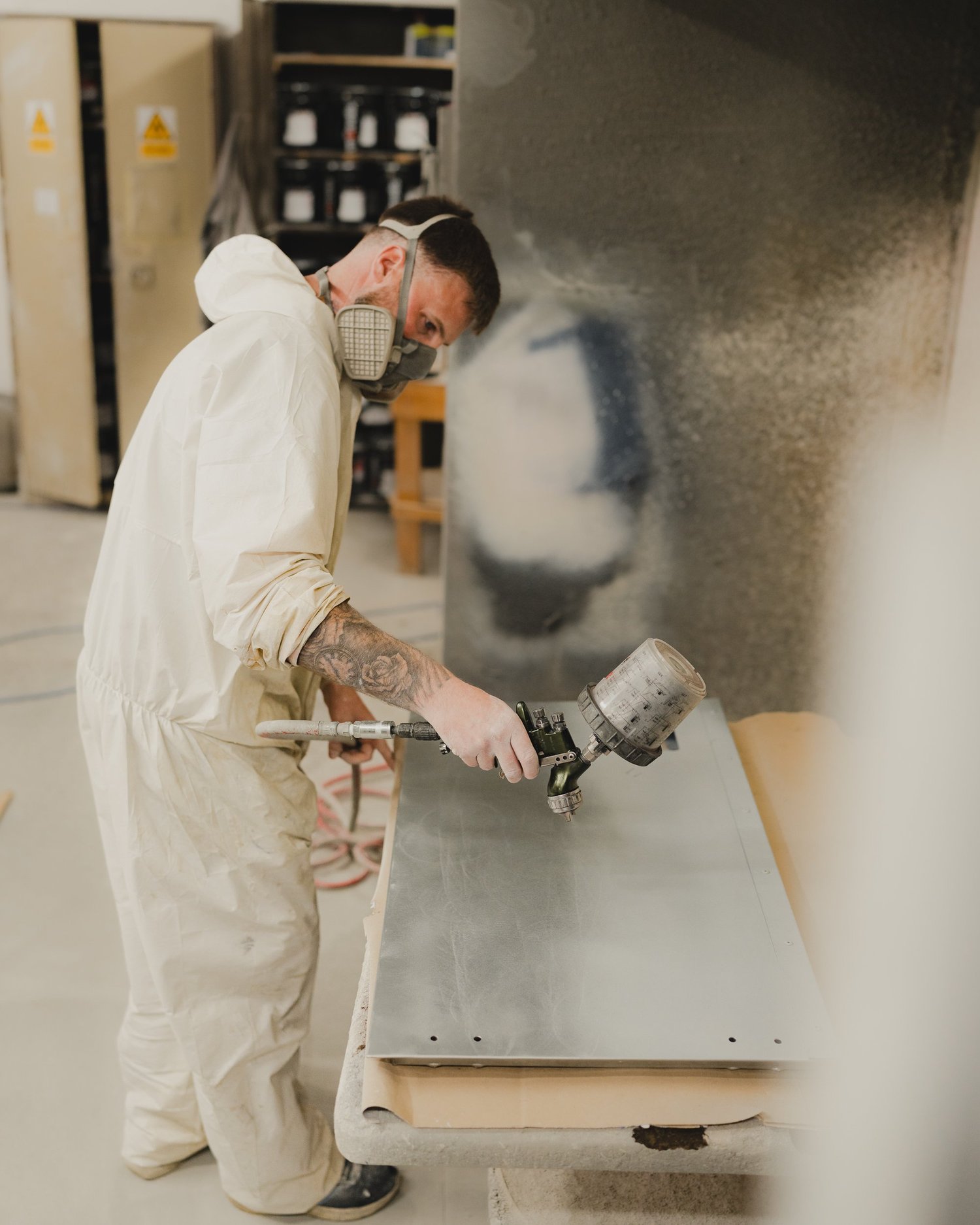
Every system is rebuilt or replaced. Wiring, brakes, axles, differentials, cooling and the fuel system. Nothing is patched.
Every build is proven before it leaves. A 24-hour systems inspection and a 500-mile road test, then the vehicle is backed by our 12-month warranty.
How much does a Land Rover Defender restoration cost?
Defender restoration quotes vary so widely because the definition of "restoration" varies. The price follows the work. A bare-chassis rebuild with a new drivetrain, a fully replaced wiring loom and a hand-built interior is a different vehicle from a repaint and a service, even if both are sold under the same word.
What drives the cost
- The donor. A straight, mechanically sound donor costs less to restore than one with structural corrosion or accident history. The true condition is only confirmed once the vehicle is stripped.
- Chassis work. Usually the biggest single variable. A frame that needs cleaning and treatment costs a fraction of one that needs repair or full replacement.
- Engine and drivetrain. A rebuilt original diesel is the most straightforward route. An LS3 V8, EcoBoost or EV conversion adds fabrication, wiring and cooling work.
- Interior. A basic retrim sits at one end. Full hand-stitched leather, custom gauges and full soundproofing sit at the other.
- Wiring. Patching the original harness is cheap. Replacing it is not, but it is the single change that does the most for long-term reliability.
Shoreline edition pricing
Every Shoreline Defender is built from a genuine donor, stripped to the bare chassis and rebuilt from there. These are the starting prices for each edition. Final pricing depends on engine choice, interior specification and any custom requests.
A stripped-back soft top build for the coast, available in gas or diesel, manual or automatic.
Period-correct character with a full mechanical rebuild underneath. Our classic restoration.
Classic shape with a contemporary finish. Our Defender restomod for everyday driving.
A darker, lifted, performance-focused build.
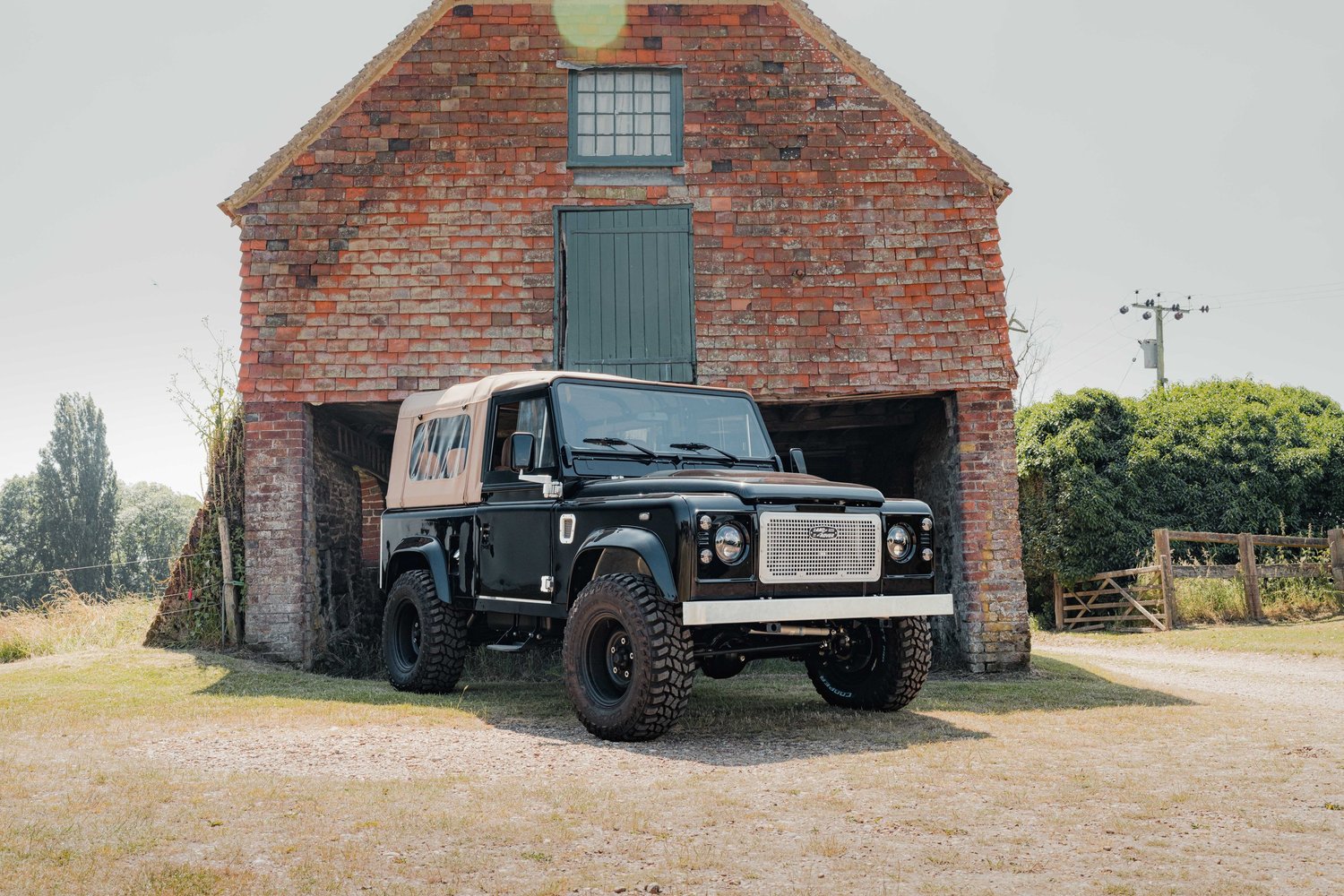
A deposit secures your build slot and starts the donor search, and payments are then split across build milestones rather than paid in one go. For a refurbishment of your own Defender, the Restoration Lab prices the work after inspecting the vehicle, because the right scope depends entirely on what we find.
Comparing quotes? The honest question to ask any restoration shop is not "how much" but "what exactly is included." Ask whether the wiring loom is replaced or patched. Ask what happens to the chassis, the cooling system, the fuel system and the brakes. The answers will tell you more about the real price than the number at the bottom of the page.
How long does a Defender restoration take?
Most Shoreline builds take between 12 and 36 weeks, depending on the specification, parts availability and the level of customization. We give you a clear timeline once your build details are confirmed, and it is written into your contract. Anyone quoting a few weeks for a full restoration is either not rebuilding the vehicle or not telling you what they are skipping.
Why a proper restoration cannot be rushed
Most of the time in a Defender build is not spent on anything dramatic. It is spent on things that cannot be hurried. Paint needs to cure between coats. Sealants need to set before the next panel goes on. A rebuilt engine needs to be run in before it can be trusted. Leather is cut, stitched and fitted by hand, and it goes in last because it is the easiest thing to damage. A shop that compresses those stages is not being efficient. It is skipping the work that decides whether the vehicle still looks and drives right in five years.
What makes a build take longer
- The donor. A vehicle that looks sound can reveal structural corrosion once stripped. When that happens, the chassis stage stretches and everything after it moves.
- Engine choice. A rebuilt original diesel is the quickest route. A V8 or electric conversion adds fabrication, wiring and cooling work.
- Specification changes. Changing paint after the body is prepped, or seats after the leather is cut, costs time as well as money. That is why the specification is confirmed before final parts are ordered.
- Parts. Most Defender parts are still available, but bespoke items such as custom gauges or specific leathers carry lead times.
- Delivery. For US clients, shipping, customs and compliance add time after the build is finished.
Throughout the build you have access to our online customer portal, with weekly photo updates and stage-by-stage tracking, so you always know where your Defender is without having to ask.
The Shoreline restoration process, step by step
Every Shoreline Defender goes through the same nine-stage build process, and over 3,000 hours of work go into each one.
- 01. Design consultation. A conversation about how you will use the vehicle and how you want it to look. Defender 90 or 110, edition, engine, transmission, color and interior. No pressure and no upsell.
- 02. Order confirmation. A digital contract covering your build slot, the core specification and the timeline, plus login access to the customer portal.
- 03. Custom samples. A physical sample pack of paint cards, leather swatches, stitching colors, dashboard finishes, and carpet and teak options. Screens do not do leather justice.
- 04. Donor car and chassis. We source a genuine donor for the right year, wheelbase and starting condition, strip it to the bare chassis, then inspect, strengthen and treat it for corrosion.
- 05. Confirm build spec. One last walk-through of wheels and tires, soft top or hard top, roof rack, side steps, exhaust finish, badging and load bay before the final parts are ordered.
- 06. Drivetrain and body. The engine is rebuilt or replaced, axles, differentials and brakes are rebuilt, suspension is upgraded, the wiring loom is replaced, and the body is refinished by hand.
- 07. Interior refit. Hand-stitched leather, teak flooring or carpet, modern gauges, climate control, premium audio, USB charging and Apple CarPlay if you want it.
- 08. Final fit and testing. Aluminum trim, badging and final detailing, then a 500-mile road test. Every electrical and mechanical system is checked, logged and signed off.
- 09. Delivery and handover. Your Defender is prepared for transport, detailed and road tested again on arrival, and hand-delivered anywhere in the US with a face-to-face handover, your documentation and the 12-month Shoreline warranty.
Choosing the right Defender to restore
Once you know whether you want a restoration or a restomod, the next decision is the platform: the compact two-door Defender 90 or the more versatile four-door Defender 110, available as a Station Wagon, soft top or Double Cab. The donor's year matters too, because it decides which original engines and details are correct for a faithful restoration. We help you make each of these decisions at the design consultation, and nothing is fixed until you confirm the build spec.
Frequently asked questions
Shoreline editions start from $135,000 for the Beach, $140,000 for the Heritage, $150,000 for the Modern and $200,000 for the Villain. Final pricing depends on engine choice, interior specification and custom requests. Refurbishment work on your own Defender is priced after inspection.
Most Shoreline builds take between 12 and 36 weeks, depending on the specification, parts availability and level of customization. You get a clear timeline once your build details are confirmed.
A restomod is a classic Land Rover Defender rebuilt from the ground up with modern upgrades, typically a more powerful engine such as the 430 horsepower LS3 V8, an automatic transmission, upgraded brakes and suspension, and a new luxury interior, while keeping the original shape.
A restoration rebuilds the Defender to its original specification and look. A restomod keeps the look but modernizes the engine, transmission, brakes, suspension and interior. A refurbishment repairs and upgrades a Defender you already own, from a mechanical refresh to a full rebuild.
Yes. Our Restoration Lab takes on owners' Defenders for mechanical refreshes, engine and transmission upgrades, interior retrims, suspension and brake upgrades, and full ground-up rebuilds.
A properly rebuilt Defender is far more reliable than an original one, because every system is rebuilt or replaced. For daily use in modern traffic, most clients choose a restomod for the extra power, automatic transmission and comfort.
Planning a Defender restoration?
Tell us whether you are leaning toward a restoration, a restomod or a refurbishment, and how you want to use the vehicle. We will come back with the options, the spec, the cost and a realistic timeline.
GET IN TOUCH