

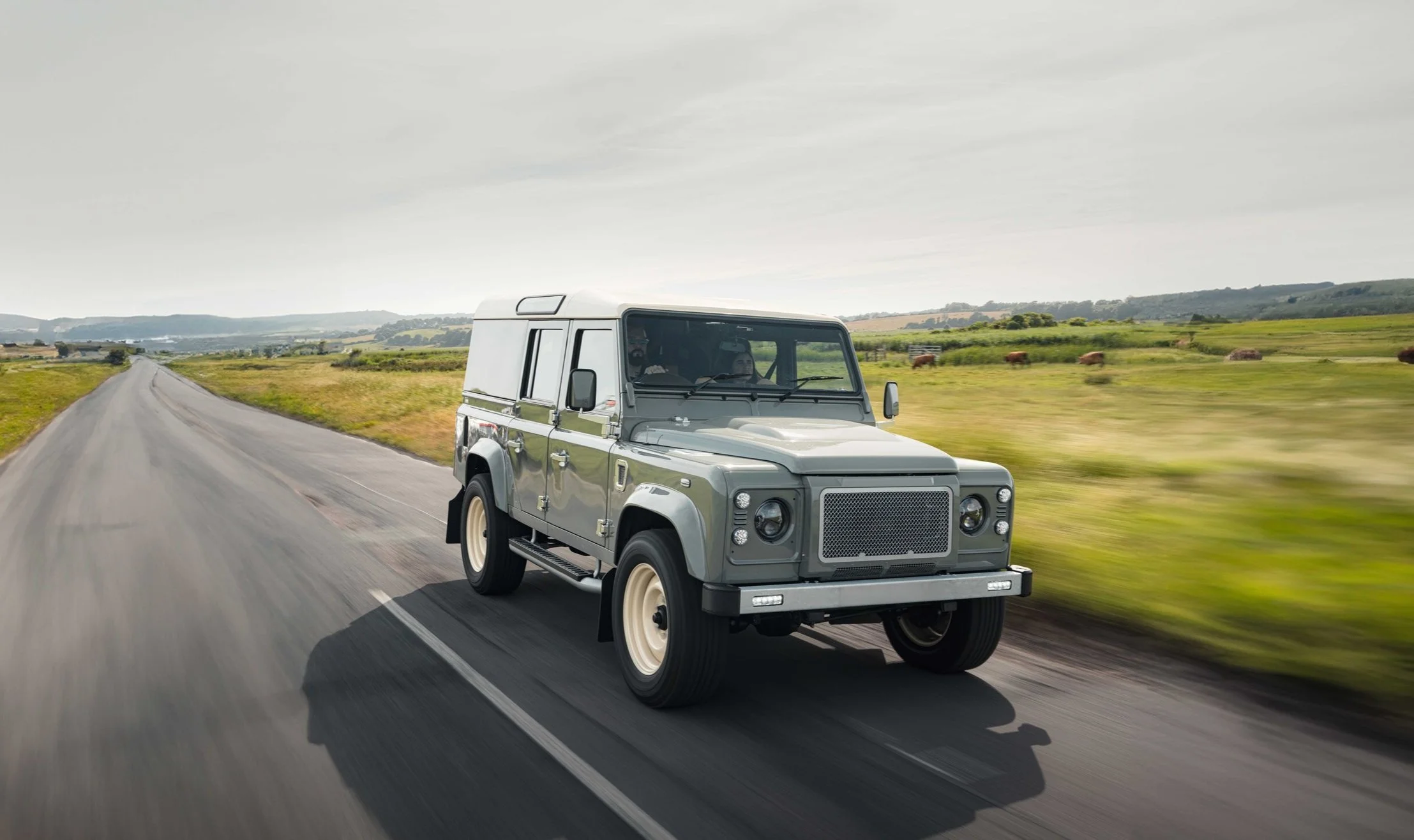
A used Land Rover Defender can be a great buy or an expensive lesson. The difference is almost never the badge, the year or the mileage. It is what has been done to the vehicle since it left the factory.
This guide covers what to inspect, how reliable a classic Defender really is, and how to choose between buying used, buying restored and commissioning a ground-up build.
The short answer
A used, unrestored Defender is not reliable by modern standards. The wiring, cooling, fuel system, chassis and seals all wear out with age. Inspect the chassis and bulkhead first, ask for service records, and treat the word "restored" as a question, not an answer. A Defender rebuilt from the bare chassis up is a different vehicle and can be as dependable as anything on the road.
Used, restored or rebuilt: know what you are looking at
Search for a Land Rover Defender for sale and you will see three very different things listed side by side.
Used. The lowest price and the fastest way into a Defender. Most are 25 to 40 years old, and many were work vehicles. Expect original wiring, a mild-steel chassis that has seen decades of weather, and tired brakes, suspension and cooling. Good ones exist, but the listing photos will not tell you which one you are looking at.
Restored. The widest range of quality. At one end it means fresh paint and a refreshed interior on original mechanicals. At the other it means a bare-chassis rebuild with documentation. The price should match the work, and the paperwork should prove it.
Rebuilt from the ground up. The vehicle is stripped to the chassis and every system is replaced or rebuilt. It costs the most and takes months, but nothing is left to chance. This is how every Shoreline Defender is built, and we explain the difference in more detail in Defender restomod vs restoration.
What to check on a used Defender
The same checks apply to a Defender 90, 110 or 130. Take a flashlight, a screwdriver and plenty of time.
Chassis and underside
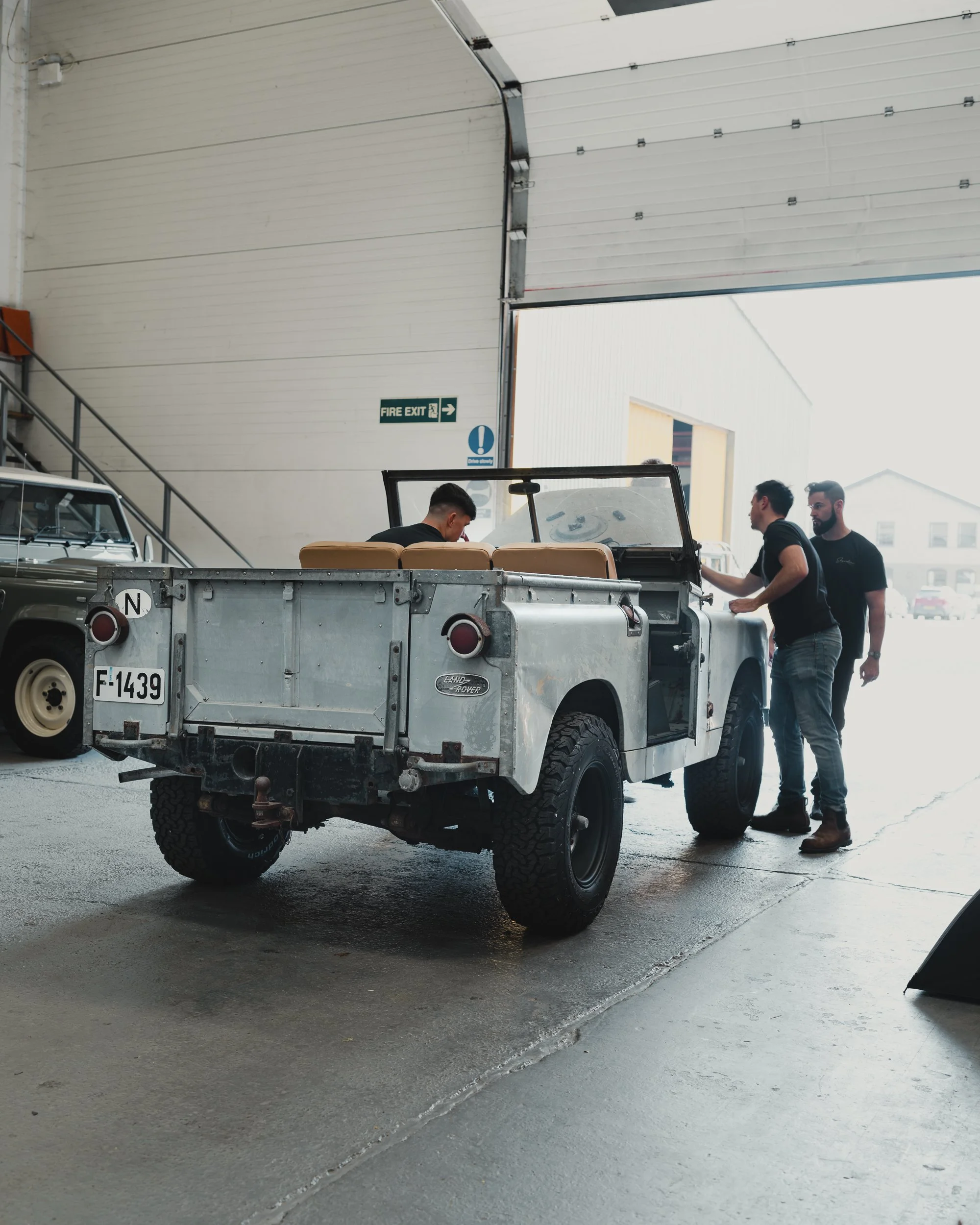
The chassis is mild steel and the body is aluminum. Where the two meet, corrosion is common, especially on coastal vehicles or ones driven on salted roads. Check the rear crossmember, outriggers, front dumb irons, bulkhead outriggers and fuel tank cradle. Light surface rust is normal. Deep pitting, flaking steel or soft spots are not. A failed chassis has to be replaced, and that changes the cost of everything else.
Bulkhead and door frames
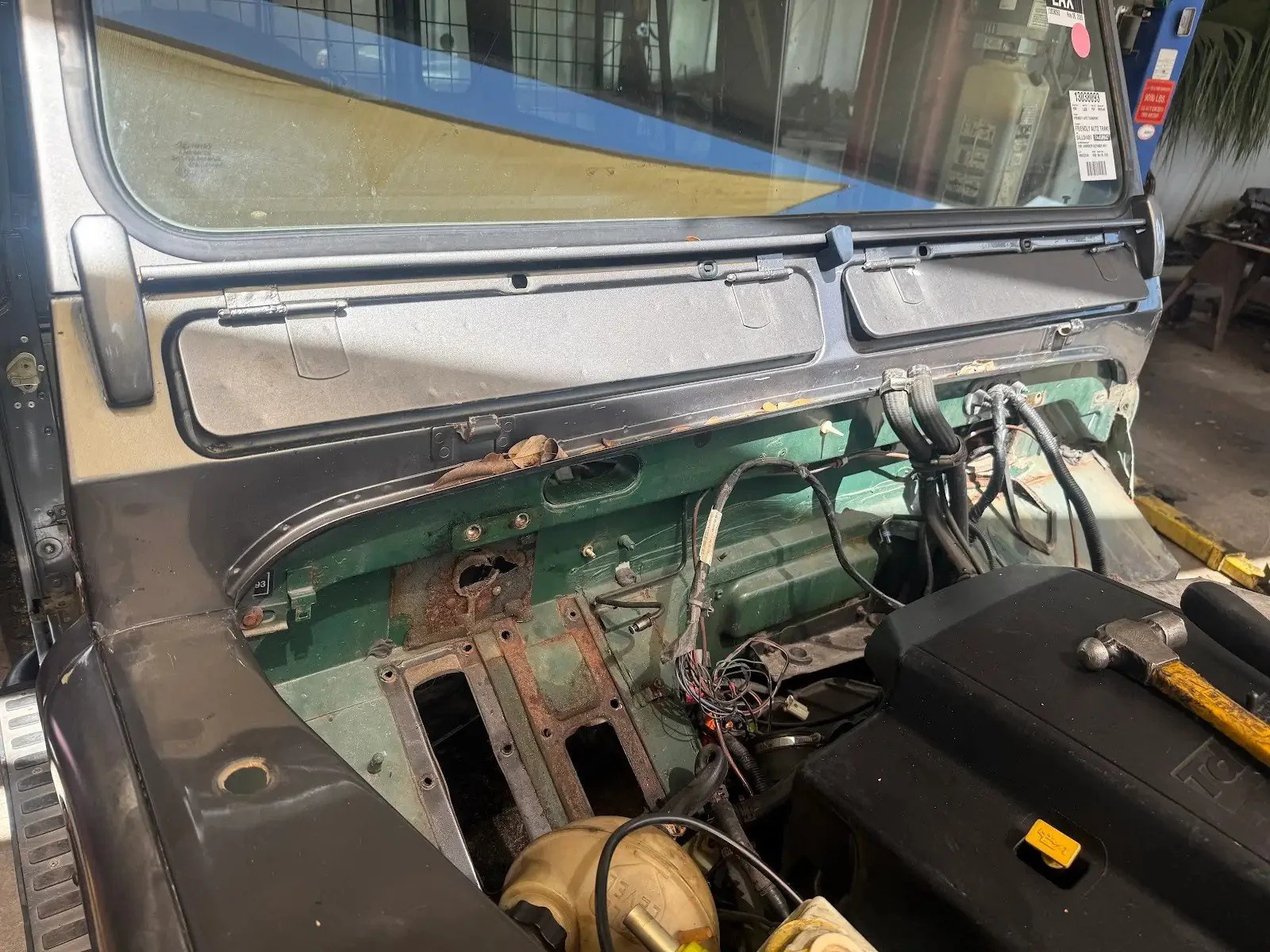
The bulkhead carries the front end, the dash and the pedals. Look in the footwells, at the base of the A-pillars and around the vents. Rot here is easy to miss and expensive to fix. Check the bottoms and corners of the door frames too. Bubbling paint usually means corrosion underneath.
Engine, gearbox and leaks
Whether it is a 200TDi, 300TDi, TD5 or an engine swap, start it cold and listen for a smooth idle. Watch for heavy smoke. Look for oil around the sump, rocker cover, transfer box and axles. Shift through every gear and listen for clunks from the driveshafts. If you are weighing up diesels, our 300TDi vs TD5 guide covers the strengths and weak points of each.
Suspension, steering and brakes
Check the steering box for play, the springs and shocks for wear, and the radius arm and trailing arm bushings. Inspect the calipers, rotors and brake lines. Each item is fixable on its own. Together, and with chassis work, the bill climbs fast.
Electrics and water leaks
Test the gauges, lights, heater, wipers and indicators. Look under the dash. Years of owner add-ons often leave a tangle of spliced wires. Damp carpets, mold or a musty smell point to failed seals or rust holes letting water in.
VIN, title and service history
Match the VIN on the chassis plate to the paperwork, especially on imports. Look for mismatched titles or frame numbers that have been cut and re-welded. Service history matters more than mileage. A Defender with 150,000 miles and full records is a better buy than one with 60,000 and none.
The test drive
Drive long enough to get everything hot. Try low range and the diff lock. Feel the clutch and the synchros. Listen for grinding, clunks or steering drift. Everything the vehicle does on the road tells you how it was used and what it will need.
How reliable is a used Land Rover Defender?
In original, unrestored form, not very. That is not a design flaw. It is age. The Defender was built to be simple and repairable for farm, military and expedition work, and the systems on a 30-year-old example were never meant to last this long without being replaced.
These are the parts that fail most often:
- Wiring. The original harness is the single most common failure point. Connections corrode and insulation breaks down, causing intermittent faults that are hard to trace.
- Cooling. Marginal when new and often inadequate now. Overheating is common in hot climates and stop-and-go traffic.
- Fuel system. Tanks corrode from the inside, lines degrade, and pumps and injectors wear. Contaminated fuel causes poor running and hard starts.
- Chassis. The factory frame is mild steel and decades of weather take their toll. Structural corrosion can hide under a solid-looking surface.
- Brakes and suspension. Calipers seize, lines corrode, bushings perish and springs sag.
- Seals and gaskets. Oil and coolant leaks are so common that owners call them normal. They are signs of worn seals.
Are Defenders reliable after a rebuild?
Yes, when every system is addressed. Replace the wiring, cooling, fuel system, brakes, suspension and seals, put the body back on a sound, properly treated chassis, and you have a mechanically new vehicle in a classic body.
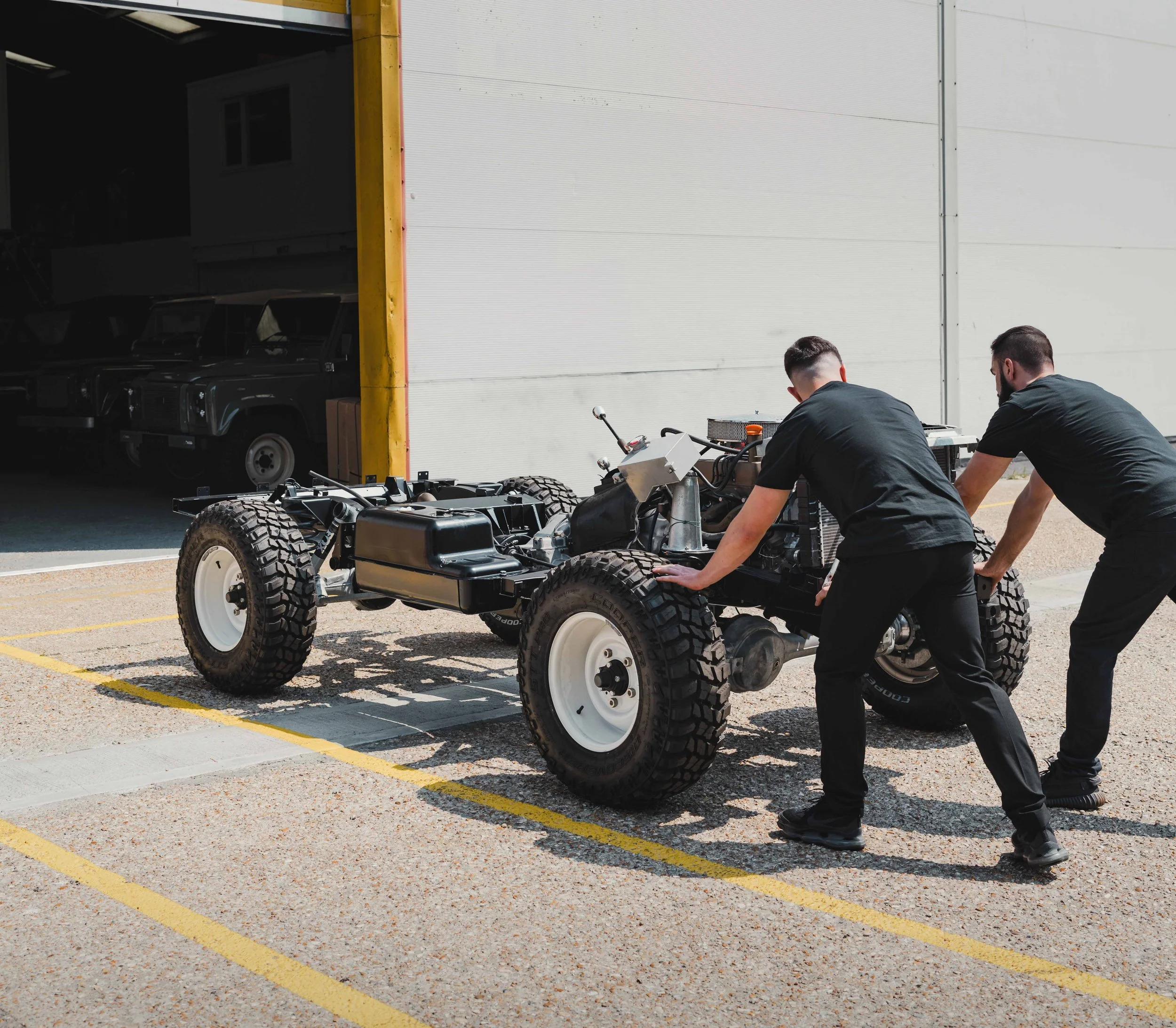
On every Shoreline build:
- The wiring loom is replaced with a new, modern harness.
- The cooling system is rebuilt with an aluminum radiator, new hoses, thermostat, water pump and high-flow fans, sized for the engine and the climate.
- The fuel system is new: tank, lines, pump and injectors.
- The chassis is stripped, inspected, repaired where needed and treated against corrosion.
- Brakes, suspension, axles, differentials and driveshafts are rebuilt or replaced.
- Each vehicle passes a 24-hour systems inspection and a 500-mile road test, and is backed by a 12-month warranty.
Engine choice matters too. Compare rebuilt diesels, V8s and electric options on our Defender engine options page, or see every stage of a build on our build process page.

Questions to ask about a "restored" Defender
- Was the chassis stripped, repaired and treated, or just painted?
- Was the wiring loom replaced, or repaired?
- What was done to the engine, gearbox and cooling system?
- Are there build photos from bare chassis to finished vehicle?
- Who did the work, and is there a warranty?
A restored Defender with full documentation is worth far more than one without. If the seller cannot answer these questions, price it as a used vehicle.
What affects the price
Unrestored Defenders are the cheapest, with value driven by chassis condition, model, year and drive side. Restored vehicles sit in the middle and vary with the scope of the work. A ground-up build is the highest price because it includes chassis work, paint, a hand-built interior, the drivetrain, testing and a warranty.
The cheapest option is rarely the best value. A used Defender that needs major work often costs more in total than one built properly the first time.
Which should you buy?
A project you enjoy working on: a used Defender, inspected carefully using the checks above.
A finished vehicle now: a documented, ground-up restoration from a builder you can verify, or one of our completed Defenders for sale.
A vehicle built exactly to your spec: a commission. Shoreline builds typically take 4 to 8 months across our Heritage, Beach, Villain and Modern editions. Not sure on size? Read Defender 90 vs 110.
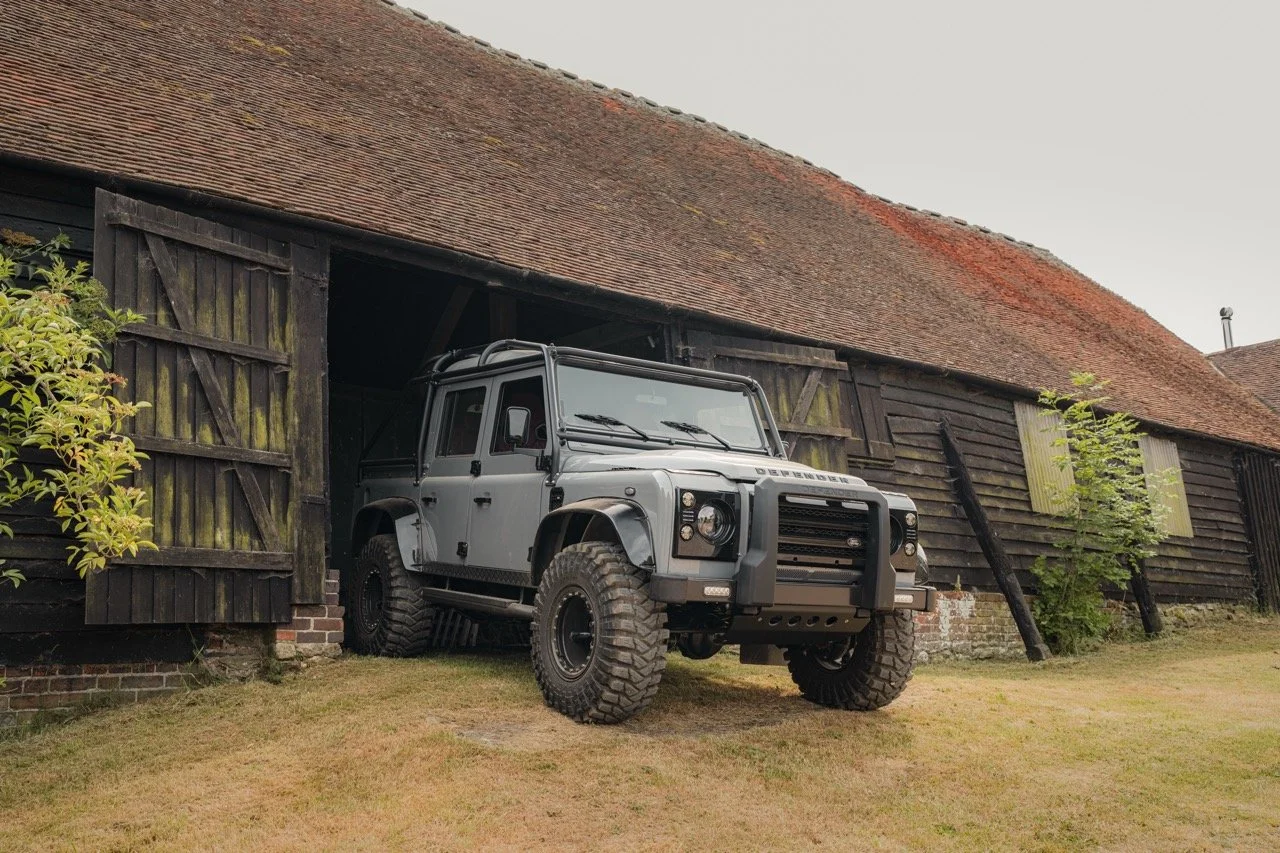
If you already own a Defender, we can inspect it and tell you honestly whether it is a good foundation for a build. We can also source the right donor vehicle for you.
Frequently asked questions
An original, unrestored Defender is not reliable by modern standards. One rebuilt from the chassis up with new wiring, cooling, fuel and brakes can be as dependable as any vehicle on the road.
The original wiring harness, followed by chassis and bulkhead corrosion and an overworked cooling system.
Less than missing records. A full service history matters more than the odometer.
The chassis and bulkhead. If either is badly corroded, everything else costs more.
Only if the work is documented. Ask what was done to the chassis, wiring and cooling, and ask for build photos.
Buying a Defender?
Send us the listing or bring us the vehicle. We will tell you what it needs, or build one around you.
GET IN TOUCH